- What is Re2O? Why we need to talk about safety in particular
- The process that makes Re2O safe — from the donor to the needle that injects you
- Risks and precautions I want to tell you about honestly
- Side effects you may see — which are normal, which mean come back to the doctor
- Who isn't suitable yet, or should consult before having it
- Before–after Re2O care for good, safe healing
- Why Re2O must be done by a doctor who listens to you first
- Consult about Re2O in Phitsanulok — de Pry Clinic
- Frequently asked questions
- References and verification
Re2O is a tissue scaffold (an acellular dermal matrix) derived from the skin of a human donor, with all the cells removed until only the collagen scaffold remains, so your own skin can gradually rebuild itself. The phrase "human tissue" may sound frightening, but the truth is that it goes through a system of donor screening + E-beam sterilization + full piece-by-piece traceability, so the risk is pushed very low. There are two things I want you to know plainly: (1) anyone with an antibiotic allergy to the Penicillin/Streptomycin/Amphotericin group must tell the doctor beforehand, and (2) the result comes on gradually over weeks — it does not change visibly in a single day. In this article, Dr. Time will tell you everything — both the upsides and the precautions — with nothing hidden.
What is Re2O? Why we need to talk about safety in particular
"Doctor… I heard it's made from real human tissue. Is something like that safe?" — this is the sentence patients say to me most often when they ask about Re2O, and they usually say it with a slightly hesitant voice, as if they don't quite dare to ask out loud. Let me say right here that feeling that way is completely normal, and it's the most "right" question to ask. I'm actually glad you think about safety first, rather than going ahead without knowing anything at all.
So in this article I won't be selling you anything. I'll sit and talk with you as if we were chatting in the exam room — about what it's really made of, the mechanisms that make it safe, and the points where I "worry" about you and want you to know in advance, both the good and what needs caution, covering both sides, with nothing hidden.
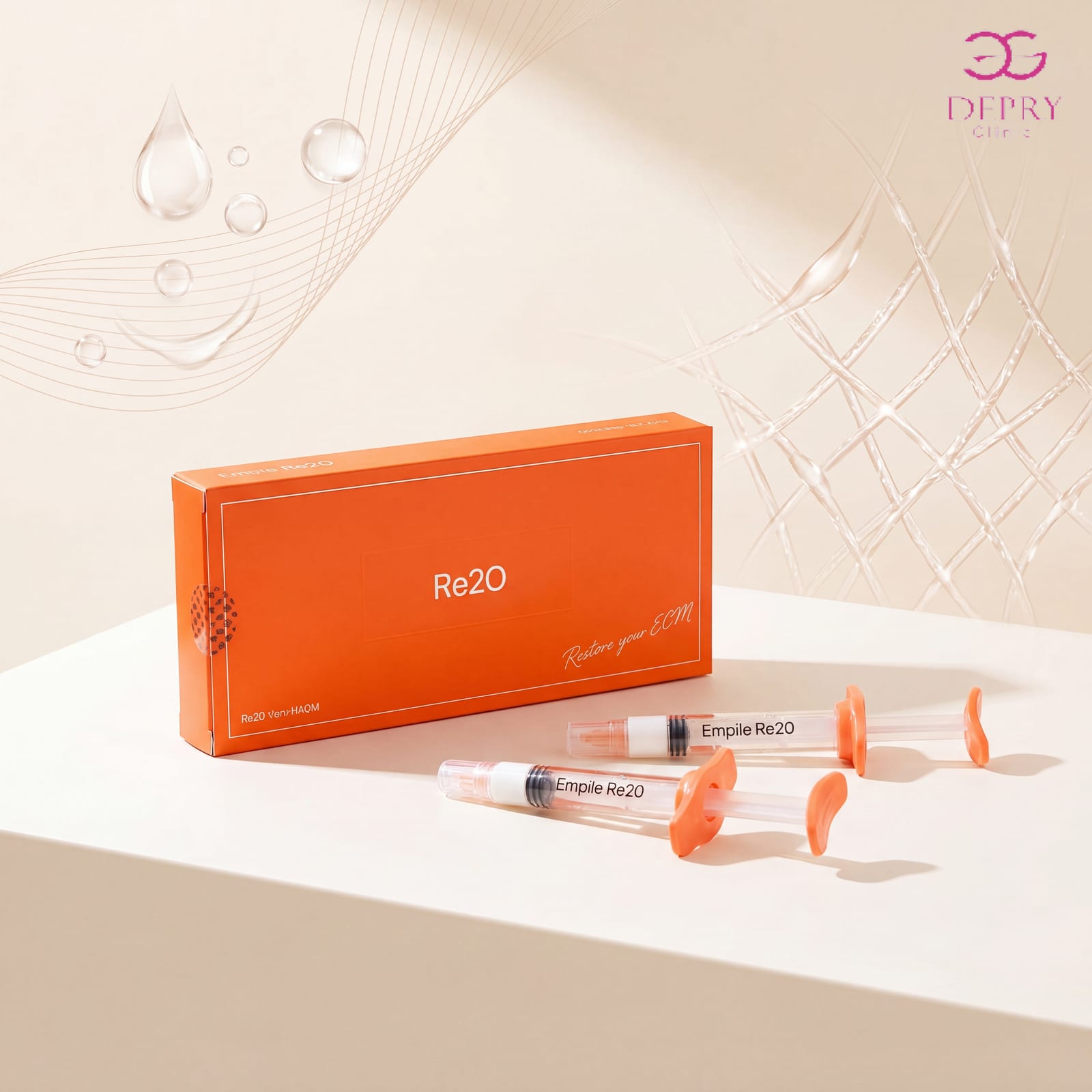
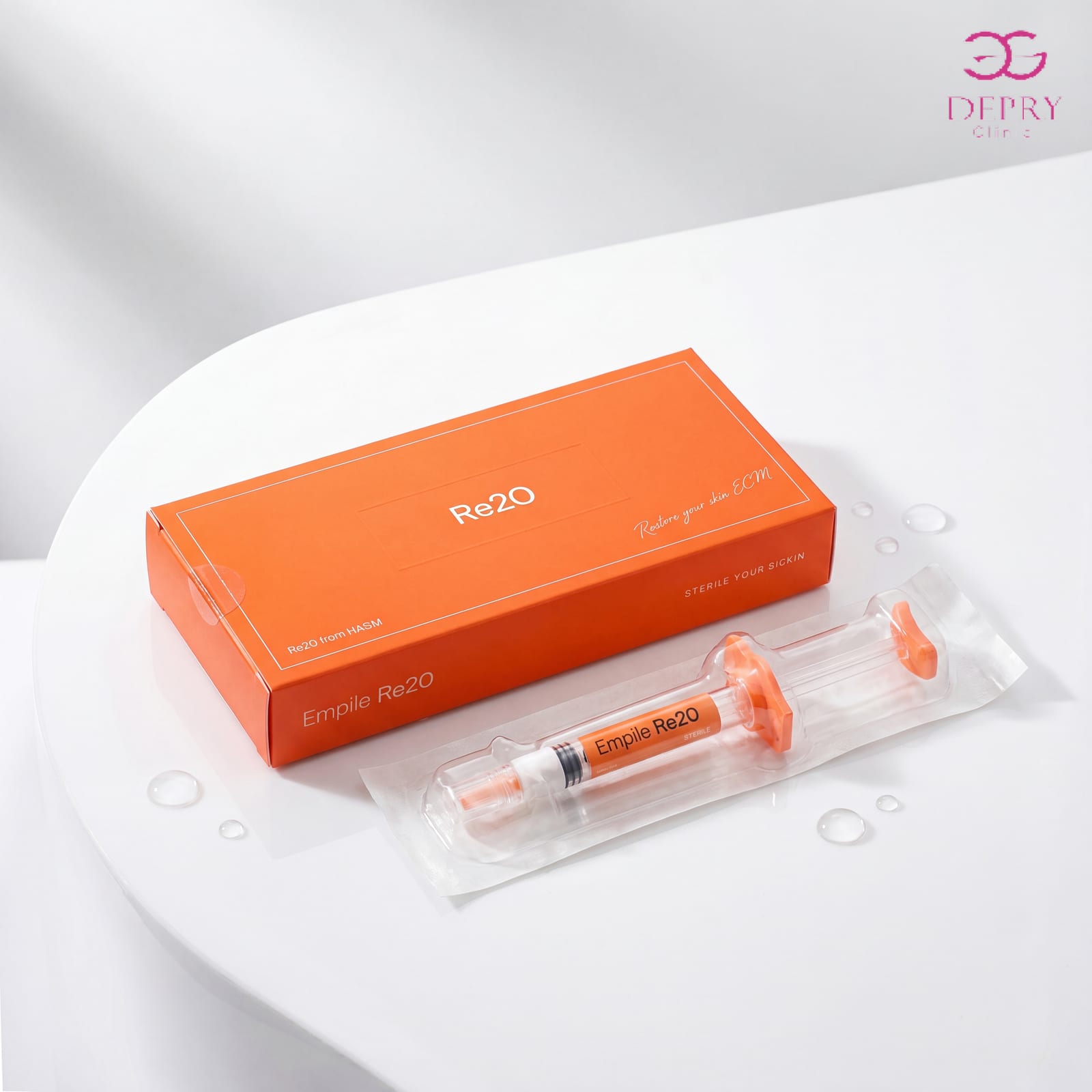
Let me tell you honestly from the start: yes — Re2O (made by L&C Bio of South Korea) is a tissue scaffold derived from the skin of a human donor. Medically it's called a micronized human-derived acellular dermal matrix, or ADM for short. The word acellular means "without cells," because all of the donor's cells are removed entirely, leaving only the natural "scaffold" of collagen and protein.
Why remove the cells? Because the cells are the part your body "recognizes as belonging to someone else" and then rejects. Once they're all removed, leaving only a neutral collagen scaffold, your body no longer sees it as foreign — instead it uses it as "scaffolding" that your own skin cells gradually move into, producing new collagen and rebuilding the skin layer. This is why many people call it "rebuilding the skin" rather than just filling.
And why am I especially meticulous about the safety of this one? Because it differs from ordinary hyaluronic acid (HA) fillers, which are synthetic substances made in a lab — Re2O originates from a real "person." Because it originates from human tissue, it must pass far stricter screening, sterilization, and traceability standards. So I want to take you by the hand and walk through it step by step to see "what makes it safe," so the fear you're carrying gradually eases and you can decide with real understanding — not because someone told you to believe it.
The process that makes Re2O safe — from the donor to the needle that injects you
Got questions? Dr. Time offers personalized, honest consultations — no upselling.
Consult Dr. TimeIf you're worried about "someone else's tissue," I'd like you to read this part slowly, because it's the answer to most of that fear. Before a single piece of tissue can reach the needle that injects you, it has to pass through many layers of safety. Let me lay them out in order.
- Donor screening — donors are screened by history and blood-tested, and must be negative for hepatitis B (HBV), hepatitis C (HCV), HIV, and syphilis before the tissue is used.
- Cell removal (decellularization) — the donor's cells are removed entirely, leaving only the collagen scaffold, reducing the chance that your body will reject it.
- E-beam (electron beam) sterilization — electron-beam radiation is used to sterilize pathogens within the tissue, a method used for medical tissue products.
- Tissue-tracking system — every piece has a traceable code showing where it came from and what it has been through, so any problem later can be traced back.
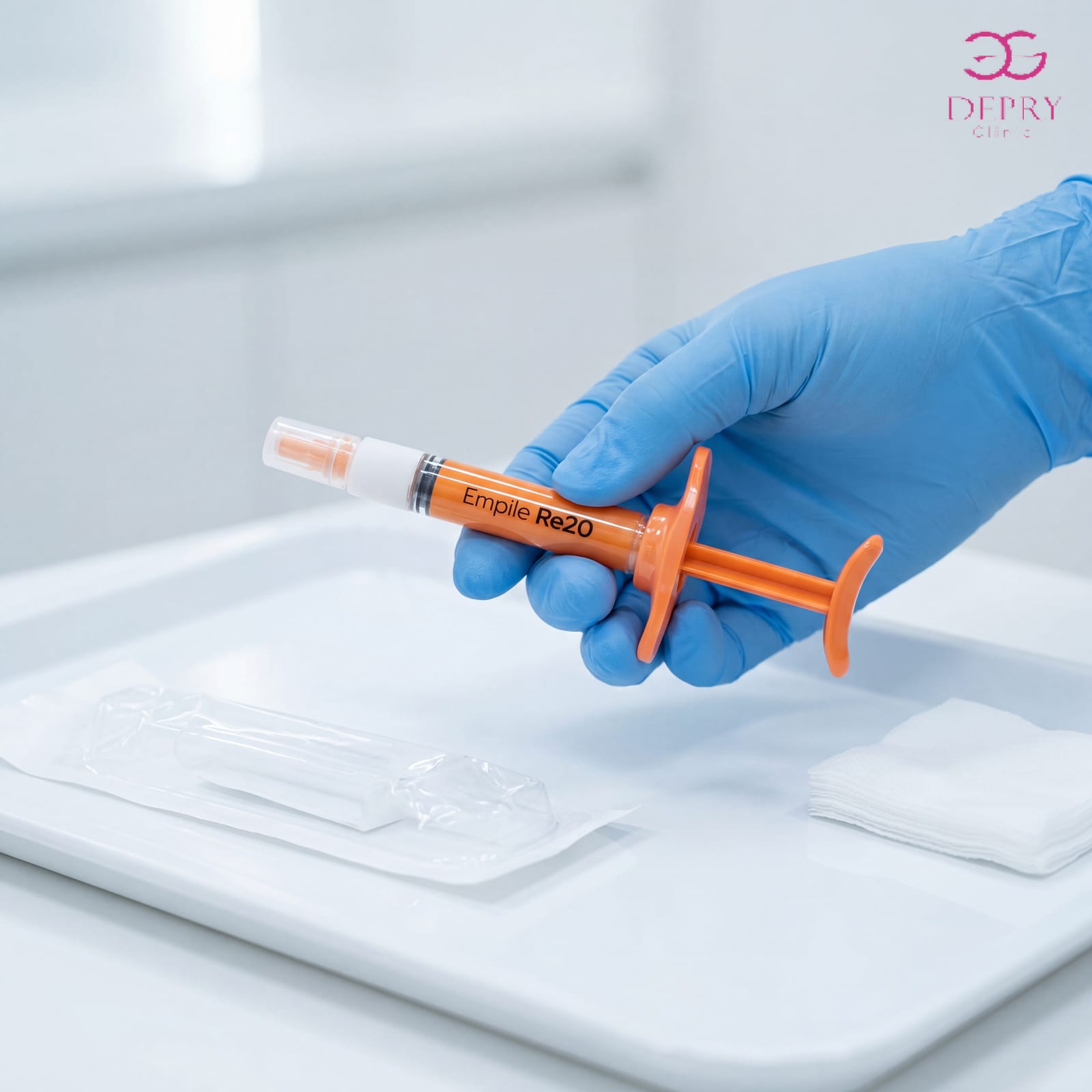
- Single patient, single use — one vial of Re2O (50 milligrams) is used for one person only; it must never, under any circumstances, be reused or re-sterilized.
- Mixed and injected by medical professionals — mixed with 1.5–2.5 cc of saline, drawn back and forth between syringes at least 10 times until smooth, left to rest for 5–10 minutes, then injected to completion within 4 hours using a needle or cannula.
You can see that each layer is designed to cut risk one point at a time — screening cuts the risk from the donor, sterilization cuts the risk from pathogens, tracking cuts problems of origin and provenance, and single use cuts the risk of cross-contamination between people. This is what makes standardized human tissue completely different from "some strange thing of unknown origin."
Using human tissue in medicine is not new or frightening at all. Skin grafts, bone grafts, and various membrane grafts have been used in hospitals worldwide for a long time, under this same system of donor screening and traceability. What makes something safe is not "whether it comes from a person," but rather "whether it has passed the standards and is in a doctor's hands."
Risks and precautions I want to tell you about honestly
At this point I'm not going to talk only about the pretty side, because I've always believed that the person who hears both sides in full is the person who can decide most safely and with the most peace of mind. So let me tell you the risks in the same tone I'd use telling my own family — straight, no scare tactics, nothing hidden. There are two things I want to make very clear and don't want you to overlook.
Point 1: Residual antibiotics — people with drug allergies must tell the doctor first
The manufacturing process for Re2O uses antibiotics to keep the tissue clean, so there may be a small amount of residual drugs of 3 kinds — namely Penicillin, Streptomycin, and Amphotericin. For most people this amount is very small and isn't a problem, but if you've ever had an allergy to this group of drugs — whether a rash or a severe reaction — you must always tell the doctor before deciding to proceed, so the doctor can assess whether it suits you or whether you should choose another route. This is something you must never keep to yourself.
Point 2: The pathogen-transmission risk inherent to human tissue — very low, but not zero
Let me say it plainly, as a good doctor should: even though the donor blood-tests negative for all of HBV, HCV, HIV, and syphilis, and even though it's sterilized with E-beam — in principle, every type of human tissue still carries a theoretical risk of transmitting an infectious agent. This risk is "very low," but I won't deceive you that it's zero, because no doctor can honestly say that.
And this is exactly why the tissue-tracking system and screening standards exist — they're designed to push this risk as low as humanly possible, and to allow traceability if something goes wrong. Choosing to have it done at a clinic that uses genuine product with verifiable origins is the best way for you to be sure that the tissue entering your body has truly passed through these checkpoints.
The most dangerous risk of Re2O isn't in the tissue itself, but in "who performs it" and "whether the product has a genuine origin." If it's done by a non-doctor who doesn't take a drug-allergy history, uses product whose origin can't be verified, or reuses product — that's where the risk truly spikes, not in Re2O itself.
Side effects you may see — which are normal, which mean come back to the doctor
Many patients ask me, "Will my face swell after the procedure? Will there be any marks?" I understand well that nobody wants to run into something unexpected. Let me separate clearly what counts as "normal early symptoms" you needn't panic about, and what is a sign you must come back to the doctor quickly.
Symptoms seen early on — normal, usually resolve on their own
- Swelling, redness, bruising at the injection site — commonly seen in the first few days.
- Tightness — mild, in the treated area.
- Temporary firm lumps — small nodules felt on touch early on, which usually soften and subside by themselves.
- Temporary dark marks at the injected skin, which usually fade over time.
There's something I'd like you to know in advance — in a study comparing micronized ADM tissue with a collagen filler, the ADM group was found to possibly have slightly more swelling and pain early on before the result gradually settled into place. So if it's more swollen than you expected at first, don't panic just yet; it's within an explainable range.
Signs you must come back to see a doctor quickly
- Severe allergic reaction — whole-body hives, facial swelling, lip swelling, difficulty breathing; get to a hospital as quickly as possible.
- Signs of infection — pain, swelling, redness, and heat that keep increasing instead of improving, pus, or fever.
- Inflammation spreading wider, or a firm lump that grows larger / becomes more painful instead of subsiding.
- Any abnormal symptom that makes you uneasy — you can always call the clinic, no need to feel hesitant.
- Swelling, redness, bruising, tightness, temporary lumps early on = normal, gradually improving.
- Steadily improving = a good sign / steadily worsening = a warning sign.
- Severe allergy, infection, fever = see a doctor quickly.
Who isn't suitable yet, or should consult before having it
Before you decide, I'd like you to gently check yourself for whether you're in a group that needs to consult the doctor in particular. It doesn't mean you can't have it — it means we need to talk in detail first, for your own safety.
Usually able to have it (after the doctor assesses)
- People in good general health with no history of allergy to the drug group mentioned.
- People who want their skin to gradually regain firmness and elasticity in a natural way.
- People who understand the result comes on gradually and don't expect a change in a single day.
Should consult the doctor first
- A history of allergy to Penicillin, Streptomycin, or Amphotericin.
- An active infection or inflammation at the intended injection site.
- Pregnant or breastfeeding women.
- An immune disorder, or use of immunosuppressant drugs.
- A history of raised scars or keloids.
- An underlying condition that is still poorly controlled.
The reason I have to ask so much isn't because I'm fussy, but because this information is exactly what lets me choose the safest path for you. The patient who tells me everything is the patient I can care for best.
Before–after Re2O care for good, safe healing
The question I get most often after booking the procedure is, "So how do I prepare, and how do I take care of myself afterward?" Let me sum it up as an easy-to-remember timeline. Following it will help the result come out well and greatly reduce unwanted symptoms.
- 5–7 days before — stop drugs/supplements that promote bleeding, such as aspirin, NSAID anti-inflammatories, fish oil, vitamin E, and avoid alcohol, to reduce the chance of bruising — and, importantly, disclose all of your drug allergies to the doctor.
- The day of the procedure — come with a clean face, no heavy makeup, well rested, and feel free to tell the doctor all your concerns before we begin.
- The first 24–48 hours — a gentle cold compress helps reduce swelling; avoid touching, pressing, or massaging the injection site; avoid makeup on that area; and sleeping with your head slightly elevated helps the swelling subside faster.
- The first week — avoid strenuous exercise, saunas, steam rooms, and very hot showers, and avoid alcohol; drink enough water; avoid strong sun and apply sunscreen once the skin starts to return to normal.
- After that — gradually observe the improving changes in your skin over time. If you have any abnormal symptoms — such as increasing swelling and redness, fever, or a growing lump — contact the clinic right away.
Don't worry too much if it looks more swollen than you expected in the first days, because Re2O works gradually. What you see in the mirror on day one is not yet the true result. The truly stable result requires waiting for the swelling to subside and the tissue to settle, which usually starts to show more clearly over weeks. Be patient and give your skin time to work.
Why Re2O must be done by a doctor who listens to you first
At this point I'd like you to feel more at ease, because Re2O can be done safely if it's in the right hands and the steps are followed. The key isn't "where it's cheapest to do," but "who is taking care of you."
Re2O is human tissue that is clearly specified to be used by medical professionals only. It is single-use per person, and it has mixing and injection steps that must be done correctly within a set time. These are not things that "anyone holding a needle can do." An experienced doctor will:
- Listen first, always — take your history of drug allergies, underlying conditions, expectations, and concerns before deciding anything at all.
- Assess whether it truly suits you — review contraindications, look at your skin condition, and tell you honestly if there's an option that suits you better.
- Use genuine product with verifiable origin — single-use per person, with no reuse.
- Inject at the appropriate skin depth with correct technique, and care for you continuously afterward.
At de Pry Clinic, Dr. Time holds to a simple principle: "Listen first, diagnose first, then treat." Because I've always believed that you are not a "customer" who walks in to buy a procedure, but a person I must keep safe as if caring for someone in my own home. If something is too risky or unnecessary, I'll tell you straight: don't do it. And whatever the result turns out to be, I'm right here, continuing to care for you, not going anywhere — that's a promise I can truly make, because I own this clinic and look after it myself.
Consult about Re2O in Phitsanulok — de Pry Clinic
If you're in Phitsanulok or a nearby province and you're hesitating about the safety of Re2O, de Pry Clinic warmly welcomes you to come and talk with Dr. Time. Many patients travel from Phichit, Sukhothai, Uttaradit, Kamphaeng Phet, and Phetchabun because they want a doctor who is willing to sit and listen to all of their concerns first, then tell them honestly what suits them — with no course packages pushed on them.
Dr. Time assesses and cares for every case personally, takes a detailed drug-allergy history, uses product with verifiable origin, and is ready to sit and answer every question until you feel at ease before deciding — and if you talk it through and still don't want to proceed, that's perfectly fine. I'd rather you "understand" than "rush into it." If you want to care for your skin safely without fear, because there's a real doctor looking after every step, message Dr. Time anytime. An initial consultation is free of charge.
Frequently asked questions
Is Re2O really made from human tissue — is that scary?
Yes, it is. Re2O is a tissue scaffold (an acellular dermal matrix, or ADM) derived from the skin of a human donor, then put through a process that removes all of the donor's cells (decellularization), leaving only the collagen scaffold and proteins that your body can use to repair and rebuild your skin. The phrase "human tissue" sounds alarming, but in reality human-tissue grafting has been used in medicine for a very long time, with strict donor-screening and sterilization systems. The key is whether the procedure is done by a doctor who uses genuine product and follows the correct steps.
Can Re2O transmit an infection from the donor, such as HIV or hepatitis?
The risk is very low, but I won't tell you it's zero — because, in principle, every type of human tissue still carries a theoretical risk of transmitting an infectious agent. Re2O donors are screened and blood-tested negative for hepatitis B (HBV), hepatitis C (HCV), HIV, and syphilis. The tissue is also sterilized with E-beam (electron beam), and there is a tissue-tracking system that traces every single piece. These standards are exactly what push the risk down as low as possible.
Can people with antibiotic allergies have Re2O?
You must always tell your doctor first, because the manufacturing process for Re2O may leave a small amount of residual antibiotics — namely Penicillin, Streptomycin, and Amphotericin. If you have a history of allergy to any of these, you must let your doctor know before deciding, so they can assess whether it suits you or whether you should choose another option instead. This is exactly why taking a careful history before the procedure matters so much.
What are the side effects of Re2O?
Most are localized symptoms that resolve on their own — for example swelling, redness, bruising, tightness, temporary firm lumps, and dark marks at the injection site early on, which usually improve by themselves within a few days to two weeks. Studies have found that this kind of tissue may cause slightly more swelling and pain early on than ordinary fillers. The symptoms to watch out for are a severe allergic reaction, infection-related inflammation, increasing pain/swelling/redness/heat, or fever. If you experience any of these, come back to see your doctor promptly.
How fast does Re2O work — does the face change right away?
Re2O is not volume-adding like a filler that visibly changes shape from the day of injection. Instead, it lays down a tissue scaffold so your body gradually produces new collagen. The result therefore comes on gradually over weeks. Studies usually assess results at 6 weeks, 3 months, and 6 months. Early on it may look more swollen than the true result; you have to wait for the swelling to subside and the tissue to settle before you see the truly stable result.
Who isn't suitable, or should consult a doctor before having Re2O?
People with a history of allergy to Penicillin, Streptomycin, or Amphotericin; those with an active infection or inflammation at the intended injection site; women who are pregnant or breastfeeding; people with an immune disorder or who take immunosuppressants; those with a history of keloid scarring; and people with an underlying condition that is still poorly controlled. Everyone should always be assessed by a doctor first, because suitability depends on each person's body and history.
How should I care for myself before and after Re2O?
Before the procedure, you should stop medications or supplements that promote bleeding — such as aspirin, fish oil, vitamin E, and alcoholic drinks — for about 5–7 days, and disclose all your drug allergies fully. After the procedure, for the first 1–2 days a cold compress can reduce swelling; avoid makeup and touching the injection site; drink enough water; and avoid strenuous exercise, saunas, steam rooms, and alcoholic drinks for about 1 week. If you notice anything abnormal, you can contact the clinic right away.
Why must Re2O be done by a doctor — can't it be done anywhere?
Because Re2O is human tissue that must be used by medical professionals only. It is single-use per person — it must never be reused or re-sterilized — and it has mixing and injection steps that must be performed correctly within a set time. An experienced doctor will take your drug-allergy history, assess for contraindications, choose the appropriate skin depth for injection, and care for you continuously afterward. Having it done by a non-doctor, or using product with no verifiable origin, is a risk that simply isn't worth it.
References and verification
I'd like you to be able to check the information I used to write this article yourself — just click to read the originals:
- U.S. FDA — Tissue & Tissue Products — the regulations governing human tissue (HCT/P) on donor screening and tissue tracking, which I use to explain why Re2O must undergo screening and tissue tracking: fda.gov
- PubMed Central (PMC13282991) — practice standards for injecting tissue-derived collagen on the face, used as a reference for the process and safety of tissue injection (2026): pmc.ncbi.nlm.nih.gov
- DermNet — Mesotherapy & injectable skin treatments — information on localized side effects and care for skin-injection procedures, which I use to support the side-effects and before–after care sections: dermnetnz.org
- Thai Food and Drug Administration (อย.) — the health-product verification system, used to check the origin and registration of a product before deciding: oryor.com
Written by
ดร.นพ.ณธธรรมภ์ โอภาอภิณัฐฏ์ (หมอธามน์)Clinic physician at de Pry Clinic, Phitsanulok · Thai medical license no. 56524