Table of Contents
- What is Juvelook
- How Juvelook works
- Juvelook vs Sculptra vs HA filler
- Who it suits, who should consult first
- When you see results, how many sessions, how long it lasts
- Is it safe, what are the side effects
- What the doctor wants to tell you straight
- Is Juvelook worth the cost
- Juvelook in Phitsanulok — Depry Clinic
- Questions patients ask the doctor often
- References
Many people who walk in to see me lately start with a similar sentence: "Doctor, my face isn't really sagging, but it looks tired, not dewy, not as fresh as it used to be." Some look in the mirror in the morning and feel their skin looks flat and dull. They are afraid filler will change their face, yet doing nothing doesn't sit right with them either. If this is how you feel, I'd like to invite you to sit down and talk about something patients have been asking me about a lot this year: Juvelook.
What is Juvelook
Let me paint a simple picture first. Usually when we talk about "injecting for beautiful skin," most people split it into two streams in their mind. The first is filler that adds plumpness instantly, and the other is a stimulator that gradually rebuilds the skin from within. What makes Juvelook interesting is that it tries to combine the strengths of both streams in a single needle.
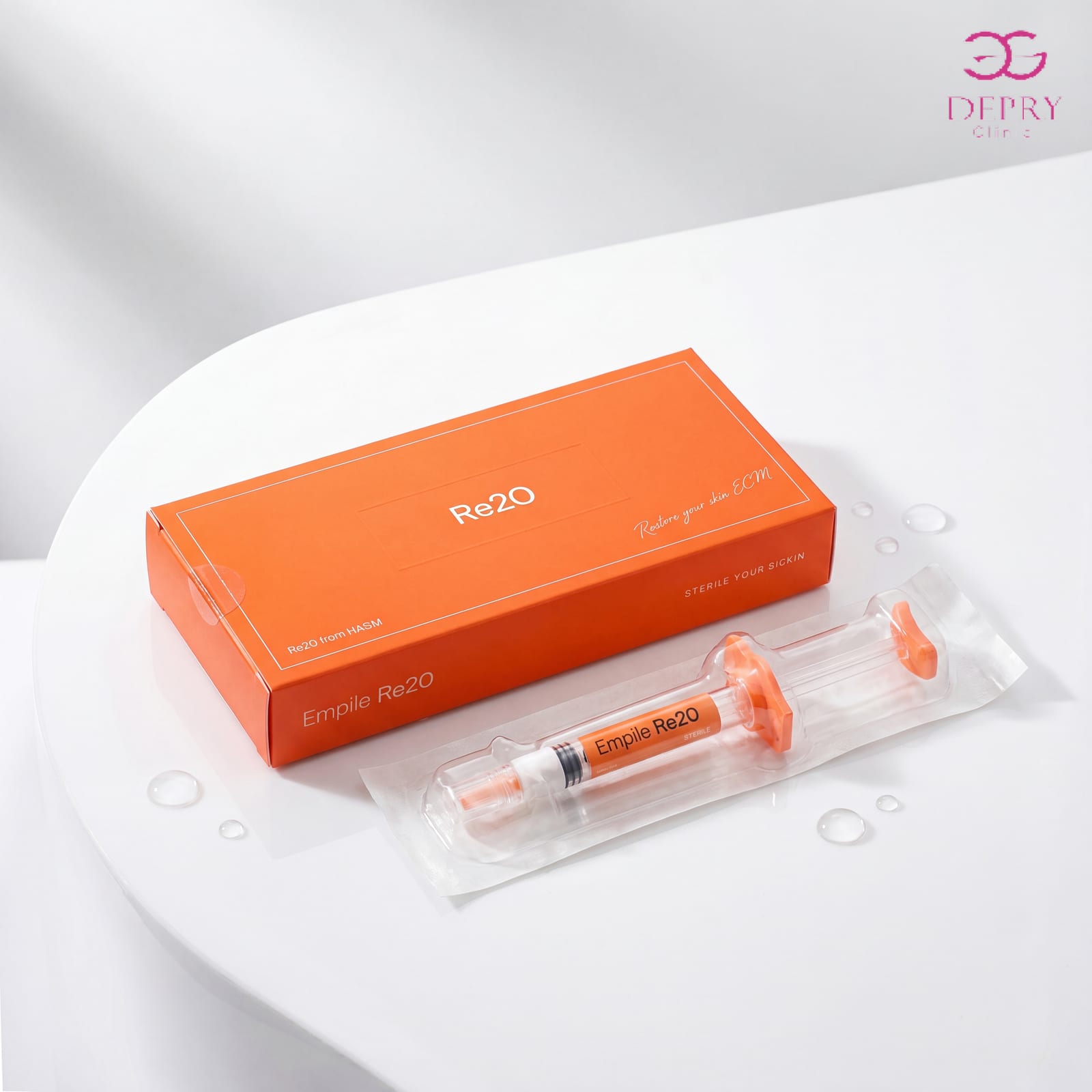
To put it a little more formally, Juvelook is a Korean skin booster made up of two main parts. The first is PDLLA (poly-D,L-lactic acid), microspheres of a naturally biodegradable substance that act as a stimulator prompting your skin to rebuild its own collagen. The other is HA, or hyaluronic acid, which holds water well and helps the skin look dewy and hydrated from the very first stage.
Because it combines these two parts, people often call Juvelook a "skin booster" or a skin-quality regenerator rather than a filler that adds volume in specific spots. The standout point, in my view, is that it isn't meant to change the shape of your face but to make your skin "tissue" itself better — firmer, dewier, while still being your own face.
How Juvelook works
Got questions? Dr. Time offers personalized, honest consultations — no upselling.
Consult Dr. TimeHere I like to compare it for my patients this way: PDLLA is like "putting up a temporary scaffold" for the skin, while HA is like "watering the ground first." Patients usually go "ahh, I get it" right away.
PDLLA and stimulating new collagen (neocollagenesis)
When PDLLA microspheres are injected into the skin layer, they act like a temporary structure in the dermis. As they gradually biodegrade over time, the body responds by activating fibroblasts so they produce fresh collagen and elastin. This process is what makes the skin gradually look firmer and more supple — not instantly plump like adding something in, but your own skin getting better.
I want you to really understand the word "gradually" here, because it is the heart of how a collagen stimulator thinks. The result therefore looks natural; the people around you often remark that you look fresher but can't quite say what you had done, which is something many patients love.
HA and the dewiness you see first
While PDLLA is quietly working away underneath, HA takes on the early role. With its water-holding properties, it adds hydration so the skin looks dewy and smoother more quickly, meaning patients don't have to wait too long and get impatient. You could say you get both early peace of mind and the long-term result that follows later.
The doctor's simple summary: HA = the dewiness you see first · PDLLA = the firmness that gradually comes from your own collagen. These two work to a different rhythm but reinforce each other.
Juvelook vs Sculptra vs HA filler
The question I get almost every day is, "So how is it different from Sculptra or the filler I had before?" Let me lay them out side by side in three ways. I'd like you to read this table to understand the principles, not to judge which one is better, because each was created to answer a different need.
| Topic | Juvelook (PDLLA + HA) | Sculptra (PLLA) | Regular HA filler |
|---|---|---|---|
| Main substance | PDLLA blended with HA | PLLA | HA (hyaluronic acid) |
| How it works | Stimulates collagen + adds dewiness in one | Mainly stimulates collagen | Adds volume instantly at the injection point |
| What it targets | Overall skin quality — smooth, dewy, firm | Adds volume, rebuilds facial structure over broad areas | Fills creases and shapes specific spots |
| Early dewiness | Seen quickly from the HA | Not the focus, gradual | Seen immediately after injection |
| Nature of the result | Natural, gradually looks better | Natural, gradually looks better | A clearly visible change right away |
To sum up from my side: if your goal is "I want my skin tissue to be better all over without changing the shape of my face," Juvelook answers that well. But if you have deep creases or want to add definite shape in specific spots, filler may suit you better — and sometimes I even design them to be used together, depending on each person's face.
Who it suits, who should consult first
I'd like you to read this part feeling at ease, not anxious, because the point is for you to understand yourself before deciding, not to scare you.
Good fit for
- Those whose skin is starting to look tired, lacking dewiness, with pores beginning to widen and skin starting to look dull and less firm than before, but who don't yet have severe sagging
- Those who want to care for their skin preventively before things get heavy. This group usually sees changes they're pleased with, because it matches what Juvelook does best: refining skin quality.
Talk to the doctor first
- Anyone who is pregnant or breastfeeding, has an infection or inflamed rash in the treatment area, has a history of allergy to the components, or has certain underlying conditions that could affect wound healing
- For this group I will take a detailed history first, with your safety as the top priority (not forbidden, just assessed first).
When you see results, how many sessions, how long it lasts
This matters a lot, because the most common misunderstanding I run into is patients expecting that one needle changes the face instantly like filler. When it isn't like that, they get disheartened — even though it is actually working.
The timeline I want you to understand
- Early period after treatment you'll see dewier, more hydrated skin from the HA. This is the quick result that lets you relax.
- About 1 to 3 months the real firming and smoothing from new collagen becomes clearer gradually, because the body needs time to build collagen itself. Be a little patient and you'll understand why a result like this looks natural.
Number of sessions and how long it lasts
Most of the time I plan a course of several sessions, a few weeks apart, because collagen stimulation works well when done in a steady, continuous rhythm rather than one and done. As for longevity, marketing information often states the overall result lasts from several months up to around 2 years, but I'll tell you honestly that this figure depends on each person's skin, age, and self-care after treatment too. Not everyone will be exactly the same.
Is it safe, what are the side effects
I understand that when it comes to "injecting into the face," anyone would be worried. So I'd like to tell you the full picture — both the common things and the less common ones worth knowing — so you decide based on real information, not vague fear.
Common side effects that usually resolve on their own include slight redness, swelling, or minor bruising at the injection site, which normally settles gradually within a few days. Some people may get small bumps or nodules at the treated spot, which mostly resolve by themselves. Less common but worth knowing are long-lasting nodules, infection, or other injection-related complications, which are not frequent.
I want to stress this point in particular: the matter of bumps or nodules is very much linked to technique — preparing the product, distributing it evenly, and the depth at which it is injected. These are the reasons I always emphasize that it should be done by someone who looks after you closely and truly understands this substance, because there is a big difference between just getting it injected and injecting with care.
I want you to feel reassured: most side effects of Juvelook are minor and resolve on their own, and most of the more serious problems can be prevented by assessing the skin first, choosing the right patient, using genuine product, and using correct technique. If anything seems off after treatment, you can always call me. I don't disappear once you get up from the bed.
- Common side effects (redness, swelling, bruising, small bumps or nodules) are mostly minor and settle on their own within a few days
- Bumps or nodules are very much linked to technique — preparing the product, distributing it evenly, and the depth at which it is injected
- More serious problems can be prevented by assessing the skin first, choosing the right patient, using genuine product, and using correct technique
What the doctor wants to tell you straight
Now we come to the part I'm most serious about, because Juvelook is becoming popular, and popular things always come with knock-offs or products that don't meet standards.
The first thing I want you to ask everywhere you go for treatment is, "Is the product you use approved by the Thai FDA (อย.)?" Because for substances injected into the skin like this, if you get a product that isn't up to standard, the risk of nodules and inflammation goes up a lot. You have every right to ask and to see it. Anywhere that can't answer or dodges the question, I'd advise caution.
The second thing is that the practitioner's technique matters just as much as the substance. As I mentioned about bumps and nodules, it doesn't depend on the brand alone, but on the hand of the injector, how the product is prepared, and the skin assessment beforehand. So I'd like you to see an unusually cheap price as something that may be traded for something you can't see on the day you pay.
And the last thing I always say: Juvelook isn't a magic product that suits everyone and every problem. For some people the real issue isn't skin quality but facial structure or sagging, which needs a different approach. That's why I always want to assess first, rather than rush to sell.
Is Juvelook worth the cost
I won't fool you with vague numbers in an article, because the real price depends on many factors, and throwing out random figures would be disrespecting your decision.
Factors that make the price differ
The price of Juvelook can differ from place to place for many reasons — for example, the number of sessions or the course that suits your skin, the amount used, the treatment area, whether the product is genuine and Thai FDA-approved (อย.), and, importantly, whether there is a doctor who assesses and provides ongoing care. When two places have very different prices, sometimes the difference isn't in the "name of the substance" but in what lies behind that needle.
So the word "worth it," in my view, isn't just the cheapest — it's getting genuine product, getting someone who assesses before treating, and having someone responsible to care for you afterward. If you want to know the real price that fits your skin and your goals, message me on LINE. I'm glad to assess for you first at no charge, and then we can decide together later whether to go ahead.
Juvelook in Phitsanulok — Depry Clinic
If you're in Phitsanulok or a nearby province and looking for somewhere to have Juvelook with peace of mind, I'd like to invite you to come and talk at Depry Clinic first.
What I've always held to is assessing before treating, every time. I'll look at your skin, listen to what worries you, and tell you straight whether Juvelook suits you or whether there's a better answer. Sometimes my answer is "you don't need to do this right now," which I can say because I see you as a patient I have to care for, not a customer I have to close a sale on.
And once it's done, I continue the care — it doesn't end on the day you pay. If anything feels off afterward, you can reach me, because I believe good care means being with the patient before, during, and after, not just at the moment of injection.
Questions patients ask the doctor often
What is Juvelook, and how is it different from a regular filler?
Juvelook is a skin booster that combines two parts: PDLLA, an agent that prompts your skin to rebuild its own collagen, and HA, which adds hydration for a dewy look from the very start. Unlike a regular HA filler that adds volume in specific spots, Juvelook focuses on improving overall skin quality so it looks firmer and smoother from within.
When will I see results from Juvelook, and how long do they last?
Early on you will notice dewier, more hydrated skin from the HA. The real firming and smoothing from new collagen builds up gradually over about 1 to 3 months. Marketing information often states the overall result can last from several months up to around 2 years, depending on your skin and how you care for it.
How many Juvelook sessions does it take to see results?
Most of the time the doctor plans a course of several sessions, a few weeks apart, because stimulating collagen is a gradual process. The number of sessions that suits you depends on your skin condition and your goals, which the doctor will assess on your consultation day.
Does Juvelook hurt, and is the downtime long?
Most people feel a bit of tightness or mild pain during the injection. Afterward there may be slight redness, swelling, or minor bruising that gradually settles within a few days, so the downtime is considered short. The doctor will always give you clear aftercare guidance.
Is Juvelook safe, and is there a chance of bumps or nodules?
Juvelook is considered a safe procedure when performed by someone knowledgeable using products approved by the Thai FDA (อย.). Most side effects are mild and resolve on their own. Small bumps or nodules can occur and usually settle by themselves; the likelihood depends largely on how the product is prepared and injected, so it should be done by a doctor who looks after you closely.
How is Juvelook different from Sculptra?
Both belong to the collagen-stimulating group, but Sculptra uses PLLA while Juvelook uses PDLLA and also blends in HA. That gives Juvelook a faster dewy effect early on, and it is usually positioned as a skin booster for skin quality, whereas Sculptra is more often used to restore volume and rebuild facial structure over broad areas.
Who should not have Juvelook?
Anyone who is pregnant or breastfeeding, has an infection or inflamed rash in the treatment area, has a history of allergy to the components, or has certain underlying conditions should postpone or consult the doctor first. On your consultation day the doctor will take your history and assess whether it suits you.
Where can I get Juvelook in Phitsanulok?
At Depry Clinic in Phitsanulok, Dr. Time looks after you from the pre-treatment skin assessment, choosing a plan that genuinely fits you rather than selling a ready-made package, through to ongoing care afterward. You can consult first via LINE at no charge.
References & how to verify
I've chosen credible references for you to read further, in case you want to understand the safety of injectables and how to choose a procedure with good information.
- PubMed Central — a safety review of collagen-stimulating injectables: pmc.ncbi.nlm.nih.gov
- U.S. FDA — official information on dermal fillers (soft tissue fillers): fda.gov
- NHS — advice on having cosmetic procedures safely: nhs.uk
- Thai FDA (อย.) — check the product registry before you decide: oryor.com
Written by
ดร.นพ.ณธธรรมภ์ โอภาอภิณัฐฏ์ (หมอธามน์)Clinic physician at de Pry Clinic, Phitsanulok · Thai medical license no. 56524