- What Is PDO Thread Lifting? How Does It Work?
- Types of PDO Threads
- Who Is It For? Who Should Consult First
- The Procedure at de Pry Clinic
- Results and Timeline
- How Much Does It Cost?
- How to Care for Your Skin After Thread Lifting
- Thread Lifting in Phitsanulok — de Pry Clinic
- Frequently Asked Questions
- References and Verification
You feel your cheeks starting to sag, your facial contour no longer as sharp as it used to be, and you want to lift and tighten but aren't ready for surgery. Then you keep hearing the term "thread lifting" so often that you wonder what it is and whether it's safe — I completely understand this curiosity.
Dr. Time will explain PDO thread lifting in an easy-to-understand, straightforward way — covering the principles, the thread types, who it suits and who should consult first, the results, and the price — so you can make a confident decision.
What Is PDO Thread Lifting? How Does It Work?
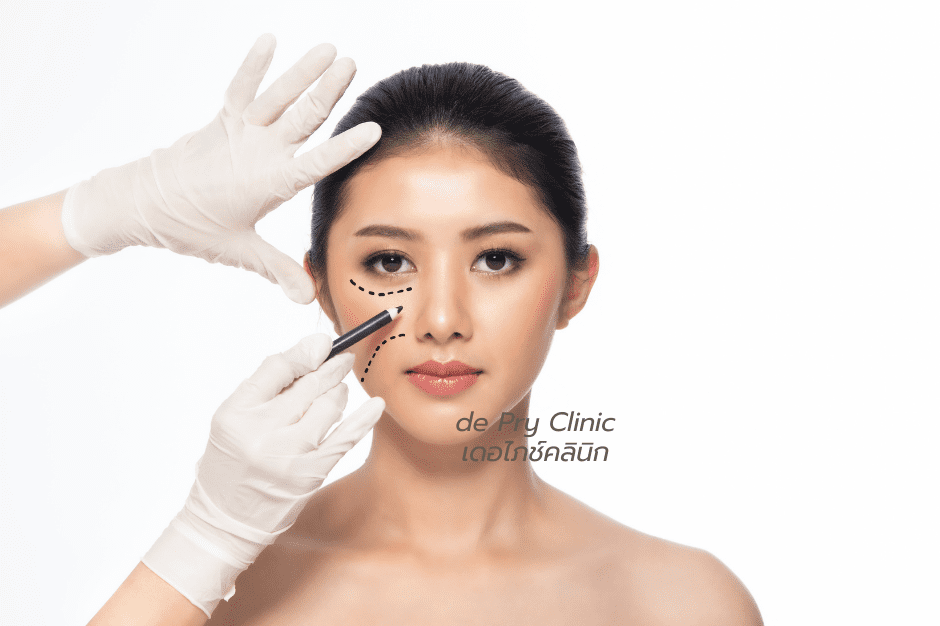
PDO thread lifting is the insertion of dissolvable Polydioxanone threads under the skin to lift sagging tissue and stimulate the skin to produce new collagen. PDO is the same type of thread that has been used to suture wounds in the operating room for over 30 years, so its safety has been medically proven.
When the threads are inserted under the skin, the body recognizes them and signals collagen to form around them. The threads gradually dissolve and disappear within 6–8 months, but the new collagen network remains. This is why the results of thread lifting usually keep improving over the first 2–3 months, rather than peaking immediately on the day of the procedure.
PDO thread lifting doesn't just "pull" the face — it stimulates the skin to create new collagen from within, so the result looks natural and not overdone.
Types of PDO Threads
Got questions? Dr. Time offers personalized, honest consultations — no upselling.
Consult Dr. TimePDO threads come in several forms, each used for a different goal.
- Mono thread — a single-strand thread used to stimulate collagen across the face, suitable for dull skin and mild sagging.
- Cog / Barb thread — a barbed thread that grips the tissue and lifts it upward, used for the cheeks, jawline, and neck, with a more noticeable lifting result.
- Screw thread — a twisted, spiral thread that adds a small amount of volume, suitable for areas with thin skin.
The choice of thread type and number of threads depends on each person's facial structure, age, and goals. There is no one-size-fits-all formula — Dr. Time assesses and plans on an individual basis.
Who Is It For? Who Should Consult First
PDO thread lifting is very well suited to people aged 30–55 who are beginning to notice slight facial sagging, drooping cheeks, or developing nasolabial–chin lines, but who don't yet need surgery.
| Suitable For | Should Consult First |
|---|---|
| Mild to moderate facial sagging | Pregnant or breastfeeding |
| Wanting a natural-looking result | Active infection in the treatment area |
| Not wanting a long recovery | Autoimmune disease / SLE |
| Wanting to stimulate the skin before reaching an age that requires more aggressive methods | Taking blood-thinning medication |
The right column doesn't always mean you can't have the procedure — it just means you should talk with the doctor first for safety.
The Procedure at de Pry Clinic
Dr. Time performs every step personally — nothing is handed off to an assistant or nurse to do instead.
- Consultation: assessing your facial structure, muscles, and skin, and planning together.
- Numbing cream: waiting about 20–30 minutes until the area is evenly numb.
- Thread insertion: using a fine needle with no incision required; the procedure takes 30–60 minutes depending on the number of threads.
- Follow-up appointment: 2–4 weeks if a re-evaluation is needed.
Every thread and instrument used is genuine and authentic, verifiable from the packaging and import lot.
Results and Timeline
The results of thread lifting keep improving over time — they don't peak immediately on the day of the procedure because you have to wait for the new collagen to form.
- Days 1–5 — there may be slight swelling and bruising, with a feeling of tightness in the threaded area.
- Weeks 2–4 — the swelling subsides and the lifting and tightening becomes more clearly visible.
- Months 2–3 — full results; the skin is tightened and looks more youthful.
- The threads dissolve within 6–8 months, but the collagen lasts 1–2 years.
How Much Does It Cost?
The price of thread lifting is calculated based on the type and number of threads used — for example, mono threads to stimulate the skin, or cog threads to lift and tighten. The appropriate number of threads varies according to the degree of sagging and the area, so Dr. Time always assesses and gives you a clear price before the procedure. There are no hidden charges, and you can inquire in advance via LINE.
Some places offering thread lifting at unrealistically low prices use unregistered threads or reduce the number of threads until you see no results. You should ask clearly which brand of thread is used, how many threads, and who performs the procedure — because thread lifting is a treatment where the person performing it matters greatly.
How to Care for Your Skin After Thread Lifting
Avoid massaging your face or pressing on it firmly. Sleep on your back, not face-down. Avoid saunas and strenuous exercise for at least 3 days. You can wash your face as usual but do it gently. Slight swelling and bruising on days 1–3 is normal.
After 1 month has passed, you can go about your life completely as normal. The skin will gradually improve as collagen forms, with the clearest results during months 2–3.
Thread Lifting in Phitsanulok — de Pry Clinic
At de Pry Clinic, Phitsanulok, Dr. Time personally assesses your facial structure and performs the thread lifting in every case, choosing the thread type and number to suit your degree of sagging. He uses genuine, registered threads, with an emphasis on lifting and tightening results that look natural and don't force the facial structure.
If you live in Phitsanulok or nearby and want to know which type of thread lifting suits your face, or whether you should combine it with HIFU/filler, you can consult Dr. Time first. He is happy to plan it out honestly for you.
Frequently Asked Questions
- How is it different from filler? Threads lift and tighten tissue, while filler adds volume — they can be done together.
- How long does it last? The threads dissolve in 6–8 months; the collagen lasts 1–2 years.
- Does it hurt? Numbing cream is applied, so most people tolerate it comfortably, with slight swelling and bruising for 3–5 days.
- Does it look natural? If the plan suits your facial structure, you'll look fresher and not overdone.
References and Verification
The information in this article has been compiled and verified from trustworthy sources, which you can check yourself:
- NHS (UK National Health Service) — what to know before non-surgical cosmetic procedures: nhs.uk/conditions/cosmetic-procedures
- U.S. Food and Drug Administration (FDA) — medical device information and safety: fda.gov
- Thai Food and Drug Administration (FDA) — checking product and clinic registration: oryor.com
Written by
ดร.นพ.ณธธรรมภ์ โอภาอภิณัฐฏ์ (หมอธามน์)Clinic physician at de Pry Clinic, Phitsanulok · Thai medical license no. 56524