
- What is Rhinoplasty?
- What Problems Does It Solve?
- Who is a Good Candidate? Who Should Avoid It?
- Open vs. Closed Techniques: How Do They Differ?
- Pricing and Materials Selection Guide
- How Long Until Results are Visible? How Long Does It Last?
- Safety and Side Effects to Watch Out For
- Post-operative Self-Care
- Rhinoplasty in Phitsanulok (Depry Clinic)
- Frequently Asked Questions
- References
Rhinoplasty is not just about inserting a silicone implant to raise the bridge; it is the art and science of restructuring the face to harmonize with your natural tissues. Most mistakes I have encountered over my 10 years in the operating room stem from choosing a shape that forces the skin beyond its limits and selecting techniques that do not match the structure. Understanding your own limitations and choosing the right materials are key to achieving a beautiful, safe, and long-lasting nose without needing revision surgery.
What is Rhinoplasty?
"Doctor, I want a high nose bridge like this celebrity. Will my nose look exactly like this after surgery?"
This is a highly popular question I often get when patients walk in for a consultation. As a surgeon who has spent over a decade working with scalpels and tissue, I want to explain that rhinoplasty (nose surgery) is a surgical procedure to reshape, restructure, and add dimension to the nose so that it harmonizes with other facial features. This is done using artificial structures (such as silicone) or autologous tissue (such as ear cartilage or septal cartilage).
I always tell my patients that our noses are not modeling clay that can be molded into any shape. Everyone has unique limitations in terms of skin elasticity, thickness of the fat layer, and existing bone structure. Therefore, a successful surgery is not about copying someone else's nose shape, but about highlighting the strengths and correcting the weaknesses of your own natural foundation to ensure the safest, most stable long-term result.
What Problems Does Rhinoplasty Solve?
Got questions? Dr. Time offers personalized, honest consultations — no upselling.
Consult Dr. Time"My face lacks dimension, doctor. When I take a front-facing photo, my nose bridge completely disappears." Facial dimension is the number one reason patients come to see me. However, nasal reshaping can solve a much wider range of issues than that.
- Corrects a flat or low nose bridge: Adds dimension, making the face look more contoured and well-proportioned from every angle.
- Refines a bulbous or short nasal tip: Reshapes the tip to look more slender or extends it for a longer appearance (teardrop shape).
- Addresses a wide nasal base or a hump (bony prominence): Smooths out the bridge for a softer, more refined look.
- Corrects a crooked or deviated nose structure: Straightens a deviated nasal septum caused by genetics or trauma, restoring both aesthetics and proper airway function.
Who is a Good Candidate? Who Should Avoid It?
"Can anyone just walk into the operating room and get a nose job?" I will answer honestly: not everyone is ready for this procedure. Assessing physical readiness and skin condition beforehand is just as crucial as the surgeon's skill.
Ideal Candidates
- Individuals whose facial structures are fully developed (typically 18 years and older).
- Those with a flat bridge, short tip, or wide nasal base.
- Individuals with adequate skin elasticity (not excessively thin).
- Those with a realistic understanding and expectations of what can be achieved on their actual structure.
Who Should Avoid or Consult Closely with a Doctor
- Individuals with bleeding disorders or those taking non-stoppage blood thinners.
- Those with uncontrolled medical conditions, such as severe diabetes.
- Individuals with active infections or severe inflammatory acne on the nose or face.
- Those expecting an extremely high or projecting nose shape that exceeds the limit of their natural tissue.
Open vs. Closed Techniques: How Do They Differ?
"Doctor, I've seen reviews online showing both closed incisions inside the nostril and full open rhinoplasty. Which one should I choose?"
I completely understand this confusion. Both techniques have distinct advantages and limitations. Based on my overall surgical experience, I have summarized a simple comparison for you below:
| Comparison Point | Closed Technique (Endonasal) | Open Technique (External) |
|---|---|---|
| Incision Type | A small incision inside one of the nostrils. | An incision across the columella, lifting the skin to expose the structure. |
| Structural Visibility | Limited. The surgeon must rely on palpation and high surgical experience. | Full, clear visibility of all bone and cartilage structures. |
| Structural Correction | Minimal. Best suited for standard bridge augmentation cases. | Excellent. Highly capable of correcting a deviated septum and refining cartilage in detail. |
| Scarring | No visible external scars. | A tiny scar on the columella, which gradually fades over time. |
| Recovery Time | Minimal swelling and bruising, fast recovery (around 1-2 weeks). | More swelling and bruising, requiring a longer recovery period (around 2-4 weeks). |
Pricing and Materials Selection Guide
"What material should I choose for long-term safety, so I don't have to keep undergoing painful revisions?"
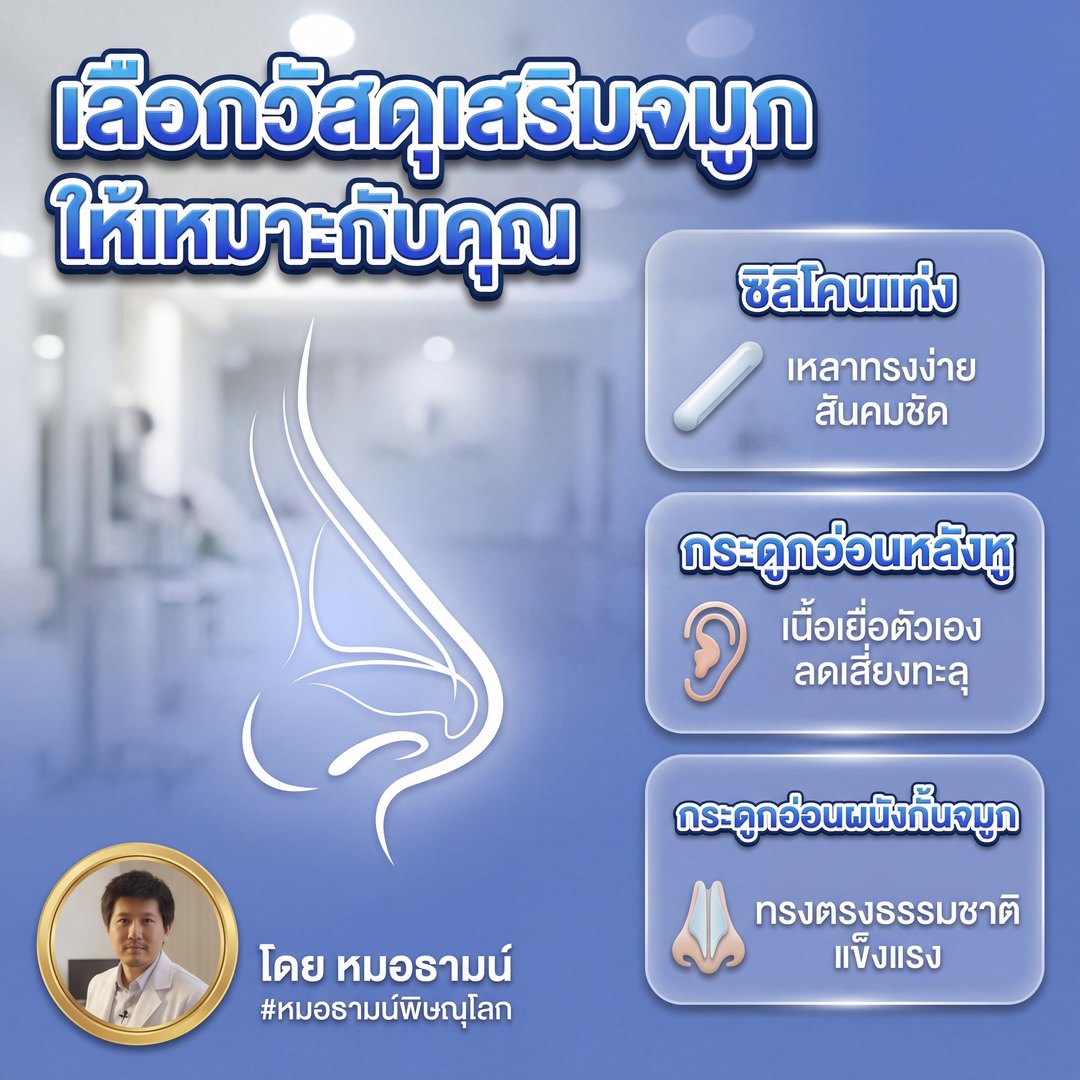
I can confidently say there is no single "best" material in the world; there is only the material that best suits each patient's unique limitations. Throughout my years in the operating room, I have learned that autologous tissue is the most body-friendly option. However, medical-grade silicone still plays a vital role in creating a sharp, well-defined nose bridge.
| Material Type | Main Advantages | Key Limitations | Suitability |
|---|---|---|---|
| Silicone Implant (Medical Grade) | Easy to carve, provides a sharp bridge, highly affordable, and relatively easy to remove or replace if issues arise. | Over time, the body forms a capsule around it, which may make the edges visible or cause deviation if placed in the wrong tissue layer. | Ideal for raising the bridge in patients with adequate skin thickness. |
| Ear Cartilage | Autologous tissue, minimizing the risk of rejection; excellent for preventing silicone breakthrough at the nasal tip. | Limited quantity; requires an additional donor site incision behind the ear to harvest. | Highly suitable for tip grafting, combined with silicone on the bridge (Hybrid Technique). |
| Septal Cartilage | Strong, naturally straight, and located in the same surgical field, allowing for simultaneous harvesting. | Relatively small quantity; may not be available if the patient has had prior nasal surgery or revisions. | Perfect for extending the nasal tip for a beautiful projection using the open technique. |
Regarding pricing, rhinoplasty typically starts from tens of thousands of baht up to hundreds of thousands, depending on structural complexity, chosen techniques, and materials. I highly recommend not making a decision based solely on the cheapest promotion, as future revision surgery costs are almost always several times higher than the initial procedure.
Many patients mistakenly believe that a thick, high silicone implant will give them a stunning, sharp look. However, if your skin is thin and you force a high-projection implant, surface tension will gradually thin the nasal tip skin. This eventually leads to a white reflection, redness, and a high risk of implant breakthrough. Choosing a shape that matches your natural tissue is the safest path forward.
How Long Until Results are Visible? How Long Does It Last?
"When will my nose shape settle after surgery, doctor?"
I always tell patients that rhinoplasty requires patience when waiting for the final result. Our bodies need time to heal wounds and naturally resolve swelling and bruising.
- Day 1 to Day 3: This is when swelling and bruising peak. You may experience tightness and soreness around the eyes. Frequent cold compresses are highly recommended to reduce swelling.
- Day 7 to Day 14: Swelling begins to noticeably decrease. I will schedule an appointment to remove the stitches and the nasal splint. Your nose will still look slightly thicker and higher than its final shape.
- Month 1 to Month 3: Tissues begin to heal, and the skin starts shrinking around the implant. The nose shape will look more natural and refined.
- Month 6 to 1 Year: Internal tissues and scarring completely stabilize. The nose shape visible during this period is the final, long-term result.
Does It Hurt? What Side Effects and Risks Should You Watch Out For?
"I am so afraid of pain, doctor, especially when the local anesthetic is injected."
I will be completely honest: the most painful step of the surgery is "the local anesthetic injection." This takes only a few short seconds. Once the anesthesia is fully effective, you will not feel any pain throughout the procedure. You might only feel some pressure or hear the sounds of instruments. My team and I will keep chatting with you and stay close to ease your anxiety so you can feel completely comfortable.
However, every surgical procedure carries certain risks and complications. I would like you to study this information so we can prevent them together:
- Deviated or Crooked Bridge: This can be caused by a pre-existing crooked bone structure, placing the silicone implant in the wrong tissue layer, or trauma during the early recovery phase.
- Thinning Tip or Breakthrough: Caused by choosing an implant that is too long or projects too high, leading to continuous pressure on the nasal tip skin.
- Infection and Inflammation: Usually occurs early on due to improper wound care or the body reacting to a foreign object.
- Capsular Contracture and Deformity: In the long run, the body may form an excessively thick fibrous capsule that pulls and shortens the nasal tip or causes distortion.

I recommend looking straight into a mirror and visualizing a vertical line down the center of your face, starting from the space between your eyebrows, down the tip of your nose, to the center of your lips. If you notice the bridge clearly leaning to one side after the swelling has fully resolved (around 1 month or more), please return to see me promptly to evaluate and plan a correction early on.
How to Care for Yourself After Surgery to Maintain a Beautiful, Straight Shape
Fifty percent of a beautiful nose result comes from the surgeon's skill and planning in the operating room. The remaining fifty percent comes from the patient's dedication to post-operative self-care. I want you to remember these simple guidelines to prevent the silicone implant from shifting during the early stage.
- Sleep on your back with your head elevated: During the first 2 weeks, do NOT sleep on your side or stomach under any circumstances to prevent pressure on your face that could shift the nose.
- Avoid touching, squeezing, or picking: Refrain from moving your nose forcefully. Avoid wearing heavy glasses that press on the nose bridge during the first month.
- Keep the wound strictly clean: Use a cotton swab moistened with sterile saline to gently wipe away blood crusts and fluid inside the nostrils. Apply prescribed ointment, and do not let water touch the wound directly until the stitches are removed.
Rhinoplasty in Phitsanulok (Depry Clinic)
Throughout my 10+ years of caring for patients in the operating room, I have met many different individuals—from first-time patients full of hope, to those who have suffered from failed procedures and lost their confidence. One resolution I have always held close is to bring my knowledge, experience, and the highest safety standards to care for the people of Phitsanulok and neighboring provinces.
I do not just focus on a single aspect of facial plastic surgery; my extensive surgical experience has given me a deep understanding of Thai facial anatomy and structures. I am committed to treating every patient with honesty, assessing cases realistically, avoiding over-stretching the tissues, and most importantly:
"No matter what the outcome is, I will still be right here, following up on your progress and personally taking care of you at Depry Clinic. I am not going anywhere."
Many patients travel from neighboring provinces such as Phichit, Sukhothai, Uttaradit, Kamphaeng Phet, and Phetchabun to consult with me honestly and directly. I am always happy to welcome everyone. Let's talk first so we can co-design a nose shape that is beautiful, safe, and best suited to you.
Frequently Asked Questions
I have gathered the questions that patients ask me most frequently during consultations so you can use them as a basic guide.
1. For a first-time rhinoplasty, should I use silicone only or also graft ear cartilage for the tip?
If you have thin skin at the nasal tip or want a well-projected, beautiful tip, I always recommend grafting ear cartilage. Your own tissue acts as a protective barrier, preventing the silicone implant from directly pressing on the skin, which significantly reduces the long-term risk of breakthrough.
2. My nose looks crooked in the first 1-2 weeks. Do I need immediate correction?
I advise you to stay calm first. During the first 1-2 weeks, uneven swelling of the tissues on each side often makes the nose look crooked or deviated. I recommend applying warm compresses and waiting for a full month to let the swelling completely subside before evaluating the actual alignment of the silicone implant.
3. Can people with allergies and frequent runny noses get rhinoplasty?
Yes, you can. However, I recommend managing and controlling your allergy symptoms well before the surgery date. If you have a runny nose during recovery, gently dab it away. Never blow your nose forcefully, as this prevents the internal incisions from tearing or becoming infected.
4. Do I have to sleep on my back for the rest of my life after getting rhinoplasty?
Not at all. I only emphasize sleeping on your back with your head elevated during the first month after surgery. This prevents the silicone from shifting before the natural fibrous capsule forms to secure the implant. After the first month, you can sleep on your side normally.
5. What are the signs of an infected nose, and what should I do?
If you notice swelling, redness, or worsening pain after the first 3 days, or if there is fluid mixed with pus draining from the wound, you should return to see me immediately. Treating an infection early with appropriate antibiotics can significantly minimize damage to the nasal tissues.
The information in this article provides basic educational knowledge and is not a medical diagnosis. Rhinoplasty is a surgical procedure that requires a personalized facial structural assessment. I highly recommend scheduling a consultation directly with your treating doctor before making any decisions.
References
These are the medical sources and journals I studied and referenced to write this article, ensuring you receive accurate and reliable information:
- Society of Plastic and Reconstructive Surgeons of Thailand (THPRS): Information on complications and post-operative wound care for rhinoplasty (thprs.org)
- Aline Clinic: Deep dive into 15 things to know before getting your first rhinoplasty and common mistakes (alineclinic.com)
- Apex Medical Center: Mistakes and critical assessments before undergoing rhinoplasty for long-term safety (apexmedicalcenter.co.th)
Written by
ดร.นพ.ณธธรรมภ์ โอภาอภิณัฐฏ์ (หมอธามน์)Clinic physician at de Pry Clinic, Phitsanulok · Thai medical license no. 56524