- What Is Pico Laser? How Does It Work
- What It Can Treat: Melasma, Freckles, Acne Marks, Dark Spots
- Pico Laser vs Q-switched — What's the Difference?
- Melasma: Research Evidence, How Many Sessions, Results
- Freckles: Results and Number of Sessions
- Post-Acne Dark Marks (PIH) and Acne Scars
- Pico Laser Machines — Differences in Wavelength
- Procedure and Preparation
- Pico Laser Pricing and the Factors That Set It
- Safety and Side Effects
- Getting Pico Laser in Phitsanulok — de Pry Clinic
- Frequently Asked Questions
- References and Verification
Melasma, freckles and dark marks are something Thai and Asian people face far more than Westerners, because our skin naturally produces more pigment and is more prone to post-inflammatory hyperpigmentation (PIH). I understand exactly how it feels when you've tried creams or lasers and your skin still hasn't improved — or worse, when treatment leaves your skin darker than before.
Pico Laser is a technology that has drawn a lot of attention recently, because it differs from older lasers in the way it destroys pigment. In this article, Dr. Time will explain the mechanism, real study results from PubMed, a comparison with Q-switched lasers, and tell you frankly which problems it suits and who it's right for.
- ✅ Melasma — especially 1064 nm in Asian skin (low PIH)
- ✅ Freckles / dark patches — fast results in 1–3 sessions
- ✅ Post-acne dark marks (PIH) — better than Q-switched in darker skin
- ✅ Those who had Q-switched before and ended up with darker skin or poor results
- ⚠️ Deep / hormonal melasma — other factors must be controlled too; the laser alone is not enough
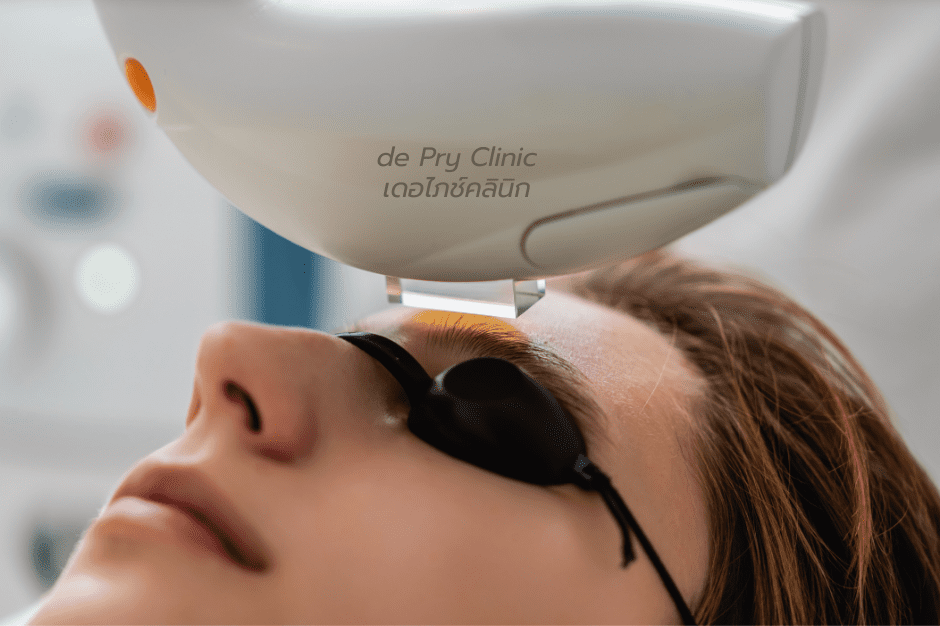
What Is Pico Laser? How Does It Work
Pico Laser is a laser that delivers energy in extremely short pulses on the scale of picoseconds (10⁻¹² seconds) — one trillionth of a second. That speed is 100–1,000 times faster than the nanosecond Q-switched lasers used before it.
Photoacoustic Effect — the Mechanism That Makes Pico Superior
When the pulse is fast enough, the energy is absorbed by the pigment before heat can spread, producing a Photoacoustic Effect (an acoustic shockwave) that shatters the pigment into far smaller, dust-like particles. The body can then clear them away more easily and quickly.
This differs from Q-switched lasers, which use the Photothermal Effect (heat) that spreads into surrounding tissue, carrying a greater risk of inflammation and PIH (post-inflammatory darkening).
Why Pico Laser Matters for Asian Skin
Asian skin (Fitzpatrick IV–VI) has more active melanocytes and tends to develop PIH more easily after inflammation. Because Pico produces less heat, that means a significantly lower risk of PIH — which is very important when treating melasma and dark marks in Thai patients.
What It Can Treat: Melasma, Freckles, Acne Marks, Dark Spots
Got questions? Dr. Time offers personalized, honest consultations — no upselling.
Consult Dr. TimePico Laser can be used for many skin concerns, but it doesn't deliver equal results across all of them:
| Skin Concern | Recommended Wavelength | Average Sessions | Results Reported in Research | Difficulty |
|---|---|---|---|---|
| Melasma | 1064 nm | 4–5 sessions | 76.9% ≥51% improvement (pico+hydroquinone vs hydroquinone alone) | ⭐⭐⭐ Hard — often recurs |
| Freckles | 730 nm, 1064 nm | 1–3 sessions | 74.46% clearance; no recurrence within 6 months | ⭐ Easy — responds well |
| Post-Acne Dark Marks (PIH) | 1064 nm | 3–5 sessions | 53.8% excellent response; 30.8% good response in Asian skin | ⭐⭐ Moderate |
| Dark Spots / Age Spots | 532 nm, 1064 nm | 1–3 sessions | Good results when the pigment layer is superficial | ⭐⭐ Moderate |
| Tattoos | Depends on color | 5–15 sessions | Clearly better than Q-switched | ⭐⭐⭐ Very hard |
| Even Skin Tone (PICO Toning) | 1064 nm (low fluence) | 4–6 sessions | Brighter, more even skin overall | ⭐⭐ Moderate |
Pico Laser vs Q-switched — What's the Difference?
This is a question I hear very often, because many people have had Q-switched treatment before and ask whether Pico is worth more. The answer is it depends on the problem you want to treat — but overall the research supports Pico in many cases.
| Comparison Dimension | Pico Laser | Q-switched Laser |
|---|---|---|
| Pulse Speed | 750–930 ps (10⁻¹² seconds) | 1–10 ns (10⁻⁹ seconds) — 1,000× slower |
| Mechanism | Photoacoustic — shatters pigment into fine dust | Photothermal — applies heat, larger fragments |
| Number of Sessions | Fewer (melasma: 4–5, freckles: 1–3) | More |
| PIH Risk | Low (~4.8% in Asian skin) | Higher |
| Pain | Less painful (evidence-backed) | More painful |
| Patient Satisfaction | Significantly higher (p=0.014) | Lower |
| Price Per Session | More expensive (higher machine cost) | Cheaper per session |
| Best For | Melasma, PIH, Asian skin Fitzpatrick IV+ | Superficial dark spots, easy tattoos, price as the main factor |
Choose Pico if: you have darker / Asian skin, you're treating melasma or PIH, you've had Q-switched before and your skin darkened, or you want fewer sessions and less pain.
Q-switched still works if: the problem is shallow and uncomplicated, you have fair Fitzpatrick I–III skin, or price is the main factor.
Melasma: Research Evidence, How Many Sessions, Results
What Is Melasma and Why Is It Hard to Treat
Melasma is an increase in melanin pigment in the dermis and epidermis. It is most common in Asian women aged 30–50 and usually stems from UV radiation + hormones + genetics. It is much harder to treat than freckles because it is rooted deep, and it tends to come back if the triggering factors aren't controlled.
Research Evidence on Pico + Melasma
- 2023 Meta-analysis (PMID 36897459) analyzed 28 studies and found that Pico 1064 nm significantly reduced the MASI score (p = 0.04), while Pico 755 nm was no better than topical treatment and even increased PIH risk in the sample group.
- Split-face RCT (PMID 28906574) in Korean patients found that Pico 1064/595 nm + 2% Hydroquinone cream achieved 76.9% reaching ≥51% improvement, compared with 2.6% using Hydroquinone alone, and the Pico group had far lower PIH because the fast pulse reduces the photothermal effect.
Pico Laser really does reduce melasma, but melasma tends to return if you're still exposed to sunlight, have hormonal fluctuations, or use birth control with high estrogen. So the laser must be paired with ongoing care: SPF 50+ sunscreen every day, avoiding sun between 10:00 and 16:00, and possibly using a brightening serum afterward.
The Advice I Give Melasma Patients
For melasma, I usually recommend 1064 nm PICO Toning (Low Fluence) rather than firing at full High Fluence, because PICO Toning distributes the energy more evenly — results come gradually but it is safer in the long run — combined with the clinic's whitening / brightening protocol.
Freckles: Results and Number of Sessions
Freckles Respond the Best
Of all the problems treated with Pico Laser, freckles (ephelides) respond the best and the fastest, because freckle pigment sits superficially (in the epidermis) and has clear borders.
Research Evidence
- A study (PMID 39741582) used a 730-nm Pico Laser to treat freckles and found an average clearance of 74.46%, requiring an average of only 1 session, with a mean GAIS score of 4.13 (very good to excellent).
- Study PMID 30357871 in Asian skin found that for freckles (ephelides) an average of only 1 session was needed, compared with 4.5 sessions for melasma. The PIH rate in the freckle group was only 4.8%.
If your main problem is freckles, Pico Laser delivers very good results and needs fewer sessions than expected. Most people see a clear difference after 1–2 sessions, and freckles usually don't return in the short term (if you avoid the sun well).
Post-Acne Dark Marks (PIH) and Acne Scars
What Is PIH and Why Can Pico Help
Post-Inflammatory Hyperpigmentation (PIH) is the dark mark that appears after inflammation — whether from acne, a wound, or even heat-based skin treatments. It's common in Asian people because melanocytes are more easily stimulated. Pico Laser suits PIH because the Photoacoustic Effect breaks down dark pigment with less heat, lowering the chance of triggering new PIH.
Acne Scars — Pico vs Fractional
For depressed (atrophic) acne scars, Pico Laser is not the best choice, because acne pits require collagen stimulation, which a Fractional Laser (CO2 or Erbium) does better. That said, Pico Fractional (Diffractive Optics) is a special mode in some newer Pico machines that combines PIH treatment and collagen stimulation at the same time.
- ✅ Post-acne dark marks (PIH) — Pico 1064 nm works well
- ✅ Acne redness (PIE) — Pico 532 nm can help
- ⚠️ Acne pits — Pico Fractional Mode only, not ordinary Pico Toning
- ❌ Deep acne scars (Boxcar / Ice Pick) — Fractional CO2 gives better results
Pico Laser Machines — Differences in Wavelength
Wavelengths Used in the Clinic
Pico Laser machines come in several wavelengths, each absorbed differently by pigment:
| Wavelength | Absorbed By | Best For | PIH Risk in Dark Skin |
|---|---|---|---|
| 1064 nm (Nd:YAG) | Dark melanin / oxyhemoglobin | Melasma, PIH, dark skin Fitzpatrick IV–VI, PICO Toning | Lowest — recommended for Thai patients |
| 755 nm (Alexandrite) | Melanin | Freckles, tattoos, fair skin | Moderate — meta-analysis found PIH in Asian melasma |
| 730 nm | Superficial melanin | Freckles — excellent results (74.46% clearance) | Low–moderate |
| 532 nm (KTP) | Melanin / oxyhemoglobin | Redness, superficial brown marks, red/yellow tattoos | High — use caution in dark skin |
Pico Laser Machines Used in Thai Clinics
Popular machines backed by research data:
- PicoWay (Syneron-Candela) — has 785 nm + 532 nm + 1064 nm, the fastest pulse (as low as ~300 ps), and includes a Fractional handpiece.
- PicoSure (Cynosure) — the first to receive FDA clearance, primarily 755 nm, with 532 nm and 1064 nm added in Gen 2+.
- Discovery PICO (Quanta) — has both 1064 + 532 nm in a single machine.
- enlighten SR/II (Cutera) — a popular model in Thai clinics with 532/1064 nm, supporting both Pico and Nano pulses.
Thai skin (Fitzpatrick III–V) should focus on 1064 nm, because it produces less heat and lower PIH. The 2023 meta-analysis confirms that 755 nm is not suitable for melasma in Asians. A doctor should choose the wavelength based on your skin and your problem — not on "whatever machine is available."
Procedure and Preparation
Before Pico Laser
- Stop retinoid creams (Retinol, Tretinoin) 5–7 days before treatment
- Avoid strong sun exposure for 2–4 weeks beforehand
- Tell your doctor if you take photosensitizing drugs such as Doxycycline or Tetracycline
- Disclose any history of herpes (HSV), as you may need preventive medication
- Don't apply cream, powder or makeup on the day
Steps on the Day of Treatment
Apply numbing cream (EMLA/Lidocaine cream) for 30–45 minutes → wash off → the doctor sets the fluence and spot size according to the problem → the laser is fired through the handpiece for about 20–45 minutes → a cold compress reduces redness → apply post-care cream → you can go home immediately.
After Pico Laser — the Most Important Thing
Consistent daily sun protection (even on days you stay indoors, because UV passes through glass) is the single factor that best prevents melasma from returning and prevents PIH. Apply it thickly enough — about two finger-lengths — and reapply every 2 hours when outdoors.
- Days 1–3: skin may be red and slightly warm; some people get tiny micro-crusts — let them fall off on their own, don't pick them.
- Days 3–7: skin returns to normal; some people see freckles/dark spots darken first (a good sign = the pigment is rising before it sheds).
- Weeks 2–4: results begin to show clearly.
- Use a gentle moisturizer with no AHA/BHA/retinoid for the first 5–7 days.
Pico Laser Pricing and the Factors That Set It
Why Is Pico Laser More Expensive Than Q-switched?
Pico Laser machines cost 5–10 times more than Q-switched machines, which makes the cost per session higher too. But if you consider the total cost (cost per result), the smaller number of sessions can make Pico more worthwhile in the long run for certain problems.
Factors That Set the Price Per Session
- The problem being treated — melasma requires more shots than freckles
- Treatment area — spot treatment uses fewer than the whole face
- The machine used — newer / imported brands are usually pricier
- The chosen protocol — PICO Toning (Low Fluence) vs Full Power differ
If you see an ad for Pico Laser at a very low price, you should ask which machine it uses, which wavelengths it has, and what fluence is applied — because low-power treatment set at a very low fluence can be called "Pico" but deliver results no better than ordinary Toning. Dr. Time uses fully FDA-registered machines and states the fluence clearly every time.
Safety and Side Effects
Common Side Effects (Temporary)
- Redness and warmth for 1–4 hours
- Slight swelling, especially around the eyes, subsiding within 24 hours
- Minor micro-crusts, falling off on their own in 3–7 days
- Purpura (small purple spots) in some high-fluence protocols — resolving in 5–10 days
Side Effects to Watch For
- PIH (subsequent dark marks) — seen in ~4.8% of Asian skin, especially when using 755/532 nm in Fitzpatrick IV+; choosing 1064 nm greatly reduces the risk.
- Hypopigmentation (white spots) — very rare, but the risk rises if too high a fluence is used over multiple rounds.
- Herpes flare-up — in people with latent HSV, take preventive medication beforehand.
Key Contraindications
- Pregnancy — no wavelength should be used
- Taking Isotretinoin (Accutane) — must stop for at least 6 months
- An active skin infection in the treatment area
- Very dark skin from recent sun exposure — wait until the skin returns to normal first
Getting Pico Laser in Phitsanulok — de Pry Clinic
At de Pry Clinic in Phitsanulok, Dr. Time assesses your skin concern every time, to select the wavelength, fluence and protocol that suit your skin specifically — not the same protocol for everyone.
For those who had Q-switched before and ended up with darker skin or poor results — I'm glad to talk it through and assess what caused it, and whether Pico can help in your case, before you decide to go ahead.
- Treating melasma — PICO Toning 1064 nm with a brightening protocol
- Removing freckles / dark patches — 1064 nm or 730 nm depending on the skin
- Post-acne dark marks (PIH) + redness (PIE)
- Overall brighter skin (Full-face PICO Toning)
If you're in Phitsanulok or a nearby province and want to know which Pico Laser wavelength suits your skin concern and how many sessions you'll need — you can consult Dr. Time first for free, at no cost.
Frequently Asked Questions
Does Pico Laser hurt?
It hurts less than Q-switched. A study (PMID 28758261) found that Pico was less painful in a direct comparison. Applying numbing cream beforehand greatly reduces the discomfort. Most patients describe it as a light rubber-band snap on the face.
Can Pico Laser really brighten the face?
Yes — with the right protocol. PICO Toning (Low Fluence 1064 nm) distributes energy evenly across the whole face, helping even out skin tone, reduce various dark marks, and make the skin look brighter overall. It's not a superficial "whitening" but rather your own skin becoming more naturally radiant.
How many Pico sessions before I see results?
It depends on the problem — freckles may show clear results after 1 session, melasma needs 4–5 sessions, and PIH dark marks need 3–5. A clear difference is generally seen after 2–3 sessions.
After Pico Laser, can I go out in the sun and work normally?
Yes, but you must apply SPF 50+ sunscreen every time and reapply frequently during the first 2 weeks. If you have to be in the sun for long periods, a hat or umbrella is recommended too. The most important thing is to avoid strong sun exposure during this period, otherwise melasma may return faster.
Can Pico help with deep (dermal) melasma?
Pico 1064 nm penetrates deeper than Pico 755 nm, so it helps dermal melasma better. But deep melasma is still harder to treat than superficial melasma — it may take more sessions, and the result may not be 100% complete. Controlling the triggering factors (sun + hormones) remains very important.
References
These are the studies and sources I used in writing this article — click through to read the originals if you'd like to verify them:
- 2023 Meta-analysis (PMID 36897459) — pooling 21 studies on Pico for melasma, with PIH figures in Asian skin (2023): pubmed.ncbi.nlm.nih.gov/36897459/
- Korean Split-face RCT (PMID 28906574) — split-face in 25 people, Pico 1064/595 nm with Hydroquinone for Asian melasma (2018): pubmed.ncbi.nlm.nih.gov/28906574/
- 730-nm Pico for freckles (PMID 39741582) — 74.46% clearance rate in Asian freckles (2024): pubmed.ncbi.nlm.nih.gov/39741582/
- Pico in Asian skin, dual-wavelength (PMID 30357871) — dark-patch results in Fitzpatrick III–V with dual wavelengths (2018): pubmed.ncbi.nlm.nih.gov/30357871/
- Q-switched vs Pico 532 nm (PMID 29948457) — a direct comparison of results and PIH between the two technologies (2019): pubmed.ncbi.nlm.nih.gov/29948457/
- DermNet NZ — Picosecond Laser — dermatological information on the mechanism and use of Pico: dermnetnz.org
- AAD — Melasma Treatment — American Academy of Dermatology guidance on treating melasma: aad.org
Written by
ดร.นพ.ณธธรรมภ์ โอภาอภิณัฐฏ์ (หมอธามน์)Clinic physician at de Pry Clinic, Phitsanulok · Thai medical license no. 56524