
- What Is OP'ERA REV? Why It's Called Glass Skin
- The Technology Inside: Triple HA in Two Molecular Sizes (Explained Simply)
- How Does It Work in Our Skin? Why It Stimulates Collagen
- The Visible Results — What Kind of Skin You'll Get Back
- Who Is OP'ERA REV Right For, and Who Should Consult First
- Compared with Other Skin Boosters (Profhilo, Ejal 40, Belotero)
- Which Areas Can Be Treated, How Many Sessions, How Long It Lasts
- Getting OP'ERA REV in Phitsanulok — de Pry Clinic
- Frequently Asked Questions
- References and Verification
OP'ERA REV is a skin booster in the bio-remodeling category, imported from Italy. It uses high-concentration hyaluronic acid (HA) in two molecular sizes, injected into the skin to stimulate collagen and elastin, leaving the skin hydrated, smooth, firm, and dewy and radiant like Glass Skin. It is not a filler that adds volume to plump up the face — instead it restores skin quality from within. In this article, Dr. Time will walk you through everything from what it is, how it works, who it's for, and how many sessions you need, all the way to how it differs from Profhilo — explained so clearly that even someone who knows nothing about it can understand.
What Is OP'ERA REV? Why It's Called Glass Skin
These days, when you open your phone, many of you have probably seen the term "Glass Skin" — that clear, dewy skin like glass — passing by your eyes very often, and you can't help but wonder, "How do I get skin like that? Can mine look like that too?" I understand this feeling well, because dewy, supple skin really does make a face look healthy and naturally younger.
Let me explain it as simply as possible first: OP'ERA REV is what we call a "skin booster" in the bio-remodeling category. To picture it, it takes high-concentration hyaluronic acid, or HA (a water-binding substance our body naturally already has), and injects it into the skin to both add hydration and stimulate the skin to produce its own new collagen. This product is imported from Italy.
And the point that many people often get mixed up about is — OP'ERA REV is not a filler used to plump up the face or sculpt its shape. Rather, it is "skin work" that makes the overall skin look dewy, smooth, firm, and healthier. It's right for people who don't want to change their facial structure and just want their own skin to look better in a natural way.
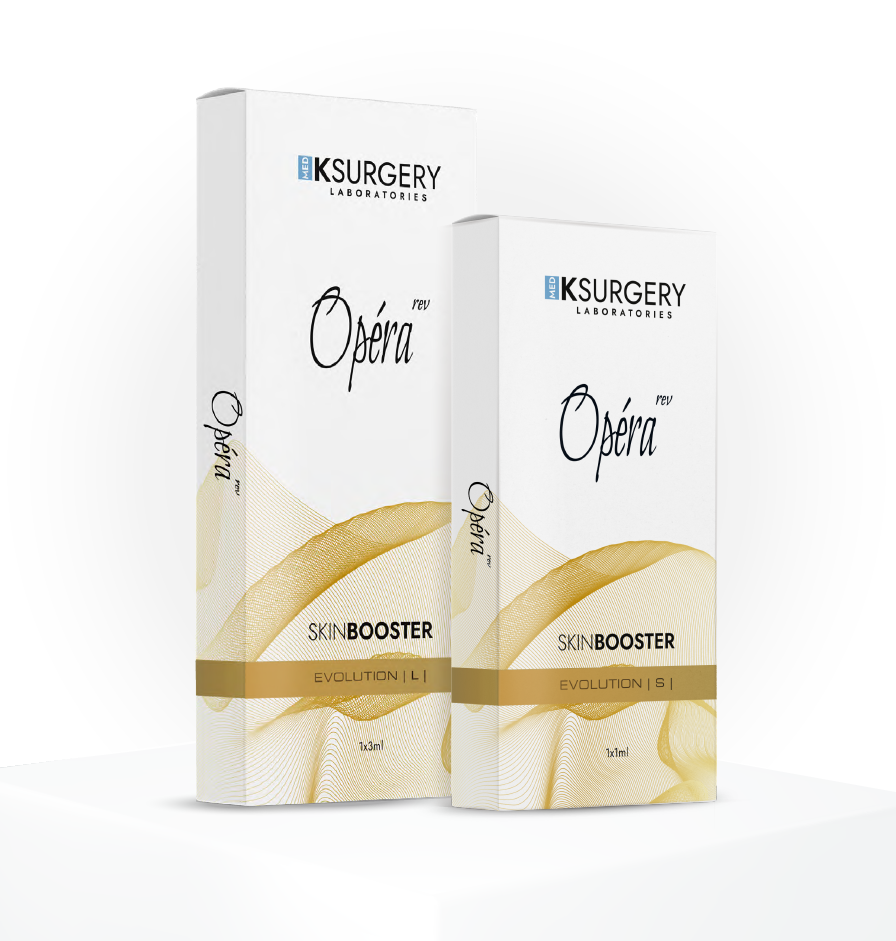
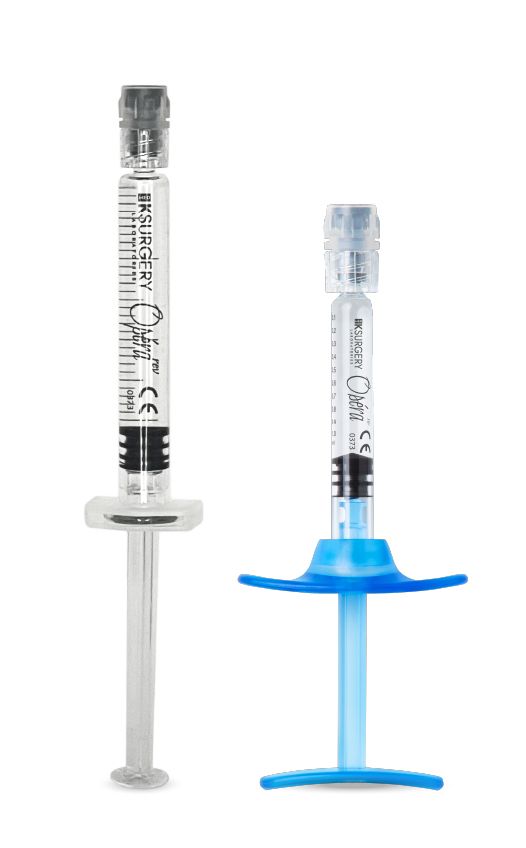
OP'ERA REV is manufactured by K-Surgery Laboratories in Italy and is certified as a CE Class III medical device, which is a high-level European safety standard. I choose to use only products whose origins can be verified, because good skin work has to start with a product you can trust first.
The Technology Inside: Triple HA in Two Molecular Sizes (Explained Simply)
Got questions? Dr. Time offers personalized, honest consultations — no upselling.
Consult Dr. TimeIf a patient asks me, "So how is it different from injecting saline or ordinary HA?" this is what I'll explain, because the details inside OP'ERA REV are the reason it works so well.
It uses HA in two molecular sizes working together. Imagine our skin is a sponge — each size of HA molecule plays a different role:
- HA molecule 1,000 kDa — the smaller one, which penetrates deeper to restore the skin at a deep level and helps the skin produce new cells better
- HA molecule 2,000 kDa — the larger one, which binds a lot of water and helps with plumpness, firmness, and lifting
The HA concentration is 2% (20 mg/ml), equal to 60 mg in one syringe (3 ml), and the pH is 7.0, which is close to that of our skin, so it is gentle. Another point I like is that it uses a very low amount of cross-linker (BDDE), just 0.09% — considered small compared with ordinary fillers. Its job is to help "coat" the HA so it breaks down more slowly and stimulates the skin for longer, while still preserving the natural quality of the skin work.
HA is not a foreign substance — it's something our skin already has and that declines with age. Adding good-quality HA back in is therefore like "adding water to a sponge that's starting to dry out" and inviting the skin to get back to work producing its own collagen again.
How Does It Work in Our Skin? Why It Stimulates Collagen
Let me explain it in simple terms. Normally, as we get older — or face the sun, stress, and lack of sleep — the skin gradually loses HA and collagen, making it start to dry out, dull, and sag. When we inject high-concentration HA back into the skin, it does two things at the same time.
The first is to bind water, making the skin dewy and more hydrated, visible in the early period. The second, which is more important, is that the HA stimulates the fiber-producing cells in the skin called fibroblasts to return to producing new collagen and elastin. Several research reviews have reached the same conclusion: that injecting HA into the skin genuinely improves skin quality — in hydration, elasticity, and smoothness — and tissue-level studies have found that HA can stimulate increased production of type 1 and type 3 collagen for many weeks.
This is the reason bio-remodeling work gives results that look so "natural" — because it isn't pushing or adding anything that distorts the shape, but rather inviting the skin to repair itself.
The Visible Results — What Kind of Skin You'll Get Back
Most patients who come to consult me about this don't want a changed face. They just say, "I want my skin to look healthier, to hold makeup well, to look fresh and not tired," and OP'ERA REV is designed to answer exactly this. The things many people notice are:
- Dewy, radiant Glass Skin — looking supple and deeply hydrated within the skin
- Smoother skin — skin texture looks more even and pores appear smaller
- Clearer and brighter — the face looks more luminous, not dull
- Slight lifting and firming — the skin looks firmer and bouncier, and fine lines appear shallower
- Stronger skin in the long term — helps restore skin damaged by sunlight
I'd like you to understand truthfully that results differ from person to person, depending on your original skin condition, age, and how you care for yourself afterward. People who take care of their skin, use sunscreen well, and continue treatment on schedule usually get clearer results that last longer.
Who Is OP'ERA REV Right For, and Who Should Consult First
Before deciding, I'd like you to check yourself to see whether you're in the right group, and whether there's anything you should discuss with me first. Here's a simple summary.
Right for
- Ages 25 to 45 who want to care for their skin to look healthy
- Dry skin lacking dewiness, where makeup won't hold
- Skin that's starting to sag, with fine lines on the face or neck
- People who work hard, sleep little, with tired skin
- Those who want skin work but don't yet want filler injections
Should consult the doctor first
- Currently pregnant or breastfeeding
- Have an infection, rash, or inflamed acne in the area to be treated
- Have a history of HA allergy or previous allergy to injectable skin products
- Have certain underlying conditions or immune-system conditions
Even if you have something in the "should consult first" group, it doesn't necessarily mean you can't have the treatment. It just means I need to assess you individually first, for your own safety. Getting to genuinely talk with the doctor before treatment is what makes skin work safe and reassuring.
Compared with Other Skin Boosters (Profhilo, Ejal 40, Belotero)
A question I often get is, "How is it different from Profhilo, which I've heard of?" So I've made a comparison table to make it easy to see. Everything here is a skin booster in the bio-remodeling category, but each one excels in a different way. There's no such thing as "which is the best" — only "which one is best for your skin."
| Topic | OP'ERA REV | Profhilo | Ejal 40 | Belotero Revive |
|---|---|---|---|---|
| Country | Italy | Italy | Italy | Switzerland |
| Volume/syringe | 3 ml | 2 ml | 2 ml | 1 ml |
| HA type | Low cross-linked, 1,000-2,000 kDa | Non cross-linked, large+small | Non cross-linked, 1,200-1,800 kDa | Cross-linked, small molecule |
| Concentration | 60 mg/3ml (2%) | 64 mg/2ml (3.2%) | 40 mg/2ml (2%) | 20 mg/1ml (2%) |
| Texture | Soft-even gel | Honey-like | Fluid HA | Smooth soft gel |
| Areas that can be treated | Face, neck, hands, décolletage | Face, neck, hands | Face | Face |
You can see that OP'ERA REV's strengths are its large volume per syringe (3 ml) and that it can cover many areas, even the décolletage and the backs of the hands. Profhilo, meanwhile, has its own strength in a texture that flows and spreads smoothly. To choose the right one, I'll look mainly at your skin and your goals. If you'd like to learn more about Profhilo, you can read the article What Is Profhilo.
Which Areas Can Be Treated, How Many Sessions, How Long It Lasts
OP'ERA REV can treat more areas than many people think — not just the face, but also the neck, the backs of the hands, and the décolletage, which are spots that clearly show your age but that people often forget to care for. Let me explain the course and timeline as a timeline so you can picture it.
- Session 1 — begins stimulating the skin and adding hydration; during this period the skin will start to look dewier
- Session 2 (about 1-2 months apart) — reinforces continued collagen accumulation in the skin; the results in firmness and smoothness become clearer
- Session 3 (if your skin needs it) — for skin that's very tired or for those who want clear results, completing the full course for fully satisfying results
- Ongoing care (maintenance) — after completing the course, top up twice a year, every 4-6 months, to keep the results lasting
Overall, results last about 6 to 9 months, depending on each person's skin condition. People who take care of their skin and continue treatment on schedule usually get more beautiful results that last longer.
- OP'ERA REV is an HA skin booster that restores skin quality — not a volume-adding filler
- It excels in volume at 3 ml per syringe, can treat the face, neck, hands, and décolletage, and results last 6-9 months
- Done as a course of 2-3 sessions for clear results, and you should always have the doctor assess you first
Getting OP'ERA REV in Phitsanulok — de Pry Clinic
If you're in Phitsanulok or a nearby province and want to care for your skin to be dewy, radiant, and healthy with a real doctor overseeing every step, de Pry Clinic is glad to look after you. Many patients travel to see me from Phichit, Sukhothai, Uttaradit, Kamphaeng Phet, and Phetchabun, because they want someone who assesses honestly, uses only products that can be verified with the FDA, and doesn't sell more than necessary.
Here, Dr. Time assesses and looks after every case personally — from examining your skin condition, planning a course suited to you, performing the treatment, all the way to advising on aftercare. You can ask any question until you feel at ease, then decide.
If you want to start caring for your skin to be dewy and radiant without fear, because a real doctor oversees every step, message Dr. Time to talk anytime. Consultation is free, with no charge.
Frequently Asked Questions
What is OP'ERA REV, and how is it different from ordinary filler?
OP'ERA REV is a skin booster in the bio-remodeling category, imported from Italy. It uses high-concentration hyaluronic acid (HA) injected into the skin to stimulate collagen and elastin, making the skin dewy, hydrated, smooth, and firmer. It differs from filler in that filler focuses on adding volume to create shape, while OP'ERA REV focuses on restoring overall skin quality to look healthy and natural. It's right for those who want skin work rather than facial-structure work.
When will I see results from OP'ERA REV, and how long do they last?
In the first weeks, the skin will start to look dewier and more hydrated from the water-binding HA. The results in firmness and smoother skin texture gradually become clearer with each session, because the body needs time to produce new collagen. In general, results last about 6 to 9 months, depending on each person's skin condition, age, and self-care.
How many sessions before I see clear results?
Most often, a course of 2 to 3 sessions is recommended, spaced about 1 to 2 months apart, to let the skin gradually recover and accumulate collagen. After completing the course, you can continue care twice a year, every 4 to 6 months. The number of sessions that truly suits you is something I'll assess from your skin condition at the appointment.
Does an OP'ERA REV injection hurt? Is recovery long?
Most people can carry on with life as usual after the treatment. There may be small needle marks, redness and swelling, or small bumps at the injection points in the early period, which usually subside on their own within 1 to 2 days. I use a small needle and assess suitability before treatment. If you're afraid of pain, you can tell me — there are ways to make it more comfortable.
Who is OP'ERA REV right for, and who should consult first?
It's right for people around ages 25 to 45 whose skin is starting to dry out, lacks dewiness, won't hold makeup, is starting to sag slightly, or has fine lines on the face or neck — or people who work hard, rest little, with tired skin. Those who should consult the doctor first are people who are pregnant or breastfeeding, have an infection or rash in the area to be treated, have a history of HA allergy, or have certain underlying conditions.
How is OP'ERA REV different from Profhilo?
Both are skin boosters in the bio-remodeling category from Italy. The main difference is that OP'ERA REV has a volume of 3 ml per syringe (more than many in the category), uses HA in two molecular sizes of 1,000 to 2,000 kDa in a low cross-linked form, and can be done across a wide range — the face, neck, hands, and décolletage. Profhilo, meanwhile, is a non-cross-linked HA with a smooth, honey-like texture that flows. Both give healthy-looking skin results; the choice depends on each person's skin condition and goals.
I want to get OP'ERA REV in Phitsanulok — where should I go?
You can get it at de Pry Clinic, Phitsanulok, where Dr. Time assesses and looks after every case personally, uses only products that have passed FDA verification, and plans a course suited to your skin. You can consult beforehand at no charge, with no course being pushed on you.
References and Verification
I'd like you to be able to verify the information I use for yourself — here are the references this article draws from. Click to read the originals:
- PubMed Central — Systematic Review — a research review concluding that HA injection genuinely improves facial skin quality (hydration, elasticity, smoothness): pmc.ncbi.nlm.nih.gov
- PubMed — a tissue-level study finding that HA can stimulate the production of type 1 and type 3 collagen in the skin for many weeks: pubmed.ncbi.nlm.nih.gov
- PubMed — a review article on using HA to restore and remodel the skin: pubmed.ncbi.nlm.nih.gov
- U.S. FDA — Dermal Fillers — safety and regulatory information for injectable hyaluronic acid skin products: fda.gov
- Thai Food and Drug Administration (FDA) — the system for verifying registrations and health products, which you can use to check before treatment: oryor.com