
Is a nose thread lift safe? Dr. Time's short answer
The question has come up again after a patient in Phatthalung raised concerns about the material used in a nose thread lift. If you are considering the procedure, it makes sense to know what will go into your nose before you pay or proceed.
A nose thread lift carries risks, but there are practical ways to reduce them: have a doctor assess you and check the name and type of thread before its package is opened.
Know who will perform the treatment and where to go if something feels wrong afterward. No approach can promise safety in every case.
What should we check after the Phatthalung news?
Got questions? Dr. Time offers personalized, honest consultations — no upselling.
Consult Dr. TimeIn a Banmuang report dated 24 September 2026, a patient said inflammation followed a nose thread lift and alleged that material removed from the nose was fishing line.
The report does not include laboratory identification of the material or a conclusion from a government agency. It would be wrong to assume from this report that every clinic or thread is the same.
Before treatment, get the material name and the treating doctor's details. If you have already had treatment and develop unusual symptoms, have a doctor examine your nose; you do not need to wait for the news case to be resolved.
What is a nose thread lift?
A nose thread lift places medical threads beneath the skin to support or adjust part of the nose's shape.
Nose-specific research has studied the technique in selected patients. Its effect is temporary, so a doctor should assess your nasal structure first.
How do absorbable and non-absorbable threads differ?
Absorbable threads gradually break down in the body. Non-absorbable threads remain in the tissue.
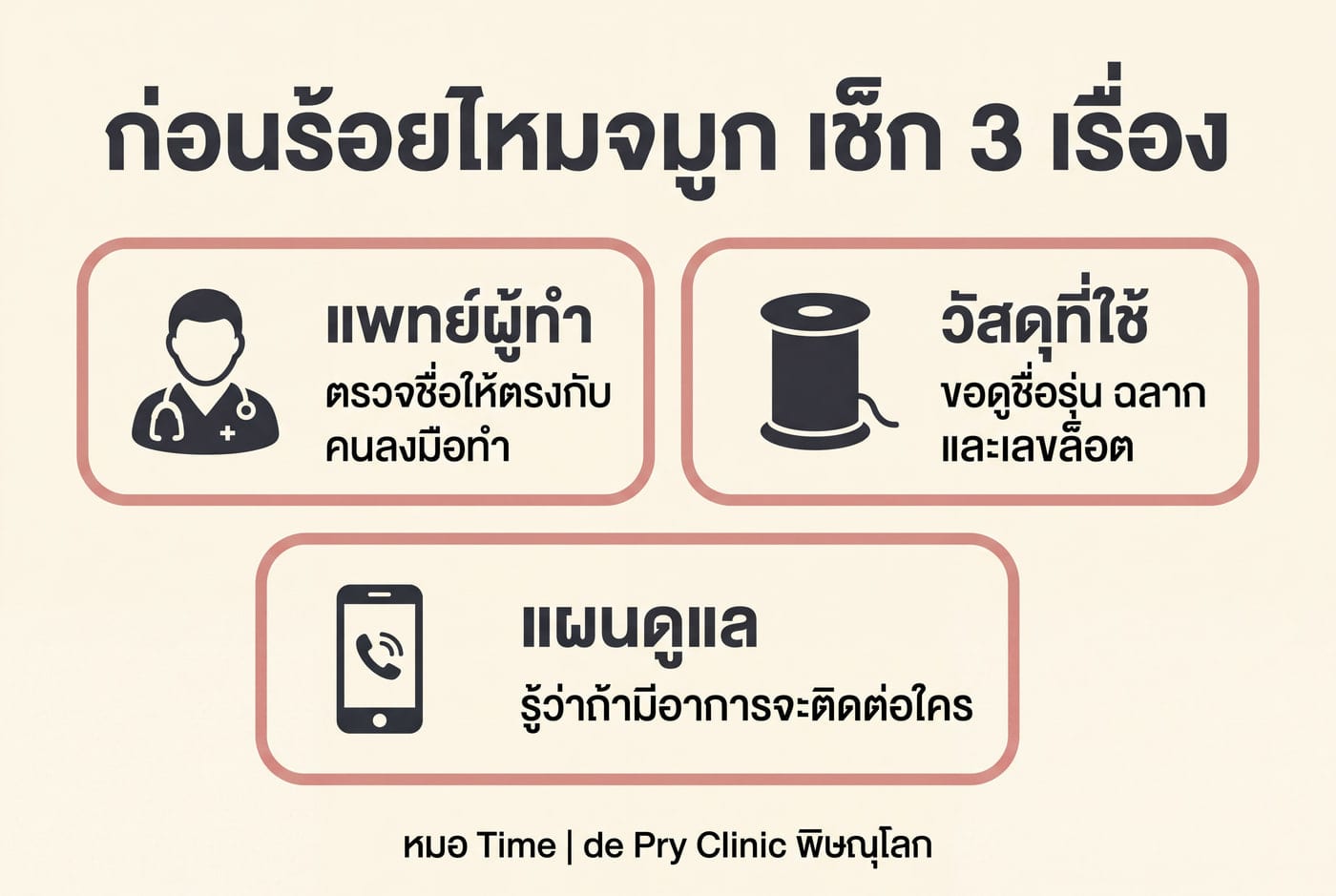
The word “thread” alone is therefore not enough information. Ask for the material, model, and manufacturer information for the exact product to be used.
“What is this thread called, is it absorbable, and what is the follow-up plan if I have a problem?” You have every right to ask.
What can a nose thread lift improve?
Some people want a modest change to the bridge or tip without surgery. Studies describe temporary contour changes in appropriately selected patients.
Threads do not suit every nose, and they cannot correct breathing problems or structural issues that need surgery.
Tell your doctor which feature you want to change and by how much. If you want to reshape the entire nasal structure, we should discuss other options rather than ask threads to do more than they can.
Who might be suitable, and who needs careful assessment?
Someone seeking a small, temporary change may discuss this option with a doctor. Disclose previous nasal procedures, filler, thin skin, past infection, and conditions that affect healing. I assess the actual nose and your goals, rather than choosing a procedure from a sample photo alone.
If your nose is already red, painful, or producing pus, have that examined and treated first. An aesthetic procedure should not be used to cover up a problem.
How can I check absorbable versus non-absorbable threads?
The thread type affects longer-term care. Reviews report differences in some complications by material, but no type is safe for everyone.
I look for materials that can be traced and explain their limits before treatment.
| What to ask | Absorbable threads | Non-absorbable threads |
|---|---|---|
| How long does the material remain? | It gradually absorbs according to the product. | It remains in the tissue and needs a longer-term care plan. |
| What should I check first? | Model, label, instructions, and that model's absorption information. | Model, label, reason for using it, and the plan if removal becomes necessary. |
| What if symptoms appear? | See a doctor; do not simply wait for the thread to dissolve. | See a doctor to assess the symptoms and retained material. |
Does a package alone prove a thread is genuine?
The package is a starting point. Check that the product name, model, lot number, expiry date, and instructions match. If you have questions about medical-device authorization, use the Thai FDA Medical Device Control Division channels or contact the agency. Do not judge by packaging colour or verbal assurances alone.
How much does a nose thread lift cost, and what should I ask before paying?
A price quoted in a news story cannot stand in for your own quote: thread type, number of threads, and medical assessment vary. Before agreeing, request a written breakdown of materials, quantity, doctor's fees, follow-up, and terms for managing complications.
A high price does not guarantee zero risk; a low price does not prove the wrong material was used. What you can verify is the product, the treating doctor, and the plan if there is a problem.
When will I see a change, and how long will it last?
You may see a change immediately alongside swelling, so the first day is not the final result. Duration varies with the material, technique, and your tissue.
Once we know the exact thread model, I can discuss the manufacturer's information for that product. There is no single absorption deadline for every thread.
Feeling something under the skin does not identify its material. If you are worried or have pain, let a doctor examine you and review the material record.
Does it hurt? When should I see a doctor afterward?
Some tightness, mild swelling, or bruising can occur. Contact the treating facility promptly if symptoms worsen rather than gradually improve.
In a nose thread lift study, some patients developed tip inflammation several weeks later and required thread removal. Problems can appear after the immediate recovery period.
Which symptoms call for prompt assessment?
Seek medical care promptly for increasing pain, a hot red swelling, pus, fever, skin discoloration, or a protruding thread. If symptoms are severe or you have fever and feel very unwell, go to a facility that can assess you immediately. Do not pull or cut a thread or start antibiotics on your own.
Getting checked early does not mean everyone needs surgery. The doctor will identify the problem before recommending care.
How should I care for my nose after a thread lift?
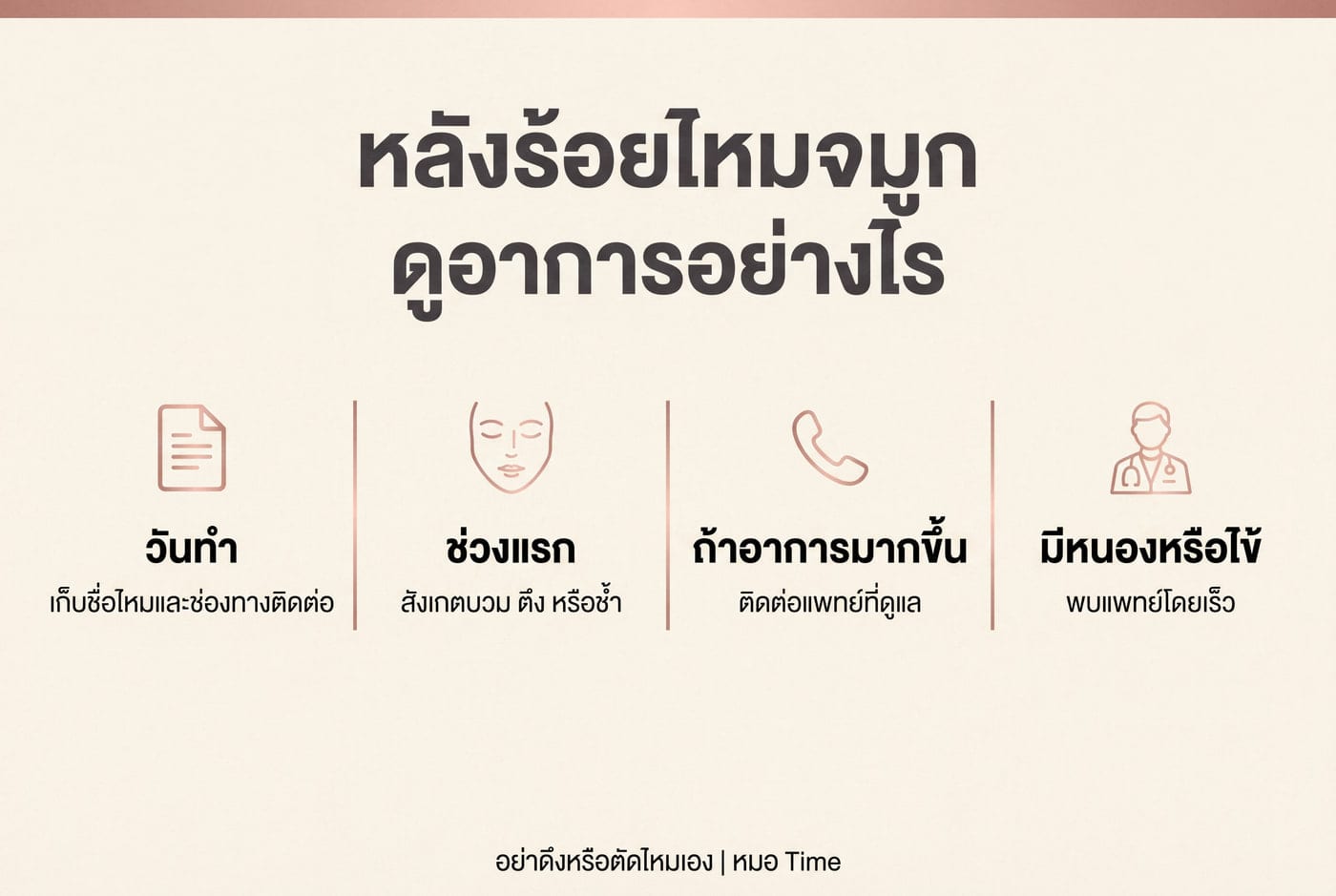
Follow your treating doctor's instructions and keep the product information and contact details. Avoid pressing, massaging, or rubbing the nose hard for the period your doctor specifies.
If a new symptom appears weeks or months later, tell the doctor about your procedure.
Record the doctor's name, treatment date, thread name, model, lot number, and a photo of the label or treatment record. These details help any doctor caring for you later.
Discuss a nose thread lift at de Pry Clinic in Phitsanulok
If you live in Phitsanulok or travel from Phichit, Sukhothai, Uttaradit, Kamphaeng Phet, or Phetchabun, I am happy to discuss your goals and nasal treatment history first.
At de Pry Clinic, I assess whether threads fit your needs or another approach deserves consideration. You can also read about our lifting and thread services and recovery after a thread lift. If you already have inflammation, seek medical assessment rather than wait for an aesthetic consultation.
Before booking, you can check the treating doctor's details in the Medical Council of Thailand's directory. Use our contact page to ask what material information to bring to your consultation.
Frequently asked questions
Is a nose thread lift safe?
As with any procedure, unwanted effects are possible. Risk can be reduced when a doctor assesses whether the treatment suits you, uses traceable material in an appropriately licensed medical facility, and sets out a follow-up plan. No procedure is risk-free.
How can I find out which threads will be used?
Before treatment, ask to see the product name, label, unopened package, and instructions for use. Ask the doctor whether that specific thread is absorbable, and have its model and lot number recorded in your medical notes.
Do all absorbable threads disappear within two years?
No single timeframe applies to every thread. Absorption depends on the material and product. Ask about the specific model being used; feeling a strand under the skin alone cannot identify its material.
Which symptoms after a nose thread lift need prompt medical review?
Contact a doctor promptly if pain, redness, or swelling worsens instead of improving, or if you notice pus, fever, skin discoloration, or a thread protruding. Do not pull or cut the thread yourself.
Where can I verify the doctor before treatment?
Ask for the name and medical licence number of the person who will perform the procedure, then check them in the Medical Council of Thailand's physician directory. The listing should match the doctor treating you.
Has the fishing-line allegation in the news been confirmed?
The 24 September 2026 report describes a patient's allegation. It does not present laboratory identification of the material or a regulator's conclusion, so one report cannot establish responsibility.
References
Here are the original report, research papers, and official verification channels:
- Banmuang: patient complaint from Phatthalung, 24 September 2026; not an investigation finding: banmuang.co.th
- Plastic and Reconstructive Surgery Global Open: nose thread lift study reporting some cases of inflammation: pmc.ncbi.nlm.nih.gov
- Clinical, Cosmetic and Investigational Dermatology: review of absorbable and non-absorbable thread materials: pmc.ncbi.nlm.nih.gov
- Plastic and Reconstructive Surgery: analysis of facial thread lift complications: pubmed.ncbi.nlm.nih.gov
- Medical Council of Thailand: physician and medical licence directory: checkmd.tmc.or.th
- Thai FDA Medical Device Control Division: medical-device information channels: medical.fda.moph.go.th