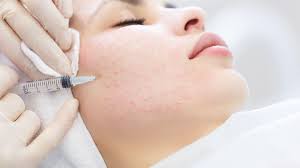
- What is Karisma — a collagen biostimulator
- How does Karisma work? (stimulating new collagen)
- Karisma vs HA filler and other biostimulators (Sculptra / PCL)
- Who suits Karisma / who should consult first
- When you'll see results, how many sessions, how long it lasts
- Is Karisma safe, and what are the side effects
- Something I want to be straight about — see the label and verify the FDA listing first
- Is Karisma worth the cost — what to look at
- Getting Karisma in Phitsanulok — Depry Clinic
- Frequently asked questions
- References & how to verify
"Karisma" is an injectable in the collagen biostimulator family. Rather than focusing on instant volume like a filler, it invites your skin to build its own new collagen, so the result comes gradually and looks natural. The point I most want to stress is this — there are several products on the market with similar names, and their formulas and origins are not the same at all. So before any treatment, always ask to see the actual box and label and verify the FDA listing so you know which formula is in front of you. In this article, Dr. Time will walk you through it in plain language and as straightforwardly as possible.
What is Karisma — a collagen biostimulator
Lately you've probably heard the name "Karisma" pass by. Maybe a friend had it done and their face looked bouncier without looking puffy or overfilled, and you wondered, "What exactly is it? Is it injected like filler? And why does the face look smoothly better, not like something was added in?"
I understand the question well, because the phrase "face injectables" these days lumps together many things that work in completely different ways. Let me explain it as simply as I can first: Karisma is an injectable in the family called a "collagen biostimulator." Its star quality isn't "placing a bolus of product to fill an area" like an ordinary filler — it's prompting your skin to build new collagen on its own.
Picture it simply: a filler is like "placing something into a depression to fill it," while a biostimulator is like "waking up the workers in your skin to rebuild the structure." So the result isn't immediate fullness on the day — it's skin that gradually becomes firmer, smoother and bouncier from within over several weeks to several months. That natural quality is the highlight of this group.
Before we go deeper, let me say this right now — the name "Karisma" comes with quite a bit of jumbled, second-hand information in the market, both about its country of origin and its ingredients. I'll have a section that talks about this straight, in "Something I want to be straight about" below, because I think it matters even more than selling a treatment.
How does Karisma work? (stimulating new collagen)
Got questions? Dr. Time offers personalized, honest consultations — no upselling.
Consult Dr. TimeLet me explain it in plain, everyday terms. Normally our skin has a "collagen factory" in the dermis, made of cells called fibroblasts. When we're young, this factory is very busy, so the skin is firm and bouncy. As we age, the factory slows down; old collagen degrades faster than new collagen is built, so the skin starts to sag, thin out and show fine lines.
A collagen biostimulator acts like a "wake-up signal" that gets this factory busy again.
What is neocollagenesis?
The word neocollagenesis literally means "the building of new collagen." When a biostimulator is injected into the skin layers, it prompts the body to respond and tells the fibroblasts to gradually produce new collagen to replace what has been lost. As new collagen forms steadily, the skin's structure becomes firmer, sagging improves and the skin is more elastic than before.
The key thing to understand is this — because it's about "letting the body build it itself" rather than adding a ready-made product, the result takes time and comes on gradually, not all at once. This is why someone expecting "inject today, different face tomorrow" may feel it's slow. But from the standpoint of looking natural, that gradual pace is exactly the advantage — the people around you will see that you "look better" without knowing what you had done.
Karisma vs HA filler and other biostimulators (Sculptra / PCL)
Many patients ask me, "How is it different from the filler I've heard of?" or "I've also heard the name Sculptra — is it the same?" Let me lay it out as a table so it's clear, dividing it into the 3 main groups people often confuse.
| Topic | HA filler (e.g. Juvederm, Restylane) | Biostimulator Sculptra (PLLA) / PCL group | Karisma |
|---|---|---|---|
| How it works | Fills directly with the product itself | Stimulates the body to build its own collagen | Stimulates the body to build its own collagen (same group) |
| Results show | Immediately, on the day | Gradually, over several weeks–several months | Gradually, over several weeks–several months |
| How the result feels | Full, plumped, with clear volume | Skin firmer and natural, not focused on bulk volume | Skin firm, smooth, bouncy from within |
| Main ingredient | Hyaluronic acid (HA) | PLLA (Sculptra) or PCL, depending on brand | Depends on the brand's formula — you must check the actual label |
| How long it lasts | On the order of months to a year, then dissolves | Often lasts on the order of years | Often long-lasting, depending on formula and the individual |
| Best for | Wanting to fill a depression / shape instantly | Wanting overall skin to be firmer in a smooth way | Wanting to stimulate collagen naturally |
From the table you can see Karisma sits on the same side as Sculptra and the PCL group — the biostimulator group, not a volumizing filler. But I want to stress that the "main ingredient" for Karisma is the cell where I wrote you must check the actual label — not because I'm holding back information, but because the information in the market really is jumbled. I'll explain in the next section.
Filler = instant fill / biostimulator (including Karisma) = wake the skin to build its own, gradually showing results. Neither is "better" across the board. They simply suit different goals. What can tell you which suits you is having a doctor assess your actual skin — not an online review.
Who suits Karisma / who should consult first
I believe that being straight about "who it suits and who should be careful" is worth more than urging everyone to do it, because a good procedure is one that genuinely "suits that person."
Good fit for
- People who are starting to feel their skin is loose, not as firm as before, and want their skin overall to look bouncier in a natural way
- People who don't want a full, puffy face from lots of filler, but want their "skin quality" to improve
- People who understand and accept that the result is gradual, not seen instantly in a single day
- People who are ready to do it as a course and to keep up the care as their doctor plans
Talk to the doctor first
- Currently having inflammation, infection or inflamed acne at the intended injection site
- A history of allergy to the product's ingredients
- A history of raised scars, keloids, or certain autoimmune conditions
- Women who are pregnant or breastfeeding
- People who expect a "change your face instantly" result, which a collagen biostimulator simply isn't designed for
If you're not sure which group you're in, don't guess on your own. Assessing this is the doctor's job. A few minutes of taking your history and looking at your actual skin will answer it far better than reading an article or watching someone else's clip.
When you'll see results, how many sessions, how long it lasts
This is a hugely popular question, and I'll answer it without overhyping.
When you'll see results, and how many sessions
Because Karisma works by prompting the skin to build its own collagen, the result doesn't arrive on day one. Most patients start to notice their skin looking firmer over several weeks to around 1–3 months after treatment, and it's usually done as a course of several sessions, spaced out as the doctor assesses from each person's skin condition and response. Not everyone needs the same number of sessions.
How long the result lasts
Once the collagen has fully formed, the result of biostimulators often lasts on the order of months to years, which is fairly long compared with some forms of skin care. But the exact figures depend on many things — the formula of the product used, your age, behavior (such as sun, sleep, smoking) and ongoing skin care. So I avoid guaranteeing precise numbers, because everyone's skin really is different.
- Several weeks–1–3 months skin starts to look firmer
- A course of several sessions spaced out as the doctor assesses
- Months to years result settles once the collagen is fully formed
Is Karisma safe, and what are the side effects
Overall, injectables in the biostimulator group are considered safe when a genuine product is used and a doctor who assesses the skin correctly performs the injection. Let me describe the side effects honestly, because knowing them is the best way to take care of yourself.
Common effects (usually temporary, resolve on their own)
- Redness and swelling at the injection site in the early period
- Mild bruising, especially at points where the skin is thin or has many vessels
- Soreness or tightness at the treated area for 1–2 days
Effects to watch for (uncommon, but worth knowing)
- Nodules — can occur with some biostimulator products; the risk is reduced with correct injection technique and massage as advised
- Infection — can occur if the process isn't clean enough, which is why it should be done in a properly accredited medical facility
- Allergic reaction — uncommon, but the reason an allergy history must be taken before treatment
Don't be alarmed reading the side effects. Most are minor and temporary. What lowers the risk a great deal comes down to 3 simple things — use a genuine, FDA-registered product, have a doctor who actually assesses your skin do the injection, and have it done somewhere clean and properly accredited. With those three covered, this group of procedures is considered safe and easy to manage with peace of mind. If anything seems off after treatment, you can message me anytime — no need to hesitate.
- Use a genuine, FDA-registered product
- Have a doctor who actually assesses your skin do the injection
- Have it done somewhere clean and properly accredited
Something I want to be straight about — see the label and verify the FDA listing first
This is the most important section in this article, and I've written it with real sincerity.
When I went to research "Karisma" to write this article, I found something I want to tell you straight — the information in the market really is jumbled. Some sources say Karisma is a "Korean" biostimulator in the PCL or PLLA group, the same as Sculptra, but when you look at the manufacturer's information for the brand named "Karisma," it instead states it is a synthetic collagen (recombinant human collagen) blended with hyaluronic acid — a completely different formula and a completely different origin.
I won't guess on your behalf, and I won't say "this is the one" while I haven't seen the actual box myself, because if I made up the ingredient information for what goes into your body, that would be far too careless a treatment. What I can do — and what I want you to do — is go by the real thing in front of you, not by the name passed around second-hand.
- Ask to see the actual box and label — check what the ingredients are, which country it's made in, and who the manufacturer/importer is
- Check the registration number and verify the FDA listing — go to oryor.com to check the product is properly registered. It takes only a few minutes
- Ask the doctor exactly which formula will be used — recombinant collagen or PCL/PLLA — and why they chose this one for your case
- Be wary of anything "unusually cheap" or with no box/label — anything whose origin can't be verified should never go into your body
I believe a clinic that genuinely cares for you will always be happy to let you see the box and verify the FDA listing in front of you — there's nothing to hide. If a place makes you feel that asking a lot is annoying, or avoids letting you see the label, that's exactly what I'd want you to be wary of first.
Is Karisma worth the cost — what to look at
On price, I won't invent a floating number to bait a click, because the price that's "real" for you depends on many factors, and quoting an exact figure without seeing your skin first wouldn't be straightforward.
Factors that make the price differ
- The actual formula/brand used — each biostimulator formula has a different cost
- The number of points and the area treated — treating specific points versus the whole face differs in price
- The number of sessions in the course — biostimulators are often done several times, so the per-course price differs from per-session
- Your starting skin condition — some people need more or less than others
What "worth it" should be measured against
I'd like you to think of "worth it" more broadly than just the number. The cheapest option, with an origin that can't be verified, injected by someone who isn't a doctor, with no one to care for you when there's a problem — that isn't worth it at all, because if something goes wrong the cost of fixing it and the worry far outweigh the difference saved. Conversely, a genuine, FDA-registered product injected by a doctor who assesses and follows up — even if it costs a little more — comes with "buying peace of mind and safety" too.
If you'd like to know the price that genuinely suits your case, message Dr. Time on LINE. I'll assess and outline the approach before you decide. The initial consultation is free, with no pushing of courses on you.
Getting Karisma in Phitsanulok — Depry Clinic
If you're in Phitsanulok or a nearby province and you're interested in a collagen biostimulator like Karisma, or you're comparing it with filler/other biostimulators, Depry Clinic would be glad to look after you.
What Dr. Time has always held to is this — the person who walks in is a patient, not a customer to be closed quickly. In every case I always assess your skin and talk through your goals with you first. If I look and think a collagen biostimulator isn't the right answer for you, I'll tell you straight and won't push you to do it. And for every product used, you can always ask to see the box and verify the FDA listing in front of you.
If you'd like to start caring for your skin with a collagen biostimulator where a doctor assesses and looks after you at every step, message Dr. Time.
Frequently asked questions
What is Karisma? Is it a filler?
Karisma is an injectable in the "collagen biostimulator" family. It is not an ordinary HA filler that focuses on instant volume. Its main purpose is to prompt your skin to build its own new collagen, so the skin gradually becomes firmer and bouncier from within rather than simply having a "bolus of product" placed into it. The texture and the result are therefore quite different from a filler.
How does Karisma work? Why does it make skin firmer?
The principle behind a collagen biostimulator is that, once injected into the skin layers, it activates your collagen-producing cells (fibroblasts) so they wake up and produce new collagen to replace what has degraded with age. This process is called neocollagenesis. The skin therefore gradually becomes firmer, smoother and better structured over several weeks to several months — not something you see overnight.
How is Karisma different from HA filler and Sculptra?
HA filler focuses on instant volume — you see the result the same day and it dissolves over time. Biostimulators such as Sculptra (PLLA) or the PCL group focus on getting your body to build its own collagen; they take longer to show results but look natural and last longer. Karisma belongs to this biostimulator group too, but the formula and ingredients differ from brand to brand, so you should ask your doctor exactly which formula they will use.
Is Karisma really Korean? What is it made of?
Here I'll be straight with you. There are several products on the market with similar names, and the information passed around has become quite jumbled. Some sources say it's a Korean PCL/PLLA product, but the manufacturer's information for the brand "Karisma" instead states it is a synthetic collagen (recombinant human collagen) blended with hyaluronic acid, from Europe — which is something entirely different. So before any treatment, ask to see the actual box and label, the registration number, and verify the FDA listing so you know exactly which formula is in front of you and where it was made. Don't go by the name alone.
When do you see Karisma results? How many sessions? How long does it last?
Because it prompts your skin to build its own collagen, the result comes gradually. Most people start to notice changes within several weeks to around 1–3 months, and it's usually done as a course of several sessions spaced out as your doctor assesses. Once the collagen is fully formed, the result often lasts on the order of months to years, depending on the product formula, your age and how you care for your skin. The exact figures are best assessed by your doctor in person.
Is Karisma safe? What are the side effects?
In general, biostimulator injectables are considered safe when a genuine product is used and a doctor performs the injection. The most common side effects are usually temporary — redness, swelling, mild bruising, or soreness at the injection site for 1–2 days. What to watch for are nodules, infection or allergic reaction, which are uncommon and whose risk drops considerably when a doctor assesses your skin, the injection technique is correct, and an FDA-registered product is used.
Who is not suited to Karisma, or should consult a doctor first?
Anyone with active inflammation, infection or inflamed acne at the intended injection site; anyone with a history of allergy to the product's ingredients; people with certain autoimmune conditions or a history of raised keloid scarring; and women who are pregnant or breastfeeding should avoid it or consult a doctor beforehand every time — because assessing your skin and individual medical history matters more than reading someone else's review.
Where should you get Karisma in Phitsanulok, and what does it cost?
At Depry Clinic in Phitsanulok, Dr. Time always assesses your skin and talks through your goals with you first — you're not treated as a customer to be closed quickly. As for price, it depends on several factors such as the formula/brand used, the number of points, the number of sessions in a course, and your starting skin condition, so there is no fixed price. We recommend messaging us on LINE for an assessment and a quote suited to your case. The initial consultation is free of charge.
References & how to verify
I want you to be able to check the information I've used yourself — here are reliable references on collagen injectables, safety, and verifying product registration:
- PubMed Central (PMC) — safety of collagen injectables and collagen biostimulators: pmc.ncbi.nlm.nih.gov
- U.S. Food and Drug Administration (FDA) — information on dermal fillers and soft-tissue fillers: fda.gov
- NHS (United Kingdom) — advice on having cosmetic procedures safely: nhs.uk
- Thai FDA (อย.) — the system for verifying health-product registration: oryor.com
Written by
ดร.นพ.ณธธรรมภ์ โอภาอภิณัฐฏ์ (หมอธามน์)Clinic physician at de Pry Clinic, Phitsanulok · Thai medical license no. 56524