
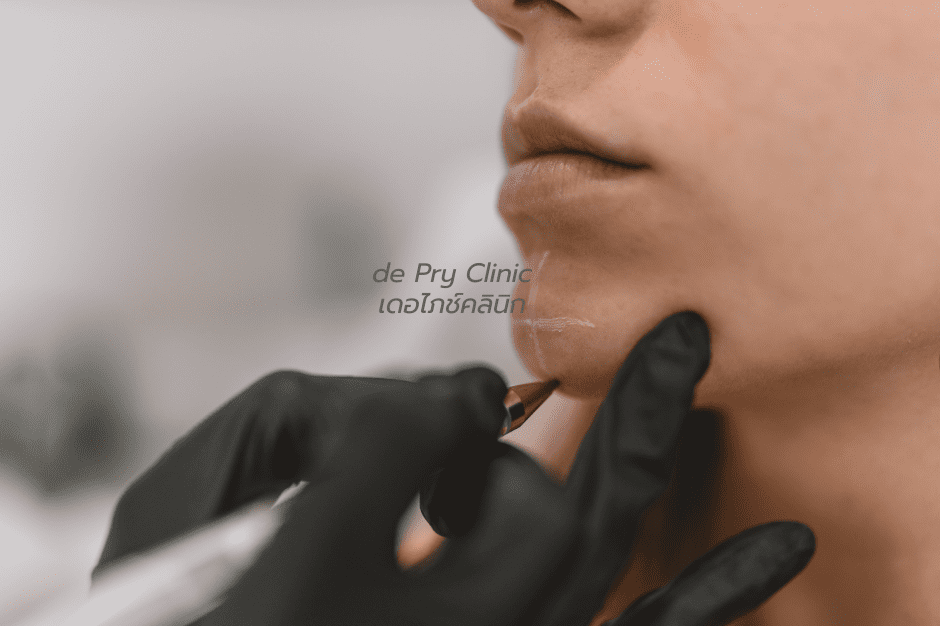
- "I saw the news about fillers ruining faces and causing blindness, and I got scared" — I understand
- The truth I want you to know first: genuine HA fillers are very safe when done correctly
- Normal side effects that resolve on their own (swelling, bruising, redness for 2-7 days)
- How your body adjusts after filler injection (timeline)
- Real danger signs that mean you must rush back to the doctor
- Normal vs dangerous — tell them apart in 1 table
- Why "choosing a real doctor + genuine product" = very low risk
- How to prevent problems + care for yourself to keep fillers safe
- At de Pry Clinic, we care for you as real "physicians"
- Get it done in Phitsanulok — de Pry Clinic
- Frequently Asked Questions
- References and Verification
Genuine HA (hyaluronic acid) fillers that have passed FDA approval are very safe when injected correctly by a physician, and they have a special advantage: they can be "dissolved" with the drug hyaluronidase (unlike permanent products). Most side effects are swelling, bruising, and redness that resolve on their own within 2-7 days. As for the frightening news like ruined faces or blindness, those come from a condition called "filler vascular occlusion" which is uncommon, and almost all of it can be prevented by choosing a real doctor and a genuine product — because safety comes from people, not luck. In this article, Dr. Time will tell you the truth — what's normal, what to watch out for, and how to care for yourself so you can feel at ease.
"I saw the news about fillers ruining faces and causing blindness, and I got scared" — I understand
Lately, many patients have asked me with a worried tone, "Doctor, I saw the news about someone who got fillers and their face was wounded, some even went blind. I want to do it but I'm really scared," or "Are fillers really that dangerous?"
I understand this fear well, and I want to say it's a reasonable fear, because that kind of news really is shocking — anyone who sees it would flinch. The fact that you're worried means you're someone who is careful and loves yourself, which is a very good thing. I don't want anyone to rush into a decision about something that will go into their own face without understanding it first.
But I also don't want that fear to make you "shut the door" on caring for yourself entirely, because in truth, the story of fillers has details that short news headlines can't fully tell. Today, let me sit down and tell you about it like a friend chatting, from start to finish — what's normal, what to watch out for, and how to stay safe — so you can decide with understanding, not with fear.
The truth I want you to know first: genuine HA fillers are very safe when done correctly
Got questions? Dr. Time offers personalized, honest consultations — no upselling.
Consult Dr. TimeBefore talking about what to watch out for, I want to lay the groundwork with the most important truth first, because it will put you much more at ease.
The filler that standard clinics use today is the HA type, or hyaluronic acid (Hyaluronic Acid), which is actually a substance that naturally exists in our own bodies — in the skin, in the joints, in the eyes. Our bodies are familiar with it, so it's quite compatible and has a low chance of allergic reaction.
And here's the advantage I especially want to emphasize — HA fillers "can be dissolved." If you don't like the shape after injection, or a problem arises, the physician has a drug called hyaluronidase that can be injected to dissolve the HA. This is different from permanent or semi-permanent fillers (such as liquid silicone or foreign substances that should not be injected) which cannot be removed, and which are the cause of the "permanently ruined face" news we often see.
The fact that HA fillers "can be dissolved" is like always having an undo button. This is the reason that I and physicians around the world choose HA, not permanent products — because even if something unexpected happens, we still have a solution in hand. A good filler, then, isn't about being "permanent forever" but about every step being "controllable and correctable."
Trusted regulatory bodies like the U.S. FDA and health systems like the UK's NHS also classify genuine HA fillers as a procedure with an acceptable level of safety when performed by qualified personnel in a standard medical facility. The key, then, lies in the phrase "done correctly."
Normal side effects that resolve on their own (swelling, bruising, redness for 2-7 days)
Let's start with the things that are "common but not scary," because many people, when they see their own face swollen or bruised after injection, get startled and think they're "allergic" or "something went wrong," when in fact it's a sign that the body is adjusting normally.
When we inject fillers, a small needle passes through the skin, so the body naturally responds. Common symptoms considered "normal" include:
- Swelling — especially around the lips or under the eyes where the skin is thin; it may be prominent during the first 1-2 days
- Bruising — caused by the needle hitting tiny capillaries under the skin; it can happen even when the doctor is fully careful
- Redness — around the injection point, usually fading within a few hours to one day
- Mild tenderness — feeling a dull ache or slight pain when pressed, for a short period
These symptoms mostly improve clearly within 2-7 days and gradually settle completely in about 2 weeks. No need to panic, no need to think something went wrong — it's a natural process by which the body gradually settles the filler into place.
How your body adjusts after filler injection (timeline)
Let me paint a picture of what each period "normally" should look like after a filler injection, so you know what to expect and don't have to worry excessively.
-
Day one (the day of injection)
It may swell, redden, or feel dull at the injection site the most during this period. You can apply a gentle cold compress, avoid massaging or rubbing the face, refrain from heavy exercise and alcohol, and sleep with your head propped up slightly to help reduce swelling faster.
-
Days 2-7
Swelling, bruising, and redness will gradually improve every day. Bruises may turn yellow before fading, which is normal. During this time, the shape may still look slightly more swollen than the actual result — don't rush to judge the outcome yet.
-
About 2 weeks
The filler has settled, the swelling has fully subsided, and the shape is stable and natural. This is when you see the "real result" and the right time to come back so the doctor can assess whether anything needs touching up or adjusting.
If everything follows this timeline, it means you're healing normally — nothing to worry about. As for the things that "don't fit" with this timeline, those are what I'll talk about in the next section.
Real danger signs that mean you must rush back to the doctor
This section is the most important. Please read it carefully. But I want you to read it with a mind that is "aware," not "afraid," because knowing what to watch for is the best preventive tool you carry with you.
Among all the risks of fillers, the thing that creates the "ruined face" or "blindness" news is a condition called filler vascular occlusion — where the filler ends up inside or presses on a blood vessel, preventing blood from reaching the tissue in that area. This condition is uncommon, and almost all of it comes from improper injection by someone who doesn't understand the anatomical layers of the face. But because it's something that must be corrected in time, I want you to memorize these "3 warning signs" by heart.
1. Abnormally severe pain that keeps getting worse
Mild tenderness is normal, but if you have abnormally severe pain, agonizing pain, or pain that keeps getting worse instead of improving — especially pain beyond what it should be — this is a sign you shouldn't ignore. Contact the doctor who injected you immediately.
2. Skin turning pale, mottled, or darkening
If the skin at the injection site (or nearby areas) turns abnormally pale, develops a net-like mottling (like marble patterns), or starts to darken — turning dusky, purple, or black, that's a sign that blood may not be reaching that area sufficiently. You must rush back to the doctor urgently.
3. Blurred vision or abnormal sight
If you experience blurred vision, double vision, abnormal sight, or severe pain around the eyes after injection — especially injections around the nose, forehead, or eyes — this is the most urgent emergency sign. You must rush back to the doctor or go to the hospital immediately. Do not wait to see how it develops.
The heart of this matter is "time", because HA filler can be dissolved with the drug hyaluronidase. If the physician detects vascular occlusion and can inject to dissolve it in time, there's a high chance of correcting it before permanent damage occurs. The guidelines for managing filler vascular occlusion in medical journals also emphasize that recognizing it early and managing it quickly is the key. This is why I always stress that you should get injected by a physician who can be reached afterward and has hyaluronidase ready — not somewhere where, once the injection is done, no one can be tracked down.
Normal vs dangerous — tell them apart in 1 table
I've gathered everything into a single table for you to save and refer to — which things "can wait to heal on their own" and which things "require rushing back to the doctor."
| Symptom | When it occurs | Normal or dangerous? | What to do |
|---|---|---|---|
| Swelling / redness around the injection point | Immediately–first 2 days, then subsides | ✅ Normal, the body adjusting | Cold compress, wait 2-7 days to heal |
| Bruising | First 1-2 days, changes color before fading | ✅ Normal | Wait for it to fade, avoid massaging |
| Mild tenderness | First 1-3 days, gradually improving | ✅ Normal | Avoid pressing on it often |
| Abnormally severe pain / pain getting worse | After injection, not improving | ⚠️ Danger sign | Rush back to the doctor immediately |
| Skin pale, mottled, or darkening | From a few hours to a few days | ⚠️ Danger sign (possible vascular occlusion) | Rush back to the doctor immediately |
| Blurred vision / abnormal sight | During or after injection | 🚨 Most urgent emergency | Go to the doctor/hospital immediately, do not wait |
You see how clear the dividing line is — "normal" symptoms gradually improve over time, while "dangerous" symptoms tend to get worse or look unnatural. If you remember this principle, you can handle it with confidence.
Why "choosing a real doctor + genuine product" = very low risk
At this point, I want you to see the biggest picture of the whole matter, because if you understand this, your fear will diminish greatly.
Let me say it straight — almost all of the risk of fillers doesn't come from the filler itself, but from "the person who injects" and "the product used." This is why I say "safety comes from people, not luck" — because it isn't a gamble on whether you'll get an unlucky case, but something that is controllable from before the injection by choosing correctly.
Look at how a "real, experienced doctor" differs from "someone who isn't a physician" — and why it matters directly to your safety:
- Knows the anatomical layers of the face — a physician knows where the important blood vessels are, so they can avoid them and choose safe layers and positions, reducing the chance of injecting into a vessel, which is the cause of vascular occlusion
- Assesses before doing — takes an allergy history, a history of past permanent-substance injections, underlying conditions, and looks at where your face is suitable for filling, rather than just injecting wherever requested
- Uses safe techniques — such as aspirating to test before releasing the drug, injecting slowly, in small amounts at a time, to reduce risk
- Has hyaluronidase ready to correct — if something unexpected happens, the physician has the filler-dissolving drug ready to manage it immediately, rather than leaving you to find a solution on your own
- Uses genuine, FDA-verifiable products — genuine fillers have supporting safety data and verifiable origins, unlike abnormally cheap products where you don't really know what's inside
You'll see that every point above isn't a matter of "good luck" but a matter of "choice" — and it's something that is in your hands even before you book the injection.
You don't need to "fear fillers," but you should "know how to choose." The power to make fillers safe is in your hands from the very first step — just choose a real doctor, choose a genuine product, and dare to ask questions. That alone lets you cut away most of the risk. This is exactly what "safety that comes from people" means.
I've written about distinguishing genuine from fake products, and about choosing a doctor, in detail in separate articles. If you're interested in reading more, check out how to check genuine vs fake fillers, how to choose a safe filler-injecting doctor, and an in-depth look at vascular occlusion at filler vascular occlusion — what it is and how to handle it.
How to prevent problems + care for yourself to keep fillers safe
I've gathered the things you can do yourself to make filler injection as safe and reassuring as possible, divided into "before injection" and "after injection."
Before injection — prepare and choose well
- Choose to be injected by a physician in a proper medical facility — make sure the person injecting you is a real "physician," not an assistant or staff member
- Ask to see the filler box and ask whether it has passed FDA approval — a standard clinic will always be happy to let you see and verify it in person
- Refrain from drugs/supplements that cause easy bleeding — such as aspirin, fish oil, vitamin E, about 1 week before the procedure (unless the doctor has prescribed them) to reduce bruising
- Avoid alcohol before and after the procedure — it helps reduce swelling and bruising
- Disclose your full history — underlying conditions, medications used, allergy history, herpes history, and if you've ever been injected with permanent substances before, you must tell the doctor
After injection — care for proper healing
- Apply a gentle cold compress on the first day to help reduce swelling (don't press hard)
- Avoid massaging, rubbing, or pressing the injection area to prevent the filler from shifting
- Refrain from heavy exercise, saunas, and intense heat for about the first 1-2 days
- Avoid alcoholic beverages during the early period
- Watch for the "3 danger signs" that I described above — if you encounter them, contact the doctor immediately
- Keep the contact number/channel of the doctor who injected you — in case you have questions or need urgent help
- Genuine HA fillers that have passed FDA approval are very safe when done correctly, with the advantage of being "dissolvable" with hyaluronidase
- Swelling, bruising, redness, and tenderness within 2-7 days are normal — the body is adjusting, no need to panic
- Remember the 3 danger signs: abnormally severe pain / skin pale-mottled-dark / blurred vision → rush back to the doctor immediately
- Safety comes from "people + product" — choose a real doctor, use a genuine product; it's not a matter of luck
- You can "choose safety" even before the injection, so there's no need to be afraid — you just need to know how to choose
At de Pry Clinic, we care for you as real "physicians"
At this point, I want you to feel more at ease, because filler injection "can be done safely" if it's in the right hands. And at de Pry Clinic, Dr. Time cares for every case as a real physician, from start to finish:
- Dr. Time injects every case personally — assessing the facial structure, taking the history, and injecting himself, not passing it to an assistant
- Always assesses first — looks at the indications, contraindications, allergy history, and aligns on goals before proceeding
- Uses only FDA-verifiable fillers — you can always ask to see the box and check it in person
- Has hyaluronidase ready — if something unexpected happens, the doctor has the dissolving drug and is ready to care for you immediately
- Follows up on results and answers every question — you can still contact the doctor after injection; it's not a case of injecting and then disappearing
I don't want anyone's beauty to come at the cost of risk, and I will never be careless with a patient's face. Because for me, filler injection isn't just "filling to look pretty" — it's caring for a whole person with responsibility.
Get it done in Phitsanulok — de Pry Clinic
If you're in Phitsanulok or a nearby province and want to get fillers safely under the care of a real physician, de Pry Clinic is glad to look after you. Over time, patients have traveled to see Dr. Time from many surrounding provinces — including Phichit · Sukhothai · Uttaradit · Kamphaeng Phet · Phetchabun — because they want the reassurance of "having a real doctor care for them at every step."
If you want to start with fillers in a way where you don't have to be afraid — because there's a real doctor assessing and caring for you at every step — message Dr. Time anytime. Free consultation, no pushy course sales. See all services on the our services page.
Frequently Asked Questions
Are fillers dangerous?
Genuine HA (hyaluronic acid) fillers that have passed FDA approval are considered very safe when injected by a physician who assesses beforehand, knows the anatomical layers of the face, and uses genuine products. Most side effects are mild symptoms that resolve on their own within 2-7 days, such as swelling, bruising, and redness. The truly dangerous thing is filler vascular occlusion, which is very uncommon and preventable by choosing a real doctor and a genuine product — it's not a matter of luck. The advantage of HA is that if a problem arises, the physician has a dissolving agent (hyaluronidase) to help correct it.
Can fillers really cause blindness?
It's theoretically possible, but very rare, and almost all of it comes from improper injection — such as injecting into a blood vessel around the eyes, nose, or forehead by someone who doesn't understand the anatomical layers. The mechanism is that the filler blocks the blood vessel supplying the retina. The best prevention is to have an experienced physician inject, choosing safe positions and techniques. If you have blurred vision or abnormal sight after injection, rush back to the doctor immediately, because the faster you act, the higher the chance of correcting it.
How many days does swelling last after filler injection?
Swelling, bruising, redness, or mild tenderness are normal — the body is adjusting. Most improve clearly within 2-7 days and settle completely in about 2 weeks. In the early period, applying a cold compress, avoiding massaging, and refraining from heavy exercise and alcohol will help the swelling subside faster. If the swelling keeps increasing, you have abnormal pain, or the skin changes color, contact the doctor.
If I'm not satisfied with the filler, can it be dissolved?
HA fillers can be dissolved. The physician uses a drug called hyaluronidase, injected to dissolve excess or misplaced HA. This is the key reason HA is safer than permanent or semi-permanent fillers that can't be dissolved. If you're not satisfied with the shape, or a complication occurs, the physician always has a way to correct it.
How do normal filler side effects differ from danger signs?
Normal side effects are swelling, bruising, redness, and mild tenderness at the injection point, occurring immediately after the procedure and gradually improving on their own within 2-7 days. The danger signs that require urgently seeing a physician are abnormally severe pain that keeps getting worse, skin turning pale-mottled or darkening, and blurred vision/abnormal sight. These three may be signs of filler vascular occlusion — you must rush back to the doctor immediately.
Why does choosing a real doctor and a genuine product make fillers safe?
Because almost all of the risk comes from the person injecting and the product used, not from the filler itself. A physician who knows the anatomical layers can avoid important blood vessels, knows safe injection techniques, assesses contraindications before the procedure, and has hyaluronidase ready to correct any incident. As for genuine, FDA-approved products, they have supporting safety data and verifiable origins for every syringe. Safety, then, comes from choosing the right person and the right product — not from gambling on luck.
Before getting fillers, how should I prepare and what should I ask the doctor?
You should refrain from drugs or supplements that cause easy bleeding, such as aspirin, fish oil, vitamin E (unless the doctor has prescribed them), about 1 week before the procedure, avoid alcohol before and after, and fully disclose underlying conditions, medications used, allergy history, and herpes history. As for questions to ask the doctor: what brand of filler is used, has it passed FDA approval, can I see the box, and if a problem occurs, is hyaluronidase ready?
References and Verification
I want you to be able to verify the information I use yourself — here are the references this article draws from:
- U.S. Food and Drug Administration (FDA) — official information on dermal fillers, including risks and the recommendation that they should be done by qualified personnel in a standard medical facility. Used to confirm that approved HA fillers have a safety framework governing them: fda.gov — Dermal Fillers (Soft Tissue Fillers)
- NHS (National Health Service, UK) — consumer information on fillers, risks, and choosing a safe provider. Used to support the recommendations about choosing a real doctor and watching for symptoms: nhs.uk — Dermal fillers
- Guideline for the Management of Hyaluronic Acid Filler-induced Vascular Occlusion (PMC) — medical guidelines on managing HA filler vascular occlusion. Used to confirm that recognizing the signs early and dissolving with hyaluronidase in time is the key to correction: pmc.ncbi.nlm.nih.gov — PMC8211329
- Thai Food and Drug Administration (FDA) — the health product verification and registration system. Used to verify that the filler a clinic uses is a genuine, properly registered product: oryor.com