
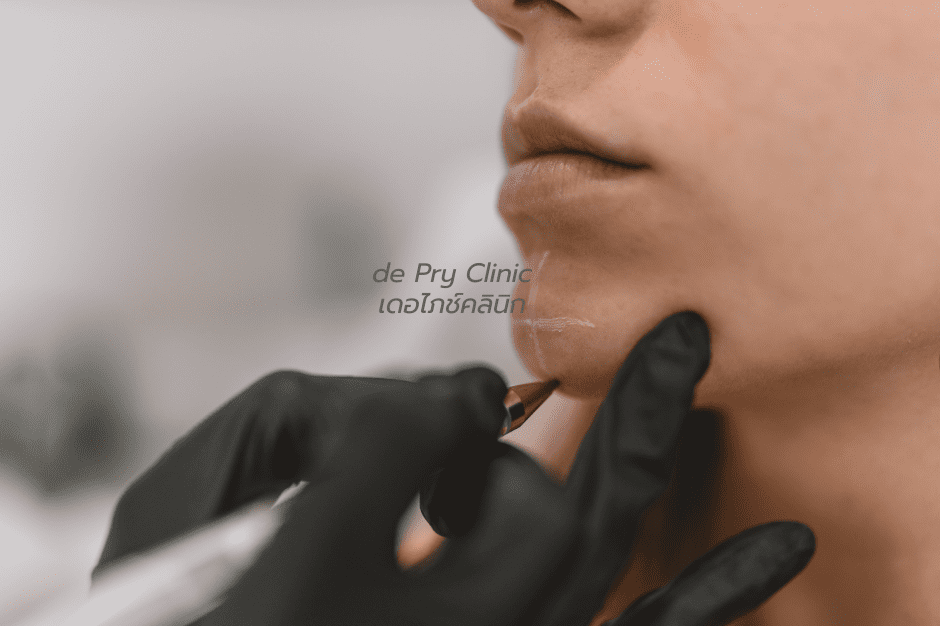
- What is filler?
- Where can it be injected? How many CCs?
- Popular filler brands — how do they differ?
- Filler vs Botox vs thread lift — which to choose?
- Results and how long does it last?
- Is it safe? Vascular occlusion
- How much does it cost?
- Caring for yourself after injection
- What to know before deciding
- Filler injections in Phitsanulok — de Pry Clinic
- Frequently asked questions
- References and verification
You want a fuller, more radiant face, shallower deep folds, or a better-shaped chin without surgery — but you're also worried that filler might look fake or be dangerous. I understand this hesitation completely, because there are both good stories and scary news all mixed together.
So Dr. Time has put together a complete filler guide for you — from what it actually is, which areas can be injected, how many CCs are used, how the brands differ, all the way to the most important safety topic of all: filler-related vascular occlusion. The goal is to help you decide from real understanding, not from fear.
What is filler?
Most fillers used today are made from hyaluronic acid (HA), a substance the body produces naturally on its own. It is found in abundance in the skin, joints, and eyes. As we age, HA in the skin decreases, causing the skin to lose its plumpness and to sag. Injecting filler therefore replaces HA in the desired area, helping the face look fuller, firmer, and more natural.
How does HA filler differ from the permanent type?
HA filler can be dissolved and gradually breaks down on its own naturally, unlike "permanent fillers" or illegal cosmetic substances (such as liquid silicone or paraffin) that stay forever, are hard to remove, and risk forming lumps, chronic inflammation, or tissue death. That is why I use only genuine HA that is registered with the FDA.
Botox relaxes muscles to reduce wrinkles caused by facial expressions, while filler adds volume and structure to areas that have hollowed out. The two do completely different jobs, and some people use them together according to their facial structure.
Where can it be injected? How many CCs?
Got questions? Dr. Time offers personalized, honest consultations — no upselling.
Consult Dr. TimeThere are many popular areas for filler injection, and each area uses a different amount. Dr. Time always assesses your facial structure first and never injects by a fixed formula. The CC figures below are general reference ranges (the actual amount depends on each individual):
| Area | Helps with | Reference amount |
|---|---|---|
| Lips | Adds fullness, defines the lip border | 0.5–1 CC |
| Nasolabial folds | Reduces the deep fold from nose to mouth corner | 1–2 CC |
| Cheekbones | Builds structure, reduces flatness | 1–2 CC per side |
| Chin | Extends the chin, balances facial structure | 1–2 CC |
| Temples | Fills areas that hollow out with age | 1–2 CC per side |
| Under-eye (tear trough) | Reduces the hollow/shadow under the eyes (a delicate spot) | 0.5–1 CC |
I recommend starting with just the right amount in the spot you most want to fix, then assessing the result before adding more — because you can always add more, but if you over-inject, it costs extra time and money to dissolve it out.
Popular filler brands — how do they differ?
There are several FDA-registered HA filler brands in Thailand, all of them safe, differing in density and in how well they suit each area. There is no brand that is "best for everyone" — softer-textured lines suit the under-eye and lips, while firmer-textured lines suit structural augmentation like the chin or cheekbones.
| Brand group (FDA-registered) | Strength | Best for |
|---|---|---|
| Juvederm (Allergan) | Several lines covering many areas | Lips, nasolabial folds, facial structure |
| Restylane (Galderma) | Varied textures, adjustable | Lips, under-eye, facial structure |
| Belotero (Merz) | Smooth texture, blends with the skin | Shallow folds, thin skin |
| Teosyal / Neuramis, etc. | Registered alternatives | Depends on the line and area |
Genuine filler must come with a box, a label, and a verifiable registration number. Be wary of smuggled/unregistered filler that is abnormally cheap. You can verify it through the FDA's product search system (link below).
Filler vs Botox vs thread lift — which to choose?
These three procedures solve different problems. Choosing the right one from the start matters more than choosing the most popular one.
| Method | Solves | Principle | Lasts |
|---|---|---|---|
| Filler | Deep folds, hollow spots, lack of volume | Adds volume | 6–18 months |
| Botox | Wrinkles from muscle movement | Relaxes muscles | 3–4 months |
| Thread lift / HIFU | Sagging skin, drooping cheeks | Lifts and tightens, stimulates collagen | ~1–2 years |
Some cases use them together — for example, filler to augment the chin plus Botox to slim the jaw — to balance the face shape in one go. Dr. Time will plan it according to your actual facial structure.
Results and how long does it last?
Results are visible immediately after injection, but during the first 1–2 weeks there may be slight swelling. The true result becomes clear after the swelling subsides.
Why doesn't each area last the same amount of time?
Areas that move frequently, like the lips, break down faster (6–9 months), while areas that stay still and use firmer-textured filler, like the chin and cheekbones, last longer (12–18 months). Each person's metabolism and lifestyle also play a role.
HA filler can be dissolved with hyaluronidase, so if the result isn't to your liking or there's a problem, it can be corrected — this is why HA is far safer than permanent filler.
Is it safe? Vascular occlusion
Genuine, FDA-registered HA filler performed by a doctor is considered highly safe. The common side effects are merely slight swelling and bruising that resolve on their own.
What is filler vascular occlusion?
It is a condition where filler blocks or compresses a blood vessel, causing insufficient blood supply to the skin. This is the most serious risk but is very rare. A systematic review indicates that the high-risk areas are the nose, nasolabial folds, and between the eyebrows. The risk is greatly reduced when performed by a doctor who understands blood vessel positioning and uses the correct technique.
How do you choose a doctor and clinic safely?
- The doctor performs it personally and assesses the anatomy before injecting
- Uses genuine HA filler that is dissolvable, with hyaluronidase ready for emergency correction
- Has a box/label/FDA registration number available for verification
Illegal filler, permanent substances, or cheap liquid silicone at beauty salons are the real risk, because they are irreversible and can cause lumps, inflammation, or tissue death. Always choose genuine products that can be verified by registration, and always have it done by a doctor.
How much does it cost?
Filler pricing is calculated by the number of CCs and the brand/line used. Each area uses a different amount, and each filler line suits a different skin layer.
Why isn't the price per CC the same?
The firmer-textured line for structural augmentation and the softer-textured line for the under-eye/lips have different costs. That is why Dr. Time always assesses and gives you a clear price for the line that suits you before any procedure — with no hidden charges. You can ask in advance via LINE.
Caring for yourself after injection
- Avoid intense exercise and saunas on the first day, because heat makes the filler disperse faster
- Do not massage or press the injected area for at least 24 hours (except where the doctor advises you to shape it)
- Avoid alcohol on the first day to help reduce swelling
- Slight bruising is normal and will fade within 5–7 days
- Warning signs that require contacting the clinic immediately: unusually severe pain, pale or blotchy darkened skin, a net-like (mottled) pattern, or any abnormality — these may be signs of vascular occlusion
What to know before deciding
Filler gives excellent results when done by the right person, in the right spot, in the right amount. Things you should ask before the procedure:
- Is the product FDA-registered? Can I see the box/label?
- Does the doctor perform it personally? — Dr. Time performs every procedure himself
- Is there hyaluronidase for emergency correction?
- If the result isn't to my liking, can it be corrected? — HA is dissolvable, so there's always a solution
Filler injections in Phitsanulok — de Pry Clinic
At de Pry Clinic, Phitsanulok, Dr. Time assesses the facial structure and injects the filler himself in every case, choosing genuine FDA-registered filler and selecting the line that best suits each area, with an emphasis on natural results — never more than necessary — along with hyaluronidase to safeguard your safety.
If you're in Phitsanulok or nearby and want to know where to start, how many CCs to use, or whether you even need it right now, you can consult Dr. Time first. He's happy to tell you honestly.
Frequently asked questions
- Does it hurt? Not much. Most fillers contain anesthetic, and numbing cream is applied beforehand.
- How many CCs are used? Lips 0.5–1 CC, nasolabial folds/chin 1–2 CC, cheekbones/temples 1–2 CC per side.
- How long does it last? From 6–9 months (lips) to 12–18 months (cheekbones/chin).
- Can it be dissolved? HA filler can be dissolved with hyaluronidase.
- Is it dangerous? Highly safe when using genuine products performed by a doctor. The serious risk is vascular occlusion (rare and preventable).
References and verification
The information in this article has been compiled and verified from trustworthy sources, which you can check yourself:
- U.S. FDA — information on dermal fillers (Dermal Fillers / Soft Tissue Fillers): fda.gov — dermal fillers
- NHS (UK National Health Service) — information on dermal filler injections: nhs.uk — dermal fillers
- PubMed Central (systematic review) — adverse events from HA facial fillers: Adverse Events From HA Dermal Filler (Meta-Analysis)
- PubMed (systematic review) — risk factors for vascular occlusion from filler: Risk Factors for Vascular Occlusions After Filler
- Thai FDA product search system — verify filler registration: porta.fda.moph.go.th
Written by
ดร.นพ.ณธธรรมภ์ โอภาอภิณัฐฏ์ (หมอธามน์)Clinic physician at de Pry Clinic, Phitsanulok · Thai medical license no. 56524