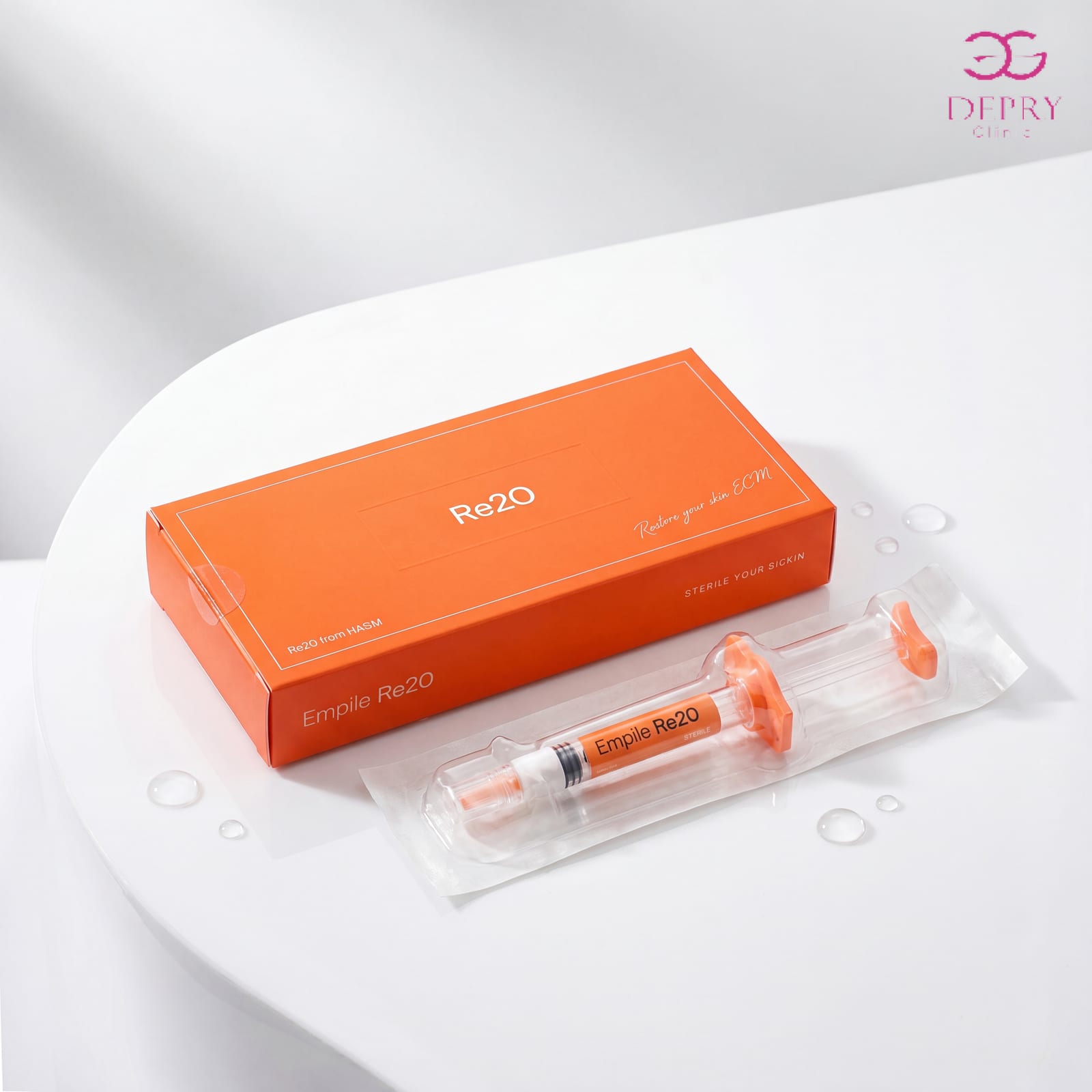
- What is Exosome? Why everyone in skincare is talking about it
- How it works and how it's used (topical or injected)
- What it can help with
- How strong is the science, and the safety facts Dr. Time wants to share honestly
- Exosome vs Skin Booster vs PRP — what's the difference
- Who it suits, who should wait or consult first
- What goes into the price of Exosome
- Getting Exosome in Phitsanulok — Depry Clinic
- Frequently Asked Questions
- References & how to verify
What is Exosome? Why everyone in skincare is talking about it
Lately, patients have been coming in more and more to ask, "Doctor, everyone's talking about Exosome — what is it, is it really good?" Dr. Time is glad you ask, because this is a topic that mixes genuine interest with overhyped marketing. So I want to give you the full picture, both sides, not just the pretty one.
An Exosome is a tiny, nano-sized vesicle (much smaller than a cell) that cells in your body release. Inside it carries the substances cells use to "communicate" with each other, such as growth factors, peptides, and certain genetic material. Picture it as a "message package" that one cell sends to tell another cell to "repair this spot" or "make more collagen." That's why the aesthetics field is interested in using it to stimulate skin recovery.
It got popular because the idea is exciting — instead of adding substances directly, we send a "signal" telling the skin to repair itself. It sounds very advanced, but I want you to pump the brakes on the excitement a little, because new and exciting technology often comes with data that hasn't settled yet and approvals that haven't caught up. I'll walk you through that in the sections ahead.
- It's a nano-sized signaling vesicle carrying growth factors, used to "send a message" telling your skin to repair itself
- Mostly applied topically and driven into the skin after laser/microneedling — not injected casually
- The evidence is still early-stage — interesting, but not as solid as long-established treatments
- The U.S. FDA has not approved it for injection — check with the Thai FDA (อย.) and choose a doctor before treatment
How it works and how it's used (topical or injected)
Got questions? Dr. Time offers personalized, honest consultations — no upselling.
Consult Dr. TimeMany people wonder how Exosome is actually done. Let me explain how it's used in most clinics in practice. The most common method is applying the Exosome product and driving it into the skin after a procedure that temporarily opens up channels in the skin, such as microneedling (tiny needles) or certain lasers, because at that point the skin absorbs ingredients better than usual. The idea is to use the growth factors in the exosomes to help the skin recover faster and better.
As for "injecting" Exosome directly into the skin, I want you to be especially careful, because safety, sterility, and approval are still unclear in many countries. Injecting a biological substance that hasn't gone through quality control into the body carries risk. So my recommendation is: if you're going to do it, choose a product whose registration you can verify, and have it done only by a doctor at a properly licensed clinic.
What it can help with
Patients often ask, "So what can it actually help with?" Let me explain based on what early research suggests, and tell you honestly which areas look promising and which still need more data.
What looks promising is helping the skin recover faster after laser and reducing inflammation and redness, because growth factors support the repair process. There are also studies on smoothness, hydration, and hair loss, and the early results look hopeful.
But let me stress something important — most of the research is still early-stage, with small sample groups. It is not as solid as drugs or procedures that have been used and studied for decades. So if anyone tells you Exosome "guarantees results" or "transforms your skin instantly," I'd want you to take that with a grain of salt. The truth is it's an interesting add-on, but not a magic cure.
How strong is the science, and the safety facts Dr. Time wants to share honestly
Let me use this section to talk about the most important thing — something many advertisements don't mention — because I believe your safety comes before selling anything.
What I want you to know is this — the U.S. Food and Drug Administration (FDA) has not approved exosome products for injection into the body, and it has issued a consumer warning about regenerative medicine products (including exosomes and stem cells) that are unapproved, with reports of adverse events from substandard products. This doesn't mean Exosome is bad or useless — it means "we still have to choose carefully."
- The product used can be verified as registered with the Thai FDA (อย.) and has a clearly known origin
- It's done at a licensed clinic, by a doctor — not at an ordinary beauty salon
- Be wary of ads that "guarantee results" or prices that are suspiciously cheap — quality biological products have real costs
I'm not telling you this to scare you out of doing anything — I want you to decide based on the real facts of both sides. People who understand the risks and choose verifiable products done by a doctor can look after themselves safely.
Exosome vs Skin Booster vs PRP — what's the difference
Because all three are talked about in the context of "restoring healthy-looking skin," patients often get confused. Let me compare them so you can see that each is a completely different concept.
| Topic | Exosome | Skin Booster | PRP |
|---|---|---|---|
| What it is | Signaling vesicle carrying growth factors | Hydrating substance (usually HA) | Concentrated platelets from your own blood |
| Core idea | Sends a signal telling skin to repair itself | Adds water for plump, glowing skin | Uses your own growth factors to stimulate recovery |
| Evidence / track record | New, evidence still limited | Long-established, well-supported data | Long-established, reasonable research base |
| Approval | Still unclear — check it | Clearer (choose approved products) | Uses your own blood |
Put simply: if you want plump, hydrated skin, Skin Booster fits the bill and the data is more settled. If you want something that comes from your own body, PRP is an option. As for Exosome, it's a promising newcomer but you have to choose carefully when it comes to approval. I'll help you figure out which suits you better based on your goals and how comfortable you feel.
Who it suits, who should wait or consult first
May suit
- People who want to boost recovery after laser/microneedling
- People open to new technology who understand the evidence is still early-stage
- People who choose products with verifiable approval and have it done by a doctor
Should wait or consult first
- People who want solid evidence and clear approval before deciding
- Those who are pregnant, breastfeeding, or have an immune disorder
- Those with an infection or wound on the skin where it would be done
- Anyone offered something "suspiciously cheap" or of unknown origin — best avoided
What goes into the price of Exosome
I understand price is something you want to know, but Exosome has a wide price range because it depends on many factors. First, I want you to understand what you're paying for.
It mainly depends on the brand and quality of the product, the amount used, and which procedure it's combined with (for example, paired with laser or microneedling). Because it's a new technology and a biological substance, the price is usually higher than ordinary basic procedures. What I want to warn you about is that suspiciously cheap prices in this category are especially questionable, because quality-controlled biological products have real costs.
At Depry, Dr. Time will tell you clearly which product is used, whether its approval can be verified, and whether it's worth it given the available evidence, so you can decide based on the real facts. Feel free to ask us on LINE.
Getting Exosome in Phitsanulok — Depry Clinic
If you're in Phitsanulok or nearby and you're interested in Exosome, I'd like to invite you to talk with us first. Dr. Time will tell you honestly about both the benefits and the limitations, look at your skin condition and your goals, and tell you truthfully whether Exosome is right for you now, or whether there's an option with more settled evidence that's better value.
I believe good skincare must be built on truth, not trends. I won't sell you something just because it's trendy if it isn't right for you yet, and I'll only use products whose origin can be verified, because your safety matters more than sales.
- It's a signaling vesicle carrying growth factors that helps stimulate skin recovery — interesting, but still new
- The evidence is still early-stage, and the FDA hasn't approved it for injection — always check the Thai FDA (อย.) first
- If you do it, choose a product with verifiable origin and have it done by a doctor at a properly licensed clinic
Frequently Asked Questions
What is an Exosome?
A nano-sized signaling vesicle carrying growth factors and cell-to-cell messengers, used to stimulate skin recovery.
How is it used — injected or applied topically?
Mostly applied and driven into the skin after microneedling/laser; injecting it requires caution over safety and approval.
What does it help with?
It may help recovery after laser, reduce redness, improve smoothness, and there are studies on hair — but the evidence is still early-stage.
Is it safe, and is it approved yet?
The U.S. FDA hasn't approved it for injection and has warned about unapproved products. You should check the Thai FDA (อย.) and have it done by a doctor.
How is it different from Skin Booster / PRP?
Skin Booster adds hydration, PRP uses your own blood, while Exosome is a growth-factor vesicle that's newer with less evidence.
How many sessions before you see results?
It's usually done as a course alongside other procedures; results depend on the product and your skin condition — think of it as a recovery booster.
Who should wait first?
People who want clear evidence/approval, those who are pregnant, breastfeeding, have an immune disorder, or have a skin wound.
How much does it cost?
It depends on the brand, the amount, and the procedure it's combined with; usually higher than basic procedures — be wary of suspiciously cheap prices.
References & how to verify
I want you to be able to verify the information I used to write this article yourself — especially on safety. Click to read the originals:
- U.S. FDA — Consumer alert on regenerative medicine products, including unapproved exosomes and stem cells: fda.gov
- PubMed Central (PMC) — The role of exosomes in skin recovery and dermatology (evidence review): pmc.ncbi.nlm.nih.gov
- PubMed Central (PMC) — Applications of exosomes in aesthetic medicine and the limits of the evidence: pmc.ncbi.nlm.nih.gov
- PubMed Central (PMC) — Review of exosomes for skin and hair, with safety and regulatory considerations: pmc.ncbi.nlm.nih.gov
- Thai FDA (อย.) (Food and Drug Administration) — Verify product registration before deciding on treatment: oryor.com