- What is chin augmentation? Why the chin matters to the face
- What surgical chin options are there? (Implant vs sliding genioplasty)
- Non-surgical chin augmentation with filler — how far it goes
- Who suits surgery, and who only needs filler
- The results you get, and how long they last
- Risks and recovery you should know
- What I want to say honestly about the chin
- Is chin augmentation worth it? What to look at
- Consult about your chin in Phitsanulok — Depry Clinic
- Frequently asked questions
- References & how to verify
A short or recessed chin can make the face look unbalanced, especially in profile. "Chin augmentation" can be done in two main ways: surgery (a silicone implant or sliding genioplasty), which gives a permanent result, and filler, which needs no operation, shows results immediately, and is adjustable. Let me say it honestly — for people whose chin is only mildly to moderately short, filler is usually enough; people whose chin is genuinely very recessed may need to consider surgery. The heart of it is the assessment first, not pushing you to do as much as possible.
What is chin augmentation? Why the chin matters to the face
Many people who walk into my clinic don't say outright, "I want chin augmentation." Instead they say, "Doctor, I took a side photo and my face just doesn't look defined," or "I feel like my chin has gone missing — my face looks round and blunt." I understand that feeling well, because the chin is a small detail many people overlook, yet it affects the overall face more than you'd think.
Let me explain it simply first: chin augmentation means adding projection to, or reshaping, the chin so it balances with the rest of the face — especially with the nose and lips. A chin that is short or set too far back makes the lower frame of the face look undefined, so that in profile the face seems to "slide down" into the neck.
When the chin is in proportion, the face looks more balanced and the jawline and neck look sharper — without making you look like a different person. This is why chin augmentation is a procedure that "changes little but shows a lot," and why assessing proportions first is so important.
What surgical chin options are there? (Implant vs sliding genioplasty)
Got questions? Dr. Time offers personalized, honest consultations — no upselling.
Consult Dr. TimeIf you decide on surgery, I'd like you to know first that surgical chin augmentation comes in two main approaches, which differ quite a bit in how they're done, who they suit, and the recovery. Let me paint a picture of both.
1. Placing an augmentation material (silicone / chin implant)
This method takes an augmentation material — such as medical-grade silicone, or a body-compatible material — and places it over your existing chin bone, through a small incision inside the mouth or under the chin, to add projection. It is the less complex option and suits people who want to add projection to a mildly to moderately short or recessed chin.
An upside many people find reassuring is that if one day you're unhappy, or you want a change, this material can be removed. But there are things to understand: the placed material may shift slightly, and over the long term there can be some erosion of the bone beneath it — which the doctor will monitor for you.
2. Sliding genioplasty
This method goes a step deeper: it cuts the lower part of the chin bone and slides it forward (or backward in some cases), then fixes it with a metal plate and titanium screws. No foreign material is placed — your own bone is reshaped.
Its strength is that it allows finer, more flexible shaping, especially in controlling the groove between the lower lip and the chin, and it suits cases where the chin is very recessed or a bigger change is wanted. The trade-off is that it's a larger operation, with a longer recovery and more careful aftercare.
In plain terms: a silicone implant = placing "an add-on" to add projection, removable, good for uncomplicated cases. A sliding genioplasty = reshaping "your own bone," finely adjustable, good for very recessed chins. Both give permanent results, and both "require surgery" — and before getting to that point, I usually invite a conversation first about whether you really need an operation.
Non-surgical chin augmentation with filler — how far it goes
Now to the option I like to have patients consider first, because many people don't realise the chin they feel unsure about "may not need surgery at all."
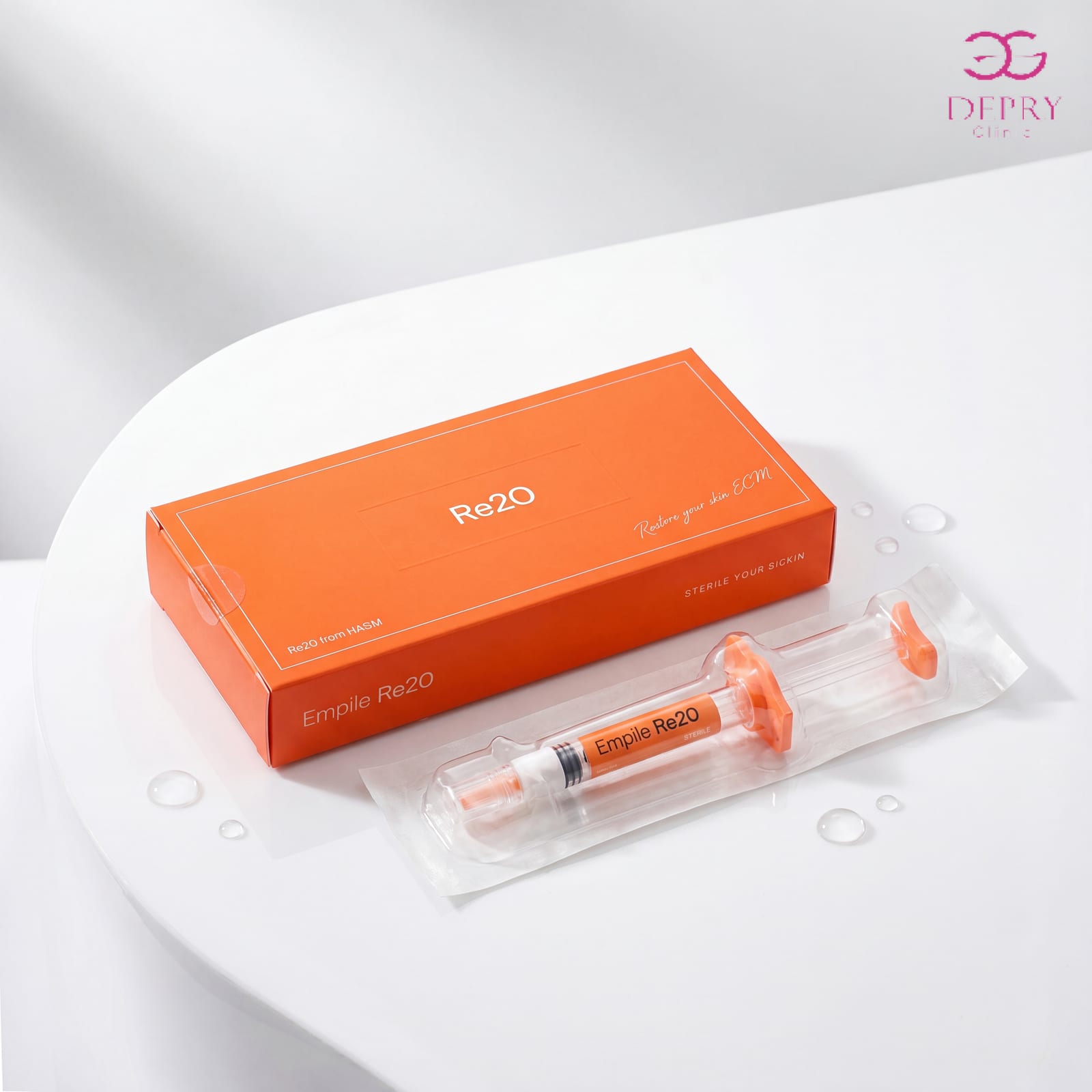
Chin augmentation with filler means injecting a hyaluronic acid filler (a substance our bodies already contain) into the chin area to add projection and reshape it to look more balanced — no surgery, no general anaesthetic, and visible results immediately on the day of injection.
Filler does well in cases where the chin is mildly to moderately short or recessed, and it's a great fit for someone who "wants to try it out first" — to see what their face looks like with a more projected chin before committing to anything permanent — because if you're unhappy, it can be adjusted or dissolved. Its limitation is that it gives a less dramatic result than surgery and is temporary, needing top-ups over time.
| Topic | Surgical chin augmentation (implant / genioplasty) | Chin filler (non-surgical) |
|---|---|---|
| Permanence | Permanent (can last many years to a lifetime) | Temporary, about 12–24 months |
| Adjustable / reversible? | Silicone can be removed / genioplasty is harder to revise | Can be adjusted, or dissolved |
| Pain & recovery | Needs anaesthesia, recovery of several days to several weeks | Little pain, uses numbing, no downtime |
| Visible results | Final result once swelling settles, ~3–4 months | Visible immediately on the day of injection |
| Degree of change | Can be large and dramatic | Adds suitable projection, less dramatic than surgery |
| Who it suits | Very recessed chin / wanting a clear permanent change | Mildly to moderately short chin / wanting to try first |
Who suits surgery, and who only needs filler
The question patients ask me most is, "So should I have surgery or filler?" I can't give a one-size-fits-all answer, because it really depends on each person's facial structure and goals. But here's a rough guide.
Filler may be enough
- A chin that is mildly to moderately short or recessed
- Wanting immediate results, no downtime, and no surgical risk
- Wanting to "try it out first" to see what a more projected chin looks like
- Not yet ready to commit to anything permanent
May suit surgery
- A chin that is very recessed or small, so that filler can't add enough
- Wanting a permanent and dramatic change to the chin shape
- Having a bite or bone-structure issue that needs to be addressed together (in which case I may refer you to a specialist who handles that directly)
- Being in good health, not smoking, and understanding what the real-world result looks like
There are some conditions for which surgery may not be suitable — for example, a severe bite problem, gum disease, or abnormal jaw height. These cases need a thorough assessment first, because sometimes the real problem isn't just a "short chin" alone.
The results you get, and how long they last
On results, let me tell you honestly about both paths, so you can decide with complete information rather than vague expectations.
Results of surgery
Both silicone implants and sliding genioplasty give permanent results. There's swelling in the early period, and you'll see the final chin shape clearly once the swelling fully settles at around 3–4 months. International studies have found patient satisfaction with chin augmentation using an implant to be very high, while sliding genioplasty stands out for controlling the groove under the lip and offering the finest reshaping.
Results of filler
Filler gives an immediate result on the day of injection, but it's a temporary change, generally lasting around 12–24 months depending on the filler type, the amount, and the individual body. As it wears off, it gradually dissolves on its own. The upside I like is that it lets us "adjust gradually" until we get just the right shape, without committing to a permanent change.
Whichever method, how natural the result looks depends on planning the facial proportions to be just right more than on making it "project as much as possible." That's why I focus on assessing first, and never overfill beyond what's appropriate.
Risks and recovery you should know
Every procedure that works carries some risk — that's normal. Let me tell you honestly without hiding anything, because knowing is the best prevention and the best way to prepare.
Risks of surgery
- Silicone implant: the material may shift slightly, there's a chance of infection, and over the long term there can be some erosion of the bone beneath it.
- Sliding genioplasty: it's a larger operation, and there may be temporary numbness of the chin or lower lip (rarely long-lasting), infection, or problems related to the fixation hardware, plus a longer recovery.
Risks of filler
- Most are temporary, such as swelling, bruising, or tenderness at the injection site, which resolve on their own within 2–3 days.
- Serious risks like filler entering a blood vessel are very rare, but they are exactly why you should be injected by a doctor who truly understands the anatomy of the chin area.
- Day of treatment Filler shows results immediately and you can return to normal life the same day; surgery has swelling in the early period.
- 2–3 days Filler may have slight swelling or bruising that settles on its own.
- Several days to several weeks The recovery period for surgery.
- 3–4 months Surgery's swelling fully settles and the final chin shape is clear.
Whether surgery or filler, what makes it safest is who performs it and whether the materials are verifiable. Fillers and chin-augmentation materials should be types that are FDA-registered (อย.) and whose registration you can check. Injecting filler in the chin area requires understanding the blood vessels there, so it should always be done by a doctor — not just "anyone can inject."
These risks are there for us to "anticipate and prevent," not to scare you out of taking care of yourself. In filler cases done by a doctor, with assessment first and using FDA-registered (อย.) materials, the chance of a serious problem is very low. And if anything feels off afterwards, I'm always here to look after you — I don't do it and then disappear.
What I want to say honestly about the chin
This part is where I want to speak with you as openly as possible, because the chin is a procedure that's "easy to sell," and many places tend to push for more than is necessary. I don't want you to spend money or take on more risk than the situation calls for.
The truth I see often is this — for people whose chin is only mildly short or recessed, filler is usually enough, with no need for surgery at all, because filler shows results immediately, is adjustable, avoids the risk of an operation, and gives a good, natural result in these cases. Going for surgery when filler would do is paying more and risking more than necessary.
On the other hand, I won't fool you into thinking filler can do everything — for people whose chin is genuinely very recessed, injecting too much filler will look unnatural and may still fall short of what you want. In these cases surgery is what truly fits, and I'll tell you honestly and recommend the right path.
The heart of what I do is to assess first, then choose the method that's right for you — not the one that makes the most money. I consider the person sitting in front of me a patient, not a customer. If filler is enough, I'll tell you it's enough; if surgery is the better choice, I'll tell you the truth.
- For people whose chin is only mildly short or recessed, filler is usually enough, with no need for surgery.
- For people whose chin is genuinely very recessed, surgery is what truly fits; too much filler looks unnatural.
- Assess first, then choose the method that's right for you — not the one that makes the most money.
Is chin augmentation worth it? What to look at
On price, let me say honestly that I can't give a fixed number, and I don't want you to decide on the number alone either — because "cheapest" and "most worthwhile" are often not the same thing. Let me explain what the price depends on.
Factors that make the price differ
- The method chosen — filler, silicone implant, or sliding genioplasty differ greatly in price. Filler generally has a lower starting cost, while sliding genioplasty is a higher-priced operation because it's more complex.
- The type and amount of material — different filler brands, or types of implant material, cost differently, and the amount needed depends on the case.
- The complexity of the case — a slightly recessed chin and a very recessed one take different effort and time.
How to think about "worth"
I'd like you to take the long view. Filler has a lower starting cost but needs a top-up every 12–24 months, while surgery is paid once and is permanent, but the upfront investment is higher and riskier at first. So "worth it" differs for each person — it depends on how much your chin needs to change and whether surgery is something you can take on.
The best path is to come in for a facial-structure assessment first, then talk honestly about which method is most suitable and most worthwhile for you. I won't push the expensive option if a cheaper one does the job. You're welcome to message the clinic on LINE for the latest pricing.
Consult about your chin in Phitsanulok — Depry Clinic
If you're in Phitsanulok or a nearby province and want a straightforward consultation about your chin, Depry Clinic would be glad to look after you. Here, Dr. Time assesses every case personally and favours non-surgical chin augmentation with filler as the first choice in suitable cases — because it's safer, shows results immediately, and is adjustable.
I'll look at your facial proportions and tell you honestly whether your case is one where filler is enough or where you should consider surgery. There's no pushing you to do more than you need, because we treat you as a patient, not a customer — and once it's done, I continue to look after you rather than finishing and disappearing.
Want to adjust your chin so the face looks more balanced, with a doctor genuinely assessing and caring for you at every step? Message Dr. Time anytime — the consultation is free, with no charge.
Frequently asked questions
Does chin augmentation always require surgery, or can filler do the job instead?
Not always. For people whose chin is only mildly to moderately short or recessed, chin filler often gives a good, natural-looking result without surgery — visible immediately, with no downtime. For people whose chin is significantly recessed, or who want a permanent and dramatic change to the chin shape, surgery (a silicone implant or sliding genioplasty) is a better fit. The key is to have a doctor assess your facial structure first to see where your case falls — not to decide based on price or trends.
What is the difference between a silicone chin implant and a sliding genioplasty?
A silicone implant places an augmentation material over your existing chin bone, through an incision inside the mouth or under the chin, to add projection. It is the less complex option, and if you are unhappy it can be removed. A sliding genioplasty cuts the chin bone and slides it forward (or backward), fixing it in place with titanium plates and screws. It allows finer shaping and better control of the groove under the lower lip, and suits complex cases or those wanting a bigger change — but it is a larger operation with a longer recovery.
How long does chin filler last?
Hyaluronic acid chin filler usually lasts around 12 to 24 months, depending on the filler type, the amount used, and your individual body. As it wears off it gradually dissolves naturally. The upside is that if you are unhappy with the shape, it can be adjusted or dissolved — unlike surgery, which is a permanent change.
Does chin filler hurt, and is there much recovery time?
It hurts very little. Most of the time we use only a topical numbing cream or anaesthetic mixed into the filler. During injection you may feel a dull pressure. Afterwards there may be slight swelling or bruising for 2 to 3 days that settles on its own, and you can return to normal life the same day — unlike surgery, which requires several days to several weeks of recovery.
Do the results of chin augmentation last, and do they look natural?
Both silicone implants and sliding genioplasty give permanent results, with the final chin shape clear once the swelling fully settles at around 3 to 4 months. Filler gives an immediate but temporary result, lasting 12 to 24 months. How natural it looks depends on assessing facial proportions and on technique — with good planning and not overfilling, both methods can look natural. That is why I always focus on assessing the facial structure first, rather than doing as much as possible.
What are the risks of chin filler?
Most are temporary, such as swelling, bruising, or tenderness at the injection site, which resolve on their own. Serious risks like filler entering a blood vessel are very rare, but they are exactly why you should be injected by a doctor who truly understands the anatomy of the chin area, using a filler that is FDA-registered (อย.) and verifiable. That is far safer than being injected by a non-doctor.
How much does chin augmentation cost in Phitsanulok?
The price depends on several factors: the method chosen (filler, silicone implant, or sliding genioplasty), the type and amount of material used, and how complex the case is. That is why I do not want you to decide on the number alone — someone who only needed filler but went for surgery has paid more than necessary. The best path is to come in for a facial-structure assessment first, then talk honestly about which method is most worthwhile for you. You are welcome to message the clinic on LINE for the latest pricing.
How should I prepare before coming in to consult about my chin at Depry Clinic?
There is not much to prepare. Just come and talk to me about what you would like to adjust — for example, feeling that your chin is short or recessed, or feeling unsure when you see your profile. I will look at your facial proportions, teeth, and bite, then tell you honestly whether filler is enough or whether this case should consider surgery. If you have any underlying conditions or are on any medication, let me know — it helps me plan more safely. We treat you as a patient, not a customer, so there is no pushing you to do more than you need.
References & how to verify
I'd like you to be able to check the information I used for yourself — here are the references this article draws on:
- NHS (National Health Service, United Kingdom) — information on cosmetic procedures and what to consider before deciding: nhs.uk
- Thai Food and Drug Administration (อย.) — the system for checking the registration of materials and health products before a procedure: oryor.com
- Medical News Today — an overview of sliding genioplasty: how it's done, results, and recovery: medicalnewstoday.com
- PubMed (U.S. National Library of Medicine) — a research review comparing surgical and non-surgical chin augmentation, risks, and outcomes: pubmed.ncbi.nlm.nih.gov