- Natural Results vs. a Frozen Face — What's the Real Difference?
- 3 Main Causes of a Frozen Face
- Facial Muscle Anatomy — The Heart of Designing Natural Results
- Micro-dosing Technique and Pre-Injection Assessment
- The Right Dosage — Zone-by-Zone
- How to Choose a Clinic That Delivers Natural Results
- Timeline and Duration of Results
- Pricing and What's Truly Worth It
- Natural-Looking Botox in Phitsanulok — de Pry Clinic
- FAQ — Frequently Asked Questions
- References and Verification
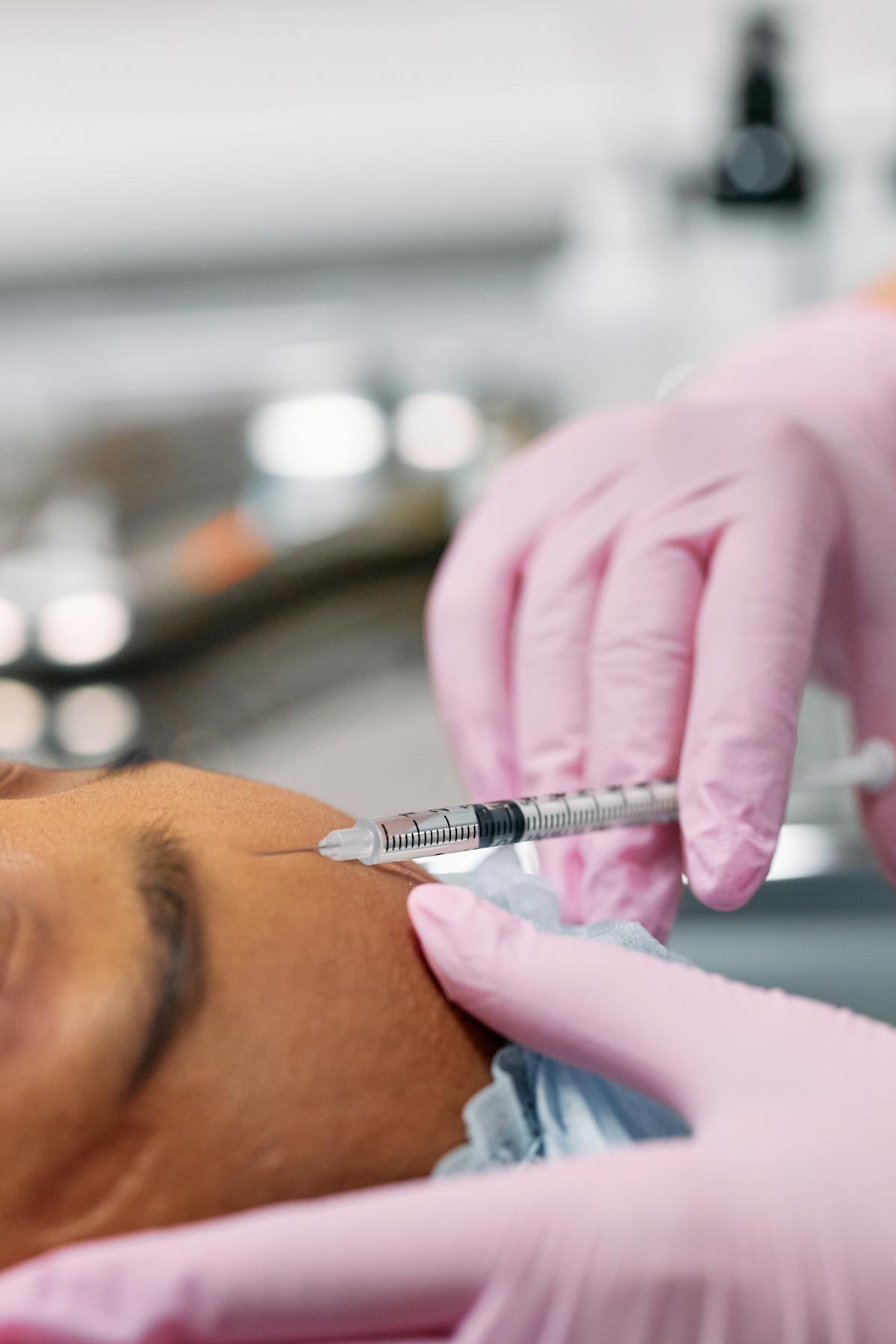
I understand why many people fear Botox more than they should — some of the photos you see online really are frightening: tight faces, smiles that won't lift, looking like a wax figure. That fear is entirely reasonable, because you don't want to end up like that.
But the truth is that a "frozen face" is not caused by the botulinum toxin itself — it comes from poor design. Dr. Time will explain clearly how good Botox injection differs from bad, in terms of technique, anatomy, and the assessment process.
Natural-looking Botox = reducing only the specific muscles that need it, while letting the remaining muscles still function — not "freezing" the entire face. This is achieved by assessing the muscles before every injection, designing placement individually, and using just the right dosage — not the same formula for everyone.
Natural Results vs. a Frozen Face — What's the Real Difference?
What Will People Around You Notice?
The easiest way to tell natural results apart from a frozen face is to look at how the people around you feel:
| What Others Notice | Natural-Looking Botox ✅ | Frozen-Face Botox ❌ |
|---|---|---|
| First impression | "You look better, fresher — can't quite say what you did" | "You look odd, your face seems tight, your smile barely lifts" |
| Expressing emotion | Still smiles, laughs, frowns — full range of expression | Limited movement, face looks static, not reactive to emotion |
| Wrinkles at rest | Faded or gone | Faded or gone (the same) |
| Wrinkles when moving | Partially reduced, still slightly visible in a natural way | No wrinkles at all, but the face looks stiff |
| Eyebrows | In their normal position, may lift slightly | May droop, or lift unnaturally high |
| Overall skin | Smooth, relaxed, alive | Tight, smooth, but lifeless |
Can You Test It Yourself?
The easiest way to check your own results after an injection: try a big smile in front of the mirror. If you see faded crow's feet and reduced wrinkles, but the muscles around your eyes can still push your cheeks up, that's a natural result. If you smile and your cheeks don't lift, or the muscles feel resistant in one spot, that's a sign of over-injection at that point.
3 Main Causes of a Frozen Face
Got questions? Dr. Time offers personalized, honest consultations — no upselling.
Consult Dr. TimeCause 1: Too Much Dosage (Overdose)
This is the most common cause. The frontalis muscle (forehead) gets blocked entirely instead of being partially reduced. The result is a forehead that can't move and eyebrows that won't lift, looking tight even when trying to make an expression.
Many doctors inject too much into the forehead to make wrinkles "disappear 100%," but the result is a flat forehead with no natural contour, and the eyebrows may droop, making you look sleepy or dull. The correct approach is to reduce it by 60–70%, leaving some wrinkles visible at full movement.
Cause 2: Wrong Placement (Misplacement)
Facial muscles sit very close together, and botulinum toxin can "diffuse" away from the injection point within a radius of 1–3 cm. If the injection point is near a muscle you don't want to treat, the drug may reach it and block it unintentionally.
| Risky Injection Point | Neighboring Muscle That May Be Affected | Resulting Effect |
|---|---|---|
| Lower forehead (too low) | Levator palpebrae (lifts the eyelid) | Temporary droopy eyelid (Ptosis) |
| Glabella (too deep / too spread out) | Levator anguli oris (lifts the corner of the mouth) | One corner of the mouth droops, asymmetric smile |
| Outer eye corner (too low) | Zygomaticus major (pushes the cheek up when smiling) | Cheeks don't lift when smiling, looks flat |
| Jaw (Masseter) near the corner of the mouth | Depressor anguli oris | Corner of the mouth droops, looks sad |
Cause 3: No Pre-Assessment of the Muscles
Everyone's muscles differ greatly in size and strength. Some people have thin, weak forehead muscles and need only a little drug; others have thick, strong muscles and need more. Using the same formula for everyone without assessing first is why some people get good results while others get unbalanced ones.
"Will the doctor assess my muscles before injecting?" — If the answer is "not necessary," or the doctor doesn't ask you to move your face first, that's a warning sign that the design may not be individualized.
Facial Muscle Anatomy — The Heart of Designing Natural Results
The Important Muscles Fall Into 2 Groups
Facial muscles divide by function into 2 main groups that matter for Botox injection:
| Group | Main Muscles | Function | If Over-Injected With Botox |
|---|---|---|---|
| Group to Reduce (Hyperactive muscles) |
Corrugator supercilii, Procerus (glabella), outer Orbicularis oculi (crow's feet), central Frontalis (forehead), Masseter (jaw) | Create wrinkles from repeated movement, or enlarge the jaw | Forehead/eye area too smooth, but the face looks stiff |
| Group to Preserve (Expressive muscles) |
Levator labii superioris (lifts the lip), Zygomaticus major (smiling), lateral Frontalis (lifts the eyebrow), Orbicularis oris (lips) | Create facial expression, make you look lively | Can't smile, face looks blank, lacking humanity |
Why Must the Injection Plan Be Individualized?
The clearest example is the forehead (Frontalis): this muscle has both a central part that creates horizontal wrinkles and a lateral part that helps lift the eyebrows. If you inject the whole thing, the eyebrows droop and you look sleepy; if you inject only the central part, the eyebrows can still lift normally. The difference is just a few millimeters of needle placement.
Micro-dosing Technique and Pre-Injection Assessment
What Is Micro-dosing and How Does It Work?
Micro-dosing means injecting small amounts of drug (1–2 units per point) spread across many points instead of injecting 5–10 units at a single point. This method offers several advantages:
| Aspect Compared | Micro-dosing (many points, small amount) | Traditional (few points, large amount) |
|---|---|---|
| Drug distribution | Even throughout the muscle | Concentrated at the injection point, uneven distribution |
| Chance of "hard spots" | Very low | Higher |
| Precision of control | High — adjustable point by point | Lower — harder to reverse |
| Suitability for delicate areas | Very good (around the eyes, lips) | Riskier in areas with important muscles nearby |
| Time taken to inject | Slightly longer | Faster |
| Best suited for | Those wanting natural results, first-timers, eye area/lips | Masseter (jaw), where the muscle is thick and far from important muscles |
Pre-Injection Assessment — What Does It Involve?
At de Pry Clinic, Dr. Time follows these steps before every injection:
- Dynamic assessment — asking you to move your muscles: frown, raise your eyebrows, smile, smile big, laugh, scowl, look up, look down — observing which muscles are working too hard
- Static assessment — looking at your face at rest: which wrinkles are dynamic (from movement) and which are static (already deep even at rest — these respond less to Botox)
- Asymmetry check — most people's faces are asymmetric; sometimes the left and right sides must be injected with different amounts
- Designing the injection plan and quoting the price — always before the first needle goes in
The doctor asks you to "move your face" in several ways before injecting / explains where they'll inject and why / tells you the total units before starting / doesn't rush to finish in 5 minutes / offers a follow-up service if the result isn't what you wanted.
The Right Dosage — Zone-by-Zone
Suitable Dosage Ranges for Natural Results
Below are the dosage ranges commonly used for natural results (these figures are a guide, not a fixed formula, since they depend on each person's muscle size):
| Area | "Natural Result" Dosage Range | "Full Correction" Dosage Range | Muscle Involved |
|---|---|---|---|
| Forehead | 8–12 units | 15–20 units | Frontalis |
| Glabella (between the brows) | 15–20 units | 20–30 units | Corrugator + Procerus |
| Crow's Feet | 8–12 units/side | 12–16 units/side | Orbicularis oculi (outer) |
| Jaw (Masseter) | 20–25 units/side | 30–40 units/side | Masseter |
| Brow Lift | 2–3 units/side | Not recommended >4 units | Orbicularis oculi (inner) |
| Gummy Smile | 2–3 units/side | 4–5 units/side | Levator labii superioris alaeque nasi |
Why Does the Doctor Give a Range Rather Than an Exact Number?
Because the same number produces different results in different people. For example, 15 units in the forehead of someone with thin muscles may block the muscle 100%, but in someone with thick muscles it may only reduce it by 60%. That's why pre-injection assessment and a 2-week follow-up are so important.
When unsure, Dr. Time will choose to start with fewer units, then top up in 2 weeks if needed. This is safer than over-injecting and then having to wait for the drug to wear off on its own, which can take 2–6 weeks.
How to Choose a Clinic That Delivers Natural Results
5 Questions to Ask Before Booking an Injection
| Question | A Good Answer ✅ | A Concerning Answer ⚠️ |
|---|---|---|
| "Will the doctor assess my muscles before injecting?" | "Yes, I'll ask you to move your face in several ways" | "Not necessary, we use standard positions" |
| "What brand of drug do you use? Is it FDA-registered?" | Answers clearly, can show documentation | Vague answer, or just says "it's good" without specifying |
| "Who does the injection?" | "The doctor injects every case personally" | "A nurse or assistant will inject for you" |
| "What can be done if I'm not happy with the result?" | "There's a 2-week follow-up; if a top-up is needed, it's free" | "You'll have to wait for the drug to wear off and inject again," or no policy at all |
| "How is the price calculated? Can you tell me before the injection?" | "It's by units; I'll assess and quote before starting" | "Told afterward," or a fixed package price without assessment |
Clear Warning Signs of an Unsafe Clinic
- Prices abnormally low (genuine drug has a minimum cost)
- No doctor on site, an assistant injects instead
- Pressure to buy multi-session courses on your first visit
- Not disclosing the drug brand or the number of units to be used
- No consultation before injecting — done immediately in 5 minutes
Timeline and Duration of Results
Do Natural Results and Full-Correction Results Last Differently?
| Time Period | Natural-Looking Botox | Full-Correction Botox |
|---|---|---|
| First visible result | 3–5 days | 3–7 days |
| Most pronounced result | Week 2 | Week 2–3 |
| Result stabilizes | 3–4 months | 4–6 months |
| Muscle returns | Month 3–4 | Month 4–6 |
| The injected person's experience | Face looks natural throughout, feels like yourself | More pronounced result, but the face may feel tight at first |
| Best suited for | First-timers, those who don't want others to know, those who need to be expressive at work | Those wanting maximum wrinkle reduction, already familiar with Botox |
Does Regular Injection Really Make Results Last Longer?
Yes, and there's research to support it. Muscles whose activity is continuously reduced over 3–4 rounds gradually "forget" how to form wrinkles and weaken on their own. The average result for people who have injected consistently for 2–3 years is often 4–5 months instead of the 3–4 months of the first round. Moreover, weakened muscles need fewer units in subsequent rounds, so the cost decreases by itself too.
Pricing and What's Truly Worth It
How Is Natural-Looking Botox Priced?
The price doesn't depend on the "style" — natural or full — but on:
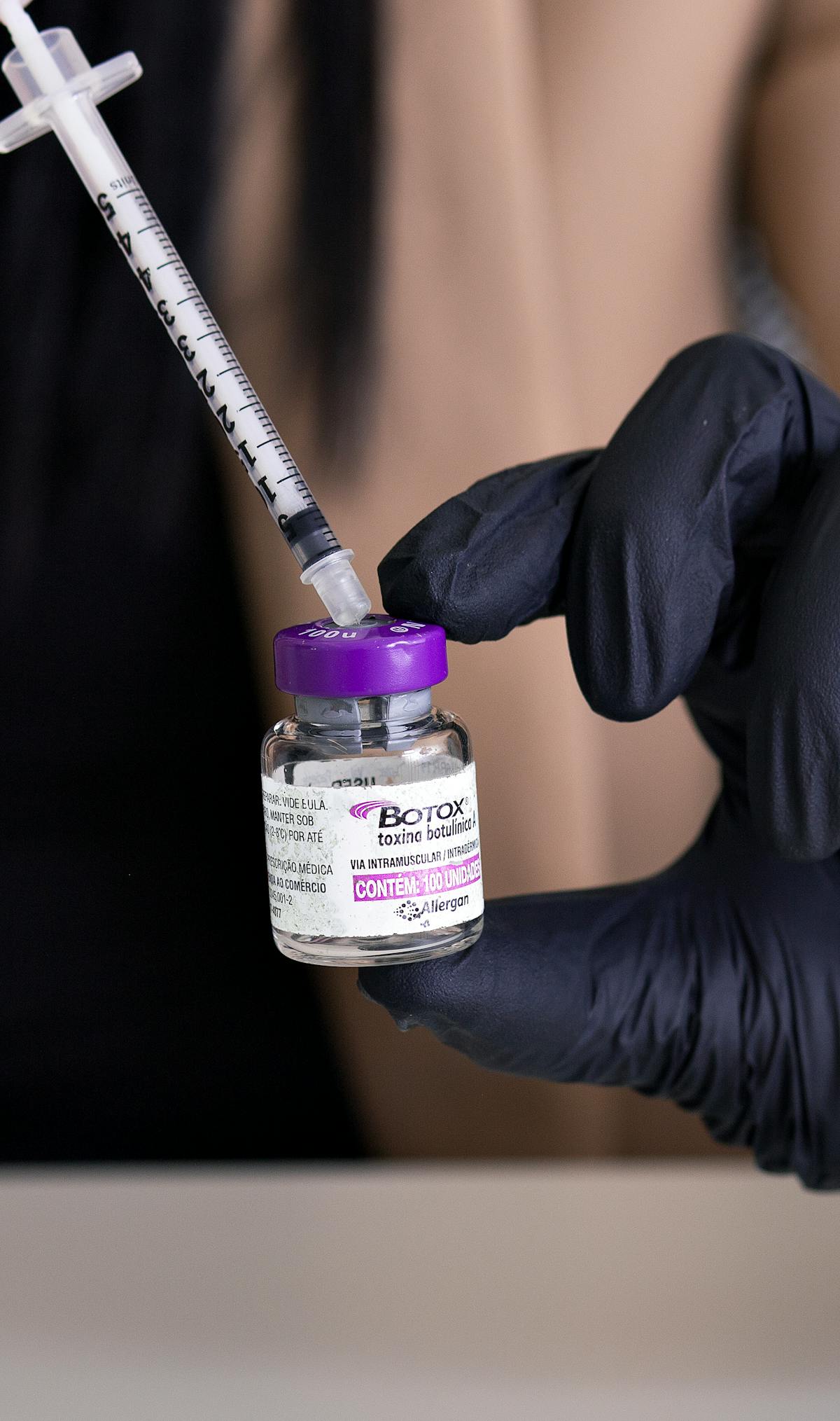
- Drug brand — each brand has a different price per unit (Allergan Botox® is the highest priced, Nabota® is cheaper, but all are FDA-registered)
- Total number of units — natural results use fewer units, so they often cost less
- Number of areas — injecting several areas in one appointment; some clinics offer a discount
Botox that's abnormally cheap (more than 50% below market) often uses unregistered drugs, counterfeit drugs, or diluted drugs. All three give unpredictable results and risk side effects — costing more than what you saved in the long run.
First Injection vs. Ongoing Injection — How Does the Cost Change?
Many people worry that once they start injecting they'll have to inject forever. The truth is:
- If you stop injecting, the muscles return to normal function; wrinkles come back but no worse than before
- Injecting consistently for 2–3 years weakens the muscles, requiring fewer units, lowering the cost
- There's no downside to stopping midway — unlike some drugs that must be tapered off
Natural-Looking Botox in Phitsanulok — de Pry Clinic
If you're in Phitsanulok, Sukhothai, Uttaradit, Phetchabun, or Kamphaeng Phet, you don't need to travel to Bangkok to get the Botox result you want.
At de Pry Clinic, Dr. Time (Dr. Natthamph) graduated from Prince of Songkla University, holds the ABAARM board certification, and personally cares for every case. The process used:
- Pre-assessment — moving every relevant muscle to see how it actually works before designing the plan
- Personalized design — no single template for everyone; units and points are set according to your actual muscles
- Micro-dosing technique — spreading the drug evenly to reduce the chance of hard spots
- 2-week follow-up — if the result falls short of the goal, a free touch-up at no extra charge
Most patients who come in because they "injected elsewhere and ended up with a frozen face" often feel a big difference after injecting here, because the assessment process is different.
If you've injected before and got a frozen face or weren't happy with the result, Dr. Time is glad to analyze what caused it and create a new, individualized plan for you. Free consultation via LINE before booking.
FAQ — Frequently Asked Questions
- What is natural-looking Botox and how does it differ from the usual kind?
It means reducing only the specific muscles that need it while letting the rest still function. The result is faded wrinkles but a full range of expression — unlike the all-blocked kind, where the face looks tight. - Why do some people end up with a frozen face after Botox?
Three main causes: too much dosage, wrong placement, and no muscle assessment before injecting. All three can be prevented with a good assessment process. - What is micro-dosing and how is it better?
Injecting small amounts spread across many points; the drug distributes more evenly, reducing the chance of hard spots. It's ideal for areas requiring high precision, like around the eyes and the forehead. - If I inject less, will the result last a shorter time?
Slightly shorter (~2–4 weeks), but injecting consistently over the long term weakens the muscles, so the result automatically lasts longer. - What will the doctor assess before injecting?
Moving your muscles in several ways, seeing which muscles work too hard and which must be preserved, checking symmetry, then designing an individualized plan. - Is the price of natural-style Botox different from the usual kind?
It depends on total units, not "style." The natural style often uses fewer units, so it costs less in some cases. Dr. Time always quotes the price before starting. - Who benefits most from natural-style Botox?
Those afraid of a frozen face, first-timers, people who injected elsewhere and weren't satisfied, and those who want to look fresh without others knowing they did anything. - What can be done if I'm not happy with the result?
Tell the doctor within 2 weeks; there's a free touch-up if more units are needed. If you've been over-injected to the point of stiffness, you'll need to wait 2–6 weeks for the drug to wear off — there's no antidote, but it always resolves on its own.
References and Verification
I want you to be able to verify the information I use yourself — here is every reference this article draws on:
- DermNet NZ — anatomy and mechanism of action of botulinum toxin: dermnetnz.org/topics/botulinum-toxin
- American Academy of Dermatology (AAD) — reducing wrinkles with procedures: aad.org/public/cosmetic/wrinkles
- NHS (UK) — safety guidance for cosmetic procedures: nhs.uk/cosmetic-procedures/advice
- PMC — Aesthetic Medicine Research — safety and efficacy of botulinum toxin in aesthetic medicine: pmc.ncbi.nlm.nih.gov/articles/PMC4174876
- Thai Food and Drug Administration (FDA) — verify drug registration: oryor.com
Written by
ดร.นพ.ณธธรรมภ์ โอภาอภิณัฐฏ์ (หมอธามน์)Clinic physician at de Pry Clinic, Phitsanulok · Thai medical license no. 56524