
- What is Re2O? Why it isn't an ordinary skin booster
- Comparing all 4 at a glance: Re2O vs HA vs Rejuran vs Exosome
- Who is suited to what? (Read this and you'll know where to start)
- What the evidence and research actually say — honestly
- How to choose the one that truly matches your goal
- Consult about Re2O and skin boosters in Phitsanulok — de Pry Clinic
- Frequently asked questions
- References and verification
These 4 are not "better than one another" — they simply do different jobs. HA skin booster = adds water for plump, dewy skin, shows quickly but is temporary · Rejuran (PDRN) = sends repair signals to renew the skin, with good data on hydration/elasticity · Exosome = cell-level regeneration signals, interesting but the evidence/regulation is still unclear · Re2O (ADM) = a collagen mesh framework from human skin that invites the skin to produce new collagen, focused on long-term "structural renewal" rather than adding water. I'll walk you through each one, then help you choose the one that truly matches your skin goal — not the trend.
What is Re2O? Why it isn't an ordinary skin booster
A patient once sat down in front of me, opened her phone and showed me a screenshot full of names she'd jotted down — Re2O, Rejuran, Exosome, HA skin booster — then asked in a tired voice, "Doctor, I've been reading for days now, and the more I read the more confused I get. Every one of them says it renews the skin and stimulates collagen, all the same. So which one should I actually do?" I think if you're reading this article, you probably feel something similar, don't you? — you want to take care of your skin, but you're afraid of choosing wrong and wasting both money and time.
I understand that feeling well, and I want to say right from the start — you're not foolish for being confused. It genuinely is confusing, because social media is full of pretty words that all sound the same, and hardly anyone sits down to explain how each one "works differently". Today, let me do that job for you. I'll walk you through each one openly and straightforwardly, and together we'll find the one that suits "your skin" — not the one that's most popular right now.
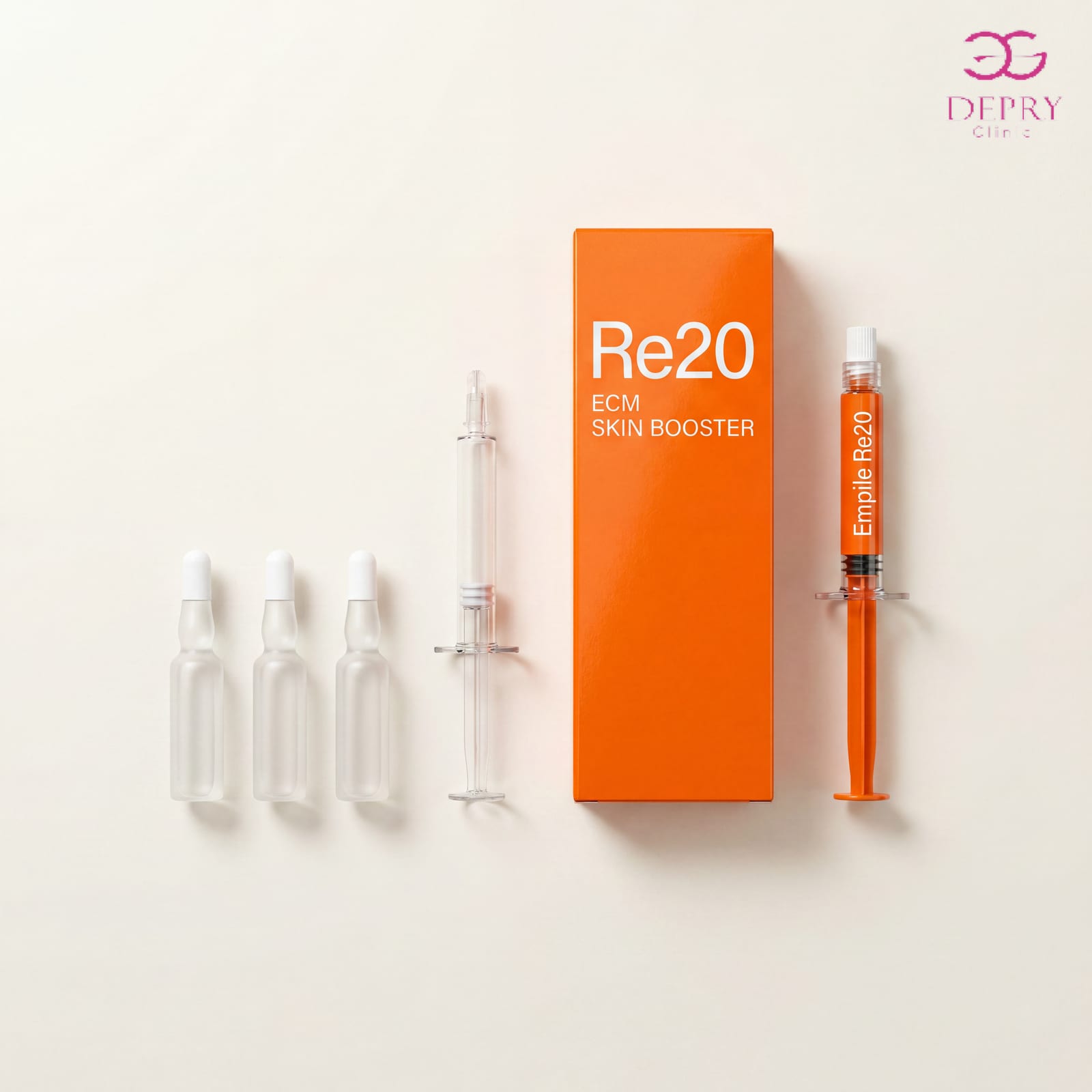
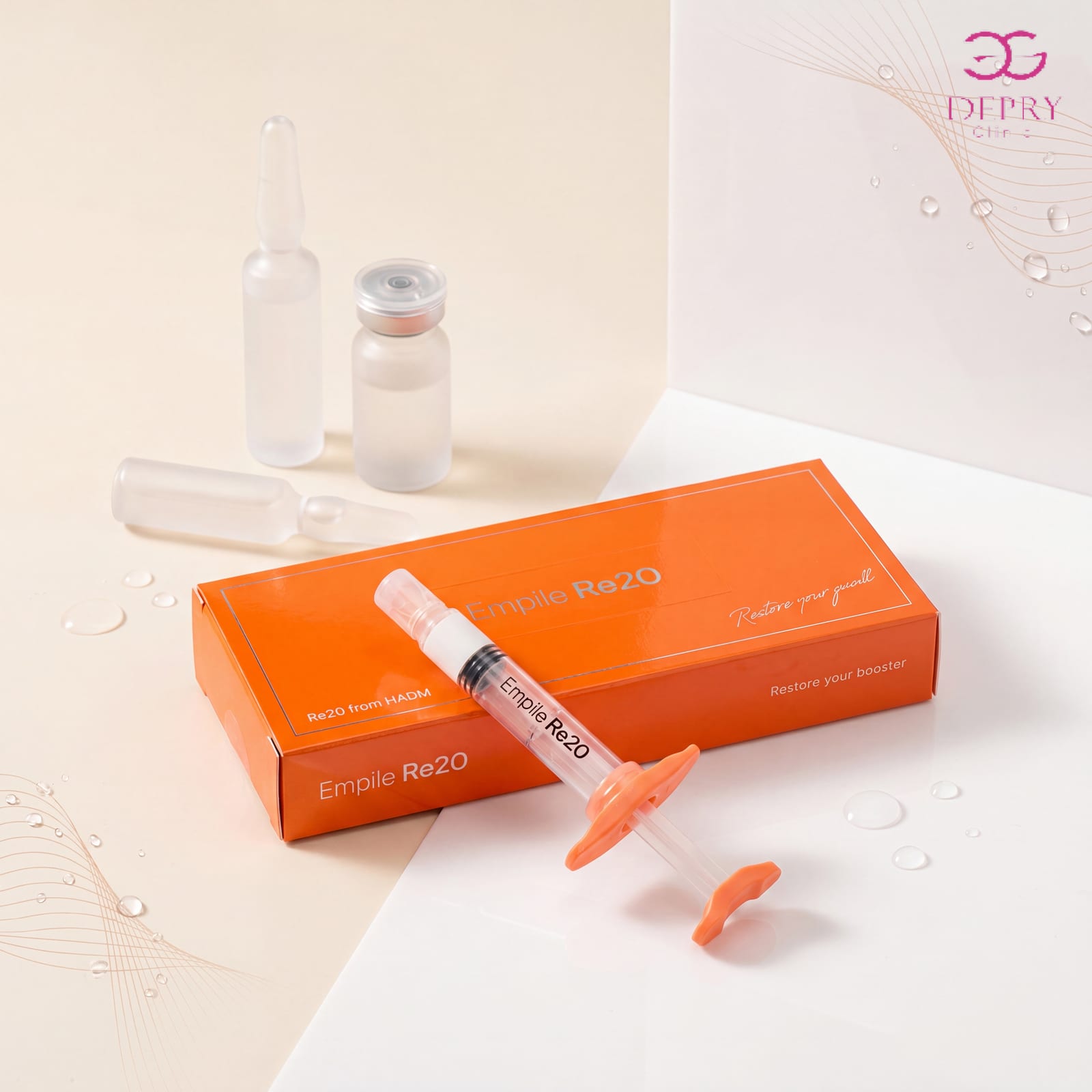
Let me explain it the way I actually explain it to patients in the exam room — you don't need to be a doctor to understand. The technical name of Re2O is Micronized Acellular Dermal Matrix, or ADM for short (developed by L&C Bio of Korea). Picture it like this — they take the skin of a human donor and put it through a process to "remove the cells" until only a mesh framework of collagen and tissue proteins remains (collectively called the ECM), which our body is familiar with, then micronize it so finely that it can be injected into the skin.
Now, what makes it different from the skin boosters we're used to is this — it doesn't go in to "add water" for temporary dewiness. Instead it settles in as a scaffold for our own skin-building cells (fibroblasts) to attach to, like scaffolding for workers to climb up and construct a building. When fibroblasts come in to work, they produce new collagen, small blood vessels form to nourish the area, and the structure of the true dermis is gradually remodeled to become firmer again. This is what the field calls "skin structure renewal" (remodeling) — not just hydration that comes and goes.
If an HA skin booster is like "watering a plant" so its leaves look fresh right away, Re2O is like "improving the soil and setting up a fence frame" so the plant becomes strong from the inside — the first shows results fast, the second is an investment in the foundation that you see gradually.
Comparing all 4 at a glance: Re2O vs HA vs Rejuran vs Exosome
Got questions? Dr. Time offers personalized, honest consultations — no upselling.
Consult Dr. TimeNow it's time to line up all 4 side by side. I believe that once you see them clearly, you'll understand why I always say "there's no single best one — only the one that best fits your goal" — like running shoes versus formal shoes, neither is better than the other, they're just for different occasions. I'll set it out in a table first, and below I've also made a separate card for each one, in case anyone reading on a phone would find it easier on the eyes.
| Topic | Re2O (ADM) | HA skin booster | Rejuran (PDRN/PN) | Exosome |
|---|---|---|---|---|
| Main mechanism | ECM/collagen mesh framework that stimulates fibroblasts to produce new collagen (structural renewal) | Adds hydration with hyaluronic acid, holding water in the skin layers | PDRN sends signals for repair and skin renewal, stimulating fibroblasts | Cell-level signaling vesicles that release substances to stimulate regeneration / reduce inflammation |
| Strengths | Focuses on "rebuilding" the structure, may improve firmness/elasticity over the long term | Dewy, radiant, shows quickly, safe, familiar, with the most data | Good data on hydration and elasticity, usually well tolerated | Regeneration signals that are interesting in early-stage research |
| Limitations | Aesthetic evidence is still newer/less than HA, results vary by brand, the early period may involve more swelling/soreness | It's temporary hydration, with little structural remodeling of the skin | Results vary by indication and product, head-to-head data is still limited | Manufacturing/regulatory standards are still unclear, clinical evidence is weaker |
| Onset / duration | Gradual over weeks, assessed at 6 weeks–6 months, lasts several months | Looks dewy quickly at first, but the effect is temporary and must be repeated on a schedule | Glow/elasticity come up fairly quickly, but it must be done as a course | Data on duration is still unclear, varies by product |
| Best suited to | People who want to renew skin structure, firmness/elasticity over the long term | People who want dewy, radiant skin with fast results, easy to start | People who want to renew the skin, reduce dullness/fatigue, focused on hydration/elasticity | People who want to try new technology and are comfortable with still-limited evidence |
Now, for anyone reading on a phone who finds the table too dense, I've broken it out into a card for each one:
Mechanism: an ECM/collagen framework that stimulates fibroblasts to produce new collagen — "structural renewal", not adding water
Strengths: focuses on rebuilding at the true dermis, may improve firmness/elasticity over the long term
Limitations: aesthetic evidence is still newer than HA, results vary by brand, the early period may involve slightly more swelling/soreness
Onset/duration: gradual over weeks, lasts several months
Suited to: people who want to renew skin structure and firmness over the long term
Mechanism: adds hydration with hyaluronic acid, holding water in the skin layers
Strengths: dewy, radiant, shows quickly, safe, familiar, with the most supporting data
Limitations: it's temporary hydration, with little structural remodeling of the skin
Onset/duration: looks dewy quickly at first, but must be repeated on a schedule
Suited to: people who want dewy, radiant skin, easy to start
Mechanism: PDRN sends signals to stimulate repair and skin renewal, helping fibroblasts
Strengths: good data on hydration and elasticity, usually well tolerated
Limitations: results vary by indication and product, head-to-head data against ADM is still limited
Onset/duration: glow/elasticity come up fairly quickly, but must be done as a course
Suited to: people who want to renew the skin, reduce dullness/fatigue, focused on hydration/elasticity
Mechanism: cell-level signaling vesicles that release substances to stimulate regeneration and reduce inflammation
Strengths: regeneration signals that are interesting in early-stage research
Limitations: manufacturing and regulatory standards are still unclear in many countries, clinical evidence is weaker
Onset/duration: data is still unclear, varies by product
Suited to: people who want to try new technology and are comfortable with still-limited evidence
Who is suited to what? (Read this and you'll know where to start)
When a patient sits down in front of me, the first question I ask isn't "which one do you want to do" but "right now, what worries you most about your skin?" — because that answer is exactly what tells us which one to start with. Let me break it down into goal groups for you.
If your goal is "dewy, radiant skin, fast"
If you feel your skin is dry and dull-tired, you want a dewy radiance you can see within a few weeks, and you'd like to start with something familiar and well-supported by data, an HA skin booster is usually the starting point that fits most directly. Rejuran (PDRN) is also a good option if you want both hydration and the feeling of renewed skin at the same time.
If your goal is "skin starting to sag, thin, lacking firmness — wanting to address the structure"
If you're starting to notice your skin thinning, the firmness fading, and you want to invest in something that addresses the "foundation" of the skin rather than just temporary surface dewiness, Re2O (ADM) is the one that's interesting mechanistically, because it works directly on the structure of the true dermis. But I'll always tell you frankly that its effect is gradual — you have to be patient and give the skin time to rebuild.
Re2O is suited to
- People who want to renew the "structure" of the skin, not just hydration
- People whose skin is starting to thin, sag, lack firmness
- People who can wait for a gradual result, looking long term
- People who have done HA and want to move up another level
Should consult a doctor first
- People who are pregnant or breastfeeding
- People with an infection or inflamed rash in the area to be injected
- People with a history of allergy to tissue products, or certain underlying conditions
- People who want dewy skin fast (for this group, HA/Rejuran fits better)
Whichever one you choose, the heart of it is "who assesses and injects it for you" — not just the name of the product that's trending. What you should ask every time is: where does this product come from, can its origin and registration be verified, and who is doing the injecting? — because a good thing in the right hands is what makes it truly safe and worthwhile.
What the evidence and research actually say — honestly
I believe the best patient is one who has real information, not advertising copy. So I'd like to tell you honestly what the research says about Re2O/ADM, and where we still have to "be truthful" and admit it's still new.
There is a randomized "split-face" study comparing human ADM with an HA skin booster. The interesting result is that the side using ADM performed better in several aspects — skin density, volume, elasticity, wrinkle depth, pore size, hydration and the skin barrier — with follow-up as long as 20 weeks, and no serious side effects found. This is consistent with the idea that ADM works at structural renewal, not just adding water.
Another is a randomized, multicenter study that used micronized ADM injected at the nasolabial folds, which found it gave results close to a collagen filler at 6 months, but the early period may involve slightly more swelling and soreness. I bring up this study because it reflects two things at once — it has real potential, but there's also a trade-off we need to talk about honestly first.
- There's a randomized study where ADM was superior to HA in several aspects over 20 weeks, with no serious side effects found
- At the nasolabial folds, micronized ADM gave results close to a collagen filler at 6 months (but with slightly more swelling/soreness early on)
- The effect is gradual over weeks, and the aesthetic evidence for ADM is still newer/less than HA — I'll tell you that honestly
As for Exosome, I'd like to invite a little caution — although the regeneration signals are interesting in early-stage research, the manufacturing standards and regulation are still unclear in many countries, and the clinical evidence is weaker than the others. For anyone who wants to try it, I recommend always asking clearly about the product's origin and registration first.
How to choose the one that truly matches your goal
By this point, I'm guessing your mind has come back to the same question that patient had at the start of the article — "so which one should I actually do, doctor?" Let me answer the same way I answer everyone who sits in front of me — don't choose the "treatment" first, start with "your goal", and the tool will follow on its own. Don't fall in love with the name of a procedure first and then look for reasons to justify it afterward.
Ask yourself these 3 questions before deciding
- What is the goal? Dewy, radiant, fast (→ HA/Rejuran) or long-term structural renewal (→ Re2O)
- How long can you wait for results? Do you want to see them quickly within a few weeks, or can you give the skin months to rebuild?
- How much risk/novelty can you accept? Do you want the one with the most data, or are you open to one whose evidence is still newer?
- Step 1 — Assess your skin with a doctor Look at the real skin condition, the skin layers, the laxity and the health history, before choosing any one option
- Step 2 — Match the goal to the tool Fast dewiness = HA/Rejuran, structural renewal = Re2O, and in some cases use them together according to a plan
- Step 3 — Treat on schedule and follow up Most skin boosters are done as a course, then results are assessed periodically and the plan is adjusted to how the skin responds
And the important point I always stress — sometimes the best answer isn't to "choose just one", but to plan to use them together with good timing, for example managing hydration with the one that shows quickly, alongside investing in structure over the long term. But all of this must come from a real assessment, not a one-size-fits-all formula that works the same for everyone.
Consult about Re2O and skin boosters in Phitsanulok — de Pry Clinic
If you've read this far and still aren't sure where your skin should start, I'd like to give your shoulder a gentle pat and tell you — that's completely normal. No one should choose a procedure just from reading on their phone alone, because no two people's skin is the same. This is exactly why I'd like you to sit down and talk with a real doctor before deciding. At de Pry Clinic, Phitsanulok, Dr. Time won't ask you "which one do you want to do" as the first question, but will first listen to what worries you most about your skin, then look at your real skin condition with my own eyes, and from there we'll choose together whether HA, Rejuran, Exosome or Re2O is right for you. And if the one that's trending isn't the answer for your skin, I'll tell you frankly — I won't sell it to you.
Many people travel to see me from Phichit, Sukhothai, Uttaradit, Kamphaeng Phet and Phetchabun, because they want someone who assesses honestly, chooses according to the real goal, and stays to look after the results over time — not someone who treats once and disappears. Here, I'd like you to feel at ease — this is my own clinic and I take care of you myself. Whatever the result turns out to be, I'm right here, following up with you, not going anywhere. And what I'm committed to is bringing back the knowledge and new techniques from the training I attend, to care for the people in our own area, so you receive good care without having to travel all the way to Bangkok.
Want dewy, radiant skin fast → start with HA or Rejuran · Want long-term renewal of skin structure → Re2O is interesting mechanistically · Interested in Exosome → ask clearly about the origin and registration first · And whichever one you choose, please have a doctor genuinely assess and follow up with you — that's what lets you trust that you're in hands that truly intend to care for you.
Frequently asked questions
What is Re2O, and how does it differ from a regular HA skin booster?
Re2O is a skin booster in the ADM (Acellular Dermal Matrix) family, made from human skin that has had its cells removed until only the collagen/ECM mesh framework remains, then micronized so finely that it can be injected. The key difference is that it does not "add water" to make the skin plump like HA — instead it acts as a scaffold for skin-building cells (fibroblasts) to attach to and produce new collagen, making it a long-term skin structure renewal. HA, by contrast, focuses on hydration that shows quickly but is temporary.
Re2O vs Rejuran (PDRN) — which one is better?
It's hard to say which is "better" because they do different jobs. Rejuran uses PDRN to send signals that stimulate repair and skin renewal, with good data on hydration/elasticity, and is usually well tolerated. Re2O is an ECM framework focused on renewing the true dermis. If you want dewy, smooth, quick results, Rejuran/HA fits more directly. But if you want to remodel structure and elasticity over the long term, Re2O is interesting. That said, head-to-head data is still limited, so a doctor should assess first.
How do Exosome and Re2O differ, and which is more reliable?
Exosome refers to cell-level signaling vesicles that release regeneration-stimulating substances, while Re2O is a real tissue mesh framework. In terms of evidence and regulation, Re2O/ADM has a clearer structural rationale, whereas Exosome still raises concerns about manufacturing/regulatory standards in many countries, and its clinical evidence is weaker. You should ask about the origin and registration every time.
Does Re2O show results quickly, and how long do they last?
Re2O is not the kind of treatment that changes volume the way a filler does, because it works gradually. The effect of structural renewal appears slowly over weeks. In studies, results are often assessed at 6 weeks, 3 months and 6 months, which fits the way the effect builds up gradually and lasts for several months — unlike HA, which looks dewy faster in the early stage.
Is Re2O safe, and what side effects are there?
Based on the available data, safety is within an acceptable range. Most reactions are local — swelling, soreness, redness, slight firmness of the skin, or a temporary change in skin tone. Studies comparing it with HA found no serious side effects throughout follow-up, while a study at the nasolabial folds found the early period may involve slightly more swelling/soreness than HA. The caveat is that long-term aesthetic safety data is still limited, and results may vary by brand.
Who is Re2O suited to, and who is better suited to HA or Rejuran?
If you want dewy, radiant, hydrated skin with quick, familiar results, HA or Rejuran fits more directly. But if you're starting to feel that your skin is sagging, thin and lacking firmness, and you want to address the structure of the true dermis over the long term, Re2O is interesting mechanistically. Those who are pregnant, breastfeeding, have a skin infection in the area, or have certain underlying conditions should always consult a doctor first.
Can Re2O replace fillers?
Not directly. HA fillers focus on adding volume so you can see the face shape change from the day of injection, while Re2O renews the quality and structure of the skin layers — it is not about building up the cheekbones or chin. A study at the nasolabial folds found that micronized ADM gave results close to a collagen filler at 6 months, but that is a specific context. Overall, the two do different jobs; some people are suited to using them together according to a plan the doctor sets out.
Where should I get Re2O or a skin booster in Phitsanulok?
Choose a place where a doctor genuinely assesses your skin before treatment, uses products whose origin and registration can be verified, and is ready to follow up with you continuously. At de Pry Clinic, Phitsanulok, Dr. Time always looks at your skin goals first, then chooses whether HA, Rejuran, Exosome or Re2O is the right fit — because choosing the one that matches your goal matters more than choosing whatever is currently popular.
References and verification
I'd like you to be able to verify the information I used to write this article yourself — click to read the originals:
- PubMed (split-face study, hADM vs HA) — a randomized study finding that ADM performed better than HA in several aspects (density, elasticity, wrinkles, hydration) with no serious side effects: pubmed.ncbi.nlm.nih.gov
- PubMed (RCT, micronized ADM at the nasolabial folds) — a multicenter study finding that micronized ADM gave results close to a collagen filler at 6 months: pubmed.ncbi.nlm.nih.gov
- Journal of Cutaneous and Aesthetic Surgery — a review article on Polynucleotide/PDRN (Rejuran) in dermatology, explaining the mechanism and the data on hydration/elasticity: jcasonline.com
- Harley Street Institute — an article comparing types of skin booster in aesthetic dermatology, including HA and regeneration-stimulating options: harleystreetinstitute.com
- U.S. FDA — Dermal Fillers — official information on dermal/soft-tissue fillers, used to compare context with the ADM research at the nasolabial folds: fda.gov
- Thai FDA (อย., Food and Drug Administration) — used to verify the origin and registration of products before deciding to have a treatment: oryor.com
Written by
ดร.นพ.ณธธรรมภ์ โอภาอภิณัฐฏ์ (หมอธามน์)Clinic physician at de Pry Clinic, Phitsanulok · Thai medical license no. 56524