- "I want to try it but I'm afraid it's not safe" — I understand
- How safe is NAD+ IV (the honest answer)
- Side effects you may encounter
- Who should not do it, or needs to be especially careful
- Where is it safe to do — what a good clinic must have
- NAD+ IV pricing in Phitsanulok
- Questions you should ask your doctor before doing it
- Get a doctor's assessment first — de Pry Clinic Phitsanulok
- Frequently asked questions
- References and verification
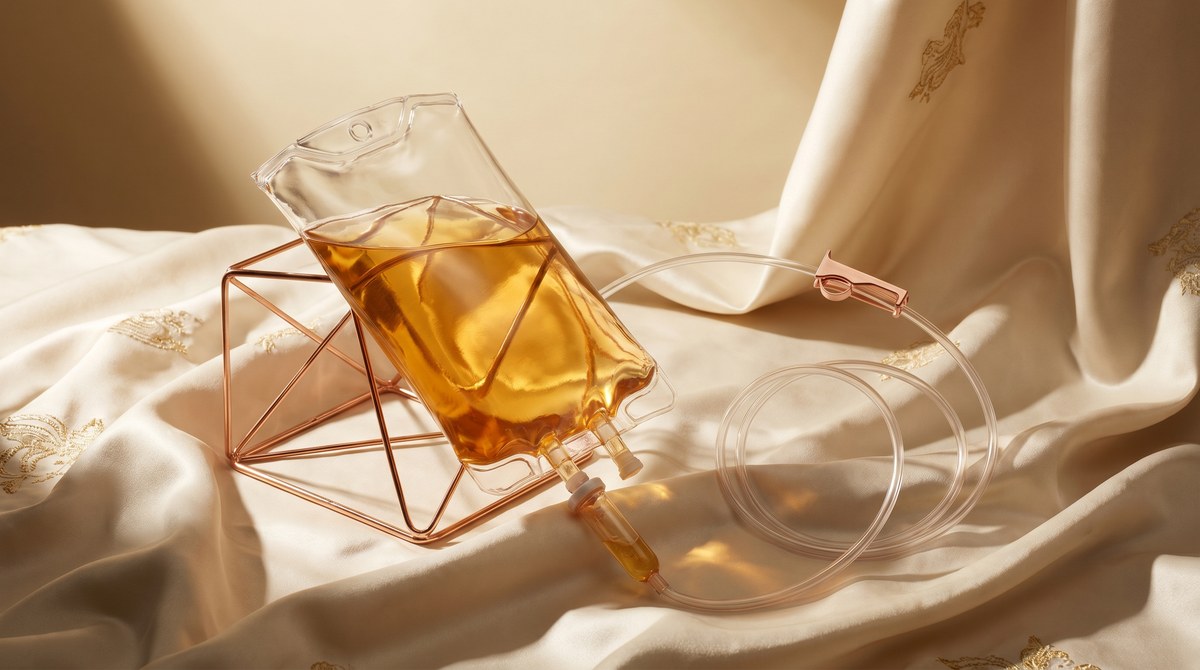
When NAD+ IV is performed in a medical facility by a doctor who screens and assesses you first, manages the infusion rate, and monitors for symptoms, it is considered low-risk for suitable individuals. But every IV procedure carries inherent risk. Possible side effects — such as nausea, chest tightness, facial flushing and warmth, and dizziness — are usually related to infusing too quickly and improve when the rate is slowed down. NAD+ IV is not suitable for everyone, especially those who are pregnant or breastfeeding, those with kidney disease or heart disease, or those allergic to its components. That is why having a doctor assess you first is always necessary. In this article, Dr. Time tells it to you straight.
"I want to try it but I'm afraid it's not safe" — I understand
Many patients are interested in NAD+ IV but worry about whether "putting something into the bloodstream is really safe." I think this concern is a very good one, because it means you're not only looking at the result you want — you're also thinking about your own safety.
So I'd like to walk you through safety from every angle: what's normal, the side effects you might encounter, who should avoid it, and what a safe clinic should look like. Because I believe that talking about risk honestly is what allows you to make a decision in the safest possible way.
How safe is NAD+ IV (the honest answer)
Got questions? Dr. Time offers personalized, honest consultations — no upselling.
Consult Dr. TimeLet me answer you directly: NAD+ IV, when performed in a medical facility by a doctor who assesses you first, manages the infusion rate to be slow and appropriate, and monitors your symptoms throughout, is considered low-risk for people whose bodies are suitable for it.
But I also have to tell you the other side of the truth: every procedure that delivers a substance into the bloodstream carries inherent risk. No one can say it's "100% safe." What lowers the risk is good screening, correct technique, and having someone there to watch over you — not luck, and not going somewhere with no doctor present.
Side effects you may encounter
What I'd like you to know before doing it is that NAD+ IV can cause discomfort during or after the infusion, especially if it's given too quickly. The most commonly reported symptoms include:
- Nausea, chest tightness, or a feeling of warmth and facial flushing
- Dizziness, or aching throughout the body
- Symptoms at the needle site, such as pain, swelling, or bruising
The good news is that most of these symptoms improve when the infusion rate is slowed down. This is why NAD+ should be given gradually and under a doctor's supervision, rather than rushed to finish quickly. Having someone there to adjust the rate and observe symptoms is therefore very important.
If during the infusion you feel severe chest tightness, palpitations, difficulty breathing, or any unusual discomfort, tell your caregiver immediately so it can be slowed or stopped and assessed. Don't force yourself to endure it.
Who should not do it, or needs to be especially careful
I want to emphasize this section in particular, because NAD+ IV is not suitable for everyone. The groups who should consult a doctor first and may not be suitable include:
Should consult a doctor first, especially
- Those who are pregnant or breastfeeding
- Those with kidney disease, heart disease, or uncontrolled blood pressure
- Those with a history of allergy to its components
- Those with complex health conditions or who take several regular medications
Things that help make it safer
- Disclose your underlying conditions, medications, and allergy history in full
- Have it done in a medical facility with a doctor present
- Have a doctor assess your suitability every time
- Don't rush the rate, and report your symptoms honestly during the procedure
Screening your health history with a doctor before the procedure is not a step that can be skipped for the sake of speed — it's what protects you.

Where is it safe to do — what a good clinic must have
If you ask me to sum up what a safe clinic for NAD+ IV should look like, I look for these things — a doctor who assesses and screens you first, products whose origin can be verified, an appropriate infusion rate with someone watching over you throughout, and readiness to handle any adverse symptoms. These things always matter more than a cheap price or a rush promotion.
NAD+ IV pricing in Phitsanulok
Patients often ask about price, and I'll tell you honestly. At de Pry Clinic, Phitsanulok, NAD+ IV (a 250mg imported dose) has a promotional price starting at 5,980 baht per session (normally 7,900 baht). That said, pricing and packages may be updated, and the number of sessions suitable for you depends on a doctor's assessment — not simply following a promotion.
You can see the latest packages and pricing on the clinic's NAD+ IV Therapy page. If you're still not sure what NAD+ is or what it helps with, you can read more at What is NAD+ and What does NAD+ help with.
- NAD+ IV is low-risk for suitable individuals "when performed somewhere with a doctor to assess and supervise" — but nothing is 100% safe
- Side effects (nausea, chest tightness, facial flushing) usually come from infusing too quickly and improve when slowed down
- Pregnant/breastfeeding, kidney disease, heart disease, allergy to its components = must be screened by a doctor first
Questions you should ask your doctor before doing it
Before deciding, I recommend asking your doctor: given my health, am I suitable to do this; are there any contraindications particular to me; what product is used and is it FDA-approved; at what rate will it be given and who supervises during the infusion; and if I feel unwell, how will it be handled? These questions are not rude — they are your right as a patient.
Get a doctor's assessment first — de Pry Clinic Phitsanulok
At de Pry Clinic, Phitsanulok, Dr. Time will always take your history and assess your health first, explain the pros, cons, and precautions honestly, and tell you frankly if I see that NAD+ IV is not right for you at this time. Because I always consider your safety more important than sales.
Many patients travel from Phichit, Sukhothai, Uttaradit, Kamphaeng Phet, and Phetchabun to have a doctor help assess them before deciding. If you're interested, you can consult for an assessment first at no cost — just reach out and talk to Dr. Time.
Frequently asked questions
I've gathered the questions patients most often worry about regarding the safety and pricing of NAD+ IV and answered them at the top of this page. If you have a question specific to you, just reach out and ask Dr. Time.
References and verification
These are the sources I rely on regarding NAD+ and its safety. Click to read the originals:
- PubMed (academic review, 2021) — the role of NAD+ in cellular processes and aging (the academic basis of this topic): pubmed.ncbi.nlm.nih.gov
- U.S. FDA — Consumer Updates — warns to be wary of exaggerated claims and to consider the safety of health procedures/products: fda.gov
- Thai FDA (Food and Drug Administration) — check the registration and safety information of products in Thailand: oryor.com