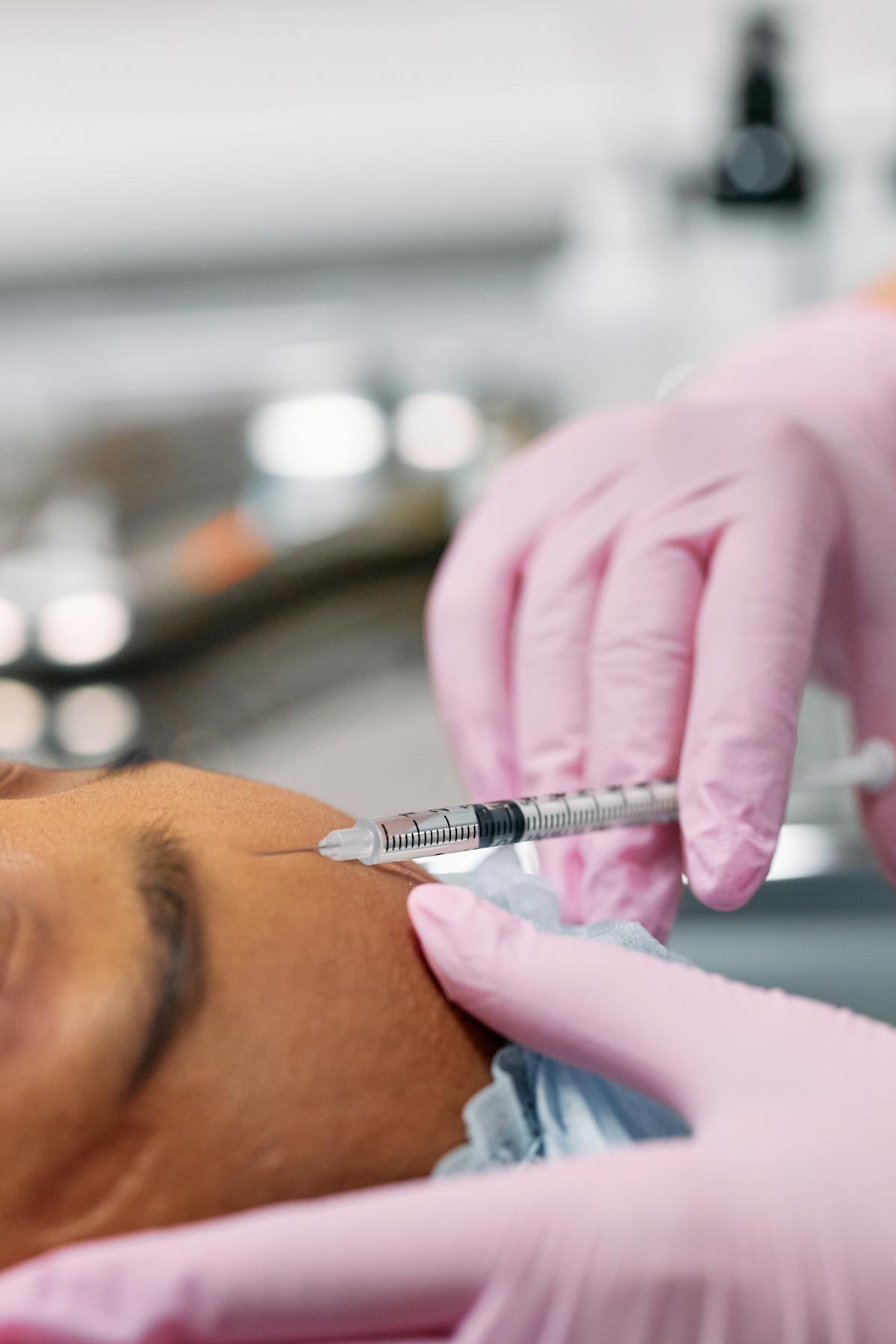

“The other areas look good, Doctor, so why is there still a line above my brow?” I hear this question often. The answer is not simply that too little product was used or that the product was ineffective. Treating the forehead involves balancing softer lines with enough muscle activity to support the brows.
If the line appears only when you raise your eyebrows, it may come from remaining muscle activity. If you can see it while your face is relaxed, it may be an existing crease in the skin. If the brow tail rises sharply or a curved line appears on one side, return to your doctor for another assessment of the balance.
The short answer: why is the line above my brow still there?
The forehead muscle, or frontalis, performs two jobs at once: it creates lines when you raise your eyebrows, and it helps lift the brows. If its activity is reduced too much, some people may notice that their brows sit lower, feel heavy, or make the eyelids look more hooded. A good result therefore does not have to mean “a completely still, perfectly smooth forehead from edge to edge.”
Softer lines with brows that still suit your face matter more than chasing every last line without considering how the brow position may change.
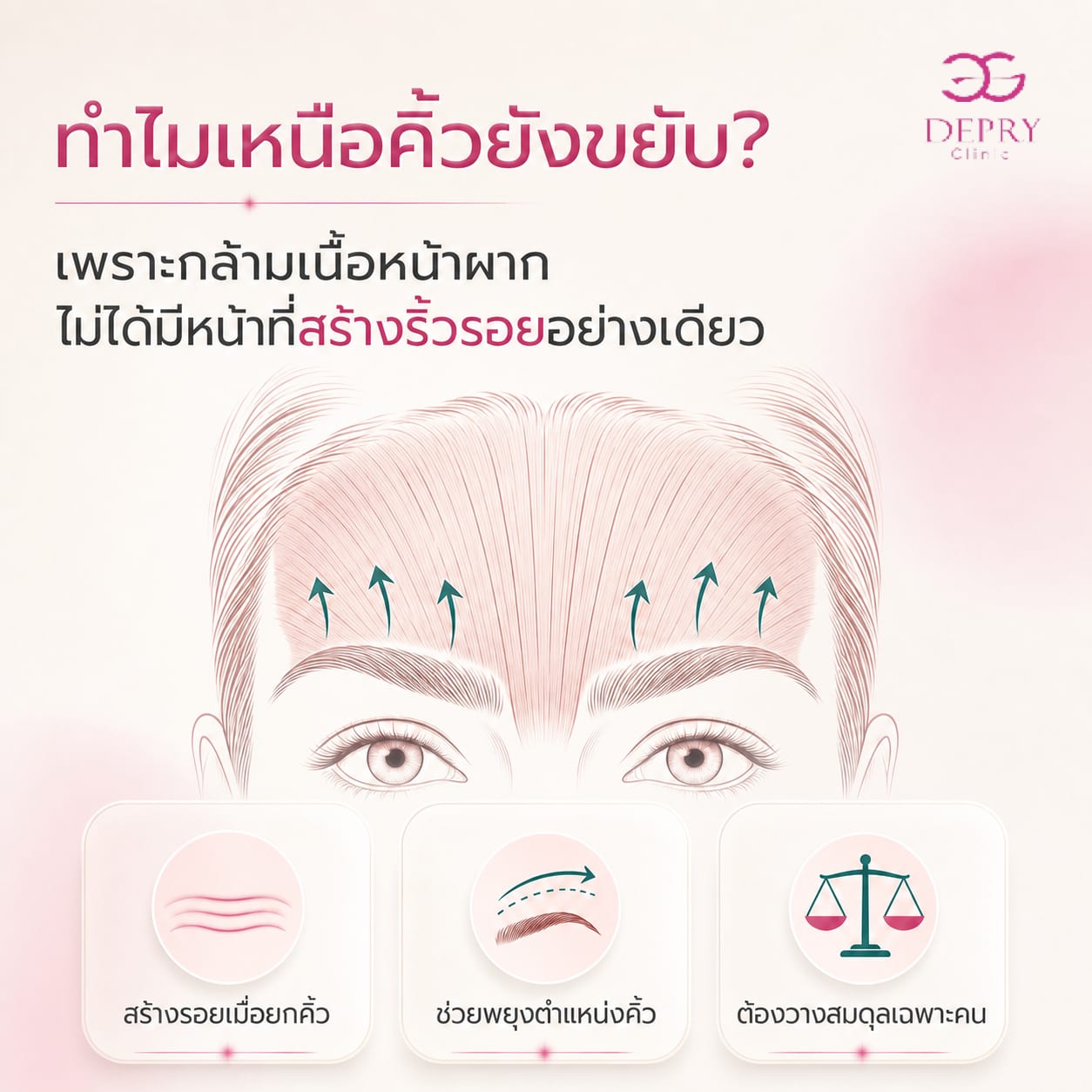
4 common reasons
Got questions? Dr. Time offers personalized, honest consultations — no upselling.
Consult Dr. Time| What you notice | Possible reason | What it may mean |
|---|---|---|
| The line appears only when you raise your brows | Some muscle activity remains | Activity may have been preserved to help support the brows |
| The line remains when your face is relaxed | An existing skin crease | Relaxing the muscle alone may not remove it completely |
| The brow tail rises with a curved line at the side | The outer muscle is stronger than the central area | It may be a Spock brow or Mephisto sign |
| The two sides look different | Muscle strength was different to begin with, or each side responded differently | Before-treatment photos and movement on both sides need to be reviewed |
Forehead research consistently shows that changing muscle activity affects both wrinkles and brow position. Planning should therefore account for your facial structure, muscle strength, and natural brow position. Someone else's result should not be treated as the answer for your face.
What are a Spock brow and the Mephisto sign?
These terms describe a brow tail that sits higher than the central brow. Some people notice a curved line above the outer brow when they move. This can happen when the outer muscle remains more active than the area that has already relaxed. The names may sound worrying, but the appearance itself does not mean that you are in danger. Your doctor should first assess the actual brow shape and movement before deciding whether any correction is appropriate.
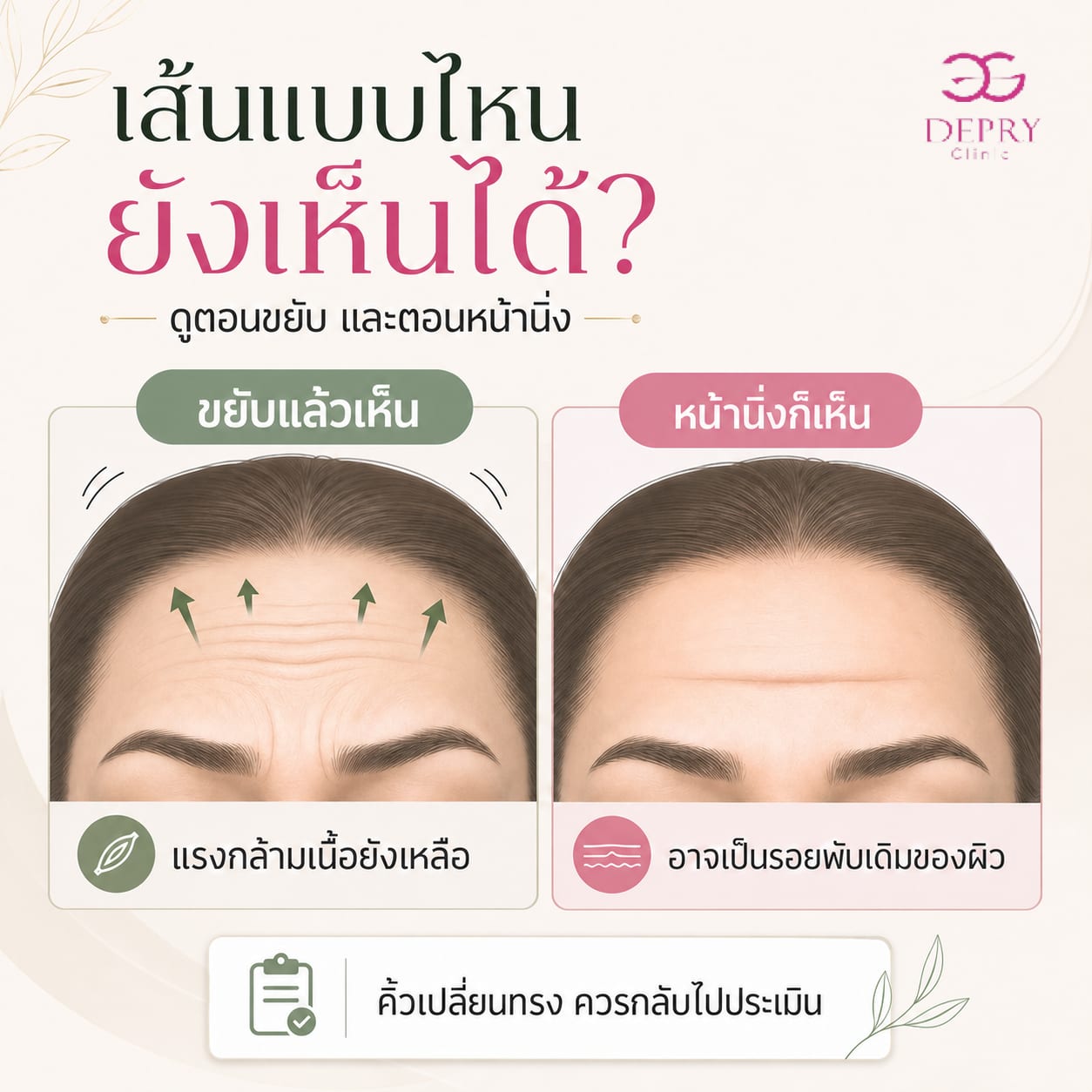
Work out whether it is a movement line or an existing crease
Visible only when you raise your brows
- Often related to remaining frontalis activity
- Check whether the brows still have a natural shape
- If the line is small and both sides are balanced, it may not need an immediate correction
Visible while your face is relaxed
- Often includes an existing crease within the skin
- The line may gradually soften when the skin is no longer folded as strongly
- A deeper line requires an assessment of skin quality and other suitable options
Record your face at rest, slowly raising your eyebrows, and frowning, using the same lighting and camera angle. This shows where the line begins and how the brows move, giving a clearer picture than a selfie taken with the camera held high.
What should you do next?
- During the first few days: Do not judge the result too early, because different parts of the muscle may begin responding at different times.
- At around two weeks: Attend your scheduled review with your before-treatment photos and a video of your facial movement. Your doctor can assess the line, brow position, and symmetry together.
- After the assessment: If anything needs adjusting, your doctor can make an individual plan. More product should not be added based only on a description or a single camera angle.
If you develop marked eyelid or brow drooping, double vision, difficulty swallowing or breathing, or unusual muscle weakness, contact the clinic and seek medical care promptly. These are not simply cosmetic concerns to monitor by yourself.
Botulinum toxin result assessment at Depry Clinic in Phitsanulok
During a review, Dr. Time examines your face at rest, while you raise your eyebrows, and while you frown, because a small line above the brow can mean something different on every face. Patients from Phitsanulok, Phichit, Sukhothai, Uttaradit, Kamphaeng Phet, and Phetchabun can bring their before-treatment photos or previous treatment details. The first goal is to explain what is causing the line, then discuss whether it needs adjusting or is better left looking natural.
Frequently asked questions
If a line remains above my brow after botulinum toxin treatment, does that mean the product did not work?
Not necessarily. Some forehead muscle activity may have been preserved to help support your brow, or the visible line may be an existing skin crease that remains even when your face is relaxed. The movement and shape of your brows need to be assessed together.
Why does my doctor not make every forehead line completely smooth?
The forehead muscle does more than create lines; it also helps lift the brows. Relaxing it too much can make some people's brows feel heavy or their eyelids look more hooded. The goal is balance, not always the smoothest possible forehead.
What is a line above the brow that appears only when I raise my eyebrows?
It is usually a dynamic line, meaning that some muscle activity remains in that area. If your brows and expression still look natural, this may be an intentional balance, but the treating doctor should assess your before-and-after appearance.
Can botulinum toxin treatment help if I can still see the line while my face is relaxed?
It may reduce how strongly the skin keeps folding, but a crease that has been etched into the skin over time may not disappear completely from muscle relaxation alone. A doctor needs to assess your skin quality and discuss other options individually.
Why did the tail of my brow lift and a curved line appear above it after treatment?
The outer forehead muscle may still be working more strongly than the central area, making the brow tail look raised or creating a curved line during movement. This is sometimes called a Spock brow or Mephisto sign and should be assessed by your doctor.
When should I return for a review?
A review is commonly arranged at around two weeks, when the result and muscle balance are clearer than during the first few days. If you develop marked eyelid or brow drooping, double vision, or another unusual symptom, contact the clinic promptly rather than waiting for the appointment.
Should I go straight to another clinic for a top-up?
Do not rush to make a correction based on one photograph. Return to the treating doctor with your before-treatment photos and a video of you raising your brows. Adding more treatment without assessing the whole forehead may make the brows feel heavier or increase asymmetry.
What should I tell my doctor before my next treatment?
Explain where the line remained last time, whether your brows felt heavy or changed shape, and how smooth you would like your forehead to look. Let the doctor assess your face at rest, with raised brows, and while frowning so the next plan reflects your actual muscle activity.
References used by Dr. Time
If you would like to review the original information about the forehead muscle, brow position, and the difference between lines seen during movement and at rest, you can read these sources:
Written by
ดร.นพ.ณธธรรมภ์ โอภาอภิณัฐฏ์ (หมอธามน์)Clinic physician at de Pry Clinic, Phitsanulok · Thai medical license no. 56524